

Article
C. Raja Mohan, Darshana M. Baruah
{
  "authors": [
    "C. Raja Mohan"
  ],
  "type": "legacyinthemedia",
  "centerAffiliationAll": "dc",
  "centers": [
    "Carnegie Endowment for International Peace",
    "Carnegie India"
  ],
  "collections": [],
  "englishNewsletterAll": "ctw",
  "nonEnglishNewsletterAll": "",
  "primaryCenter": "Carnegie India",
  "programAffiliation": "SAP",
  "programs": [
    "South Asia"
  ],
  "projects": [],
  "regions": [
    "South Asia",
    "Afghanistan",
    "Pakistan"
  ],
  "topics": [
    "Foreign Policy"
  ]
}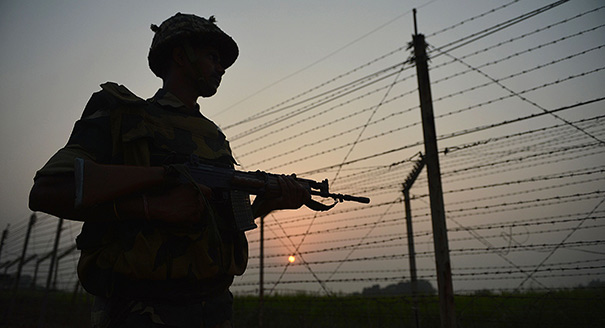
Source: Getty
A more complex phase in the long-standing conflict between India and Pakistan has begun. Modi must retain strong control over the inevitable escalation that will unfold and sustain relentless pressure on Rawalpindi’s political vulnerabilities.
Source: Indian Express
With strikes on terror launch pads across the Line of Control in Kashmir, Prime Minister Narendra Modi has won much praise at home and drawn little flak from abroad. The carefully mounted manoeuvre has helped deal with the domestic imperative for visible action against Pakistan, following the killing of 18 Indian soldiers at Uri last month. As a tactical response, it was proportional to the attack on Uri. It also had a strategic dimension — demonstrating Delhi’s political will to face up to the risks of escalating the confrontation with the Pakistan army, headquartered in Rawalpindi.
But the PM’s real test begins now, as a more complex phase in the long-standing conflict between India and Pakistan unfolds. After discarding India’s “do nothing” strategy, Modi must now retain strong control over the inevitable escalation that will unfold, ensure that cross-border military attacks become a regular response to terror attacks from across the LoC, and sustain relentless pressure on Rawalpindi’s political vulnerabilities.
India has occasionally sought to escalate the confrontation vertically, as it did during 2001-2002, following the attack on Parliament. India’s full military mobilisation put pressure on the United States to compel Pakistan’s then chief of army staff, General Pervez Musharraf, to formally commit Rawalpindi to end support for anti-India terror groups. The confrontation did lead to a period of reduced cross-border violence and a productive moment in the peace process. A ceasefire along the frontiers of India and Pakistan held for a while after it was unveiled at the end of 2003. There were purposeful negotiations on Kashmir, and an expansion of trade and popular contacts.
That period came to an end in November 2008 with the terror attacks on Mumbai. Amidst the resurgence of cross-border violence, Delhi struggled to come up with a strategy to stop the Pakistan army from organising these attacks or nurturing groups hostile to India. Modi has now taken the first step to break out of that box. To be sure, this is not the first time that the Indian army has conducted a cross-border raid across the LoC. Such tactical raids occur quite often. What is different this time, however, is the timing and context. It comes at a moment when PM Modi has taken a variety of diplomatic and political moves against Pakistan. If he was bold enough to make unconventional peace moves — like showing up in Lahore on Pakistan Prime Minister Nawaz Sharif’s birthday last December — he has been willing to take a fresh look at the risks of escalating the confrontation with Pakistan.
The Pakistan army, however, is not about to end its support to cross-border terrorism in India, especially in Kashmir. Not so fast. Despite its immediate denial of the surgical strikes, the Pakistan army must be expected to respond. While the civilians in Islamabad will make a lot of noise in the coming days, the ball is really in the court of Pakistan army chief, General Raheel Sharif.
Like his predecessors, General Sharif has built a halo around himself. There has been much talk about him being promoted as field marshal — for launching a war against the TTP in Pakistan. Having created a larger than life image for himself, General Sharif can’t but be seen as acting. He could order new terror attacks on Indian targets, civilian and military, in India and beyond. He could intensify the political destabilisation of Kashmir and escalate the confrontation on the Line of Control and the international border.
Modi, then, has his task cut out. He will need to respond effectively on the military side while retaining full control over the escalation. In devising and presenting the cross-border raids this week, Modi has found the right approach to escalation control. This challenge will become harder in the coming days. While he strives for strong control over the pace, direction and scope of the confrontation with Pakistan, he must institutionalise proportional military responses to cross-border terror attacks in Kashmir. The Indian army’s crossing the LoC to attack terror targets has rightly been viewed as a big step forward. It must also become a routine affair. Every time Pakistan-backed terrorists violate the sanctity of the LoC, the Indian security forces must do the same.
Modi’s difficulty on escalation control is mitigated by two important factors. One is the international dynamic. The past military crises between India and Pakistan have seen quick international involvement to defuse tensions. Pakistan had always calculated that escalation will bring the US to intervene and push for a settlement of the Kashmir dispute. But the Kargil War and Operation Parakram under the NDA governments showed that Delhi could indeed redirect that international pressure onto Pakistan, for example, in compelling Rawalpindi to back off and return to status quo ante. Modi could do even better.
Delhi’s preemptive cross-LoC counter terror attacks have been complemented by a proactive diplomacy that has sought to win new friends for India as well as weaken potential international support for Pakistan as the current crisis unfolds. Modi has the political confidence as well as international credibility to play the global concerns to India’s advantage. Modi’s new level of comfort with the US has been matched by the surprising mobilisation of two key South Asian states — Afghanistan and Bangladesh — on India’s side.
Even more important, Modi has a rare opportunity to exercise some influence over Pakistan’s current internal dynamic. Any rise in tension with India would naturally strengthen the Pakistan army’s domestic standing. At least in the initial phase. But if the army is not seen as responding effectively to Indian moves, General Sharif may find himself in a spot of bother. The civilian leadership in Islamabad might not be entirely displeased to see General Sharif come down a peg or two. It has long been assumed that Delhi can’t play Pakistan’s domestic politics. With enough strategic finesse, Modi could well challenge that conventional wisdom.
This article was originally published by the Indian Express.
Former Nonresident Senior Fellow, Carnegie India
A leading analyst of India’s foreign policy, Mohan is also an expert on South Asian security, great-power relations in Asia, and arms control.
Recent Work

C. Raja Mohan, Darshana M. Baruah


Alexander Gabuev, Paul Haenle, C. Raja Mohan, …
Carnegie does not take institutional positions on public policy issues; the views represented herein are those of the author(s) and do not necessarily reflect the views of Carnegie, its staff, or its trustees.

It should address the shortcomings of previous crisis communication efforts and adapt to the demands of frontier AI.

Lucy Luo

Washington’s decision to support some UN functions while letting others wither is pulling the organization apart at the seams.

Stewart Patrick, Theodore Zaritsky

Are Germany’s economic, industrial, and political struggles becoming a liability for the EU’s ability to rise to the geopolitical moment?

Rym Momtaz, ed.

China’s police training infrastructure construction projects provide benefits to recipient countries, promote China’s image as a major global security provider, and are likely to reinforce alignment between Beijing’s security priorities and those of countries in the Global South.


Cameron Waltz, Sheena Chestnut Greitens, Kim Nguyen, …
The Bureau of Industry and Security needs to adjust its focus and practices to maintain its position as the U.S. government’s primary champion of international technological competition.
Geoffrey Irving