• Research
  • Emissary
  • About
  • Experts
Carnegie Global logoCarnegie lettermark logo
DemocracyIran
  • Donate
{
  "authors": [
    "C. Raja Mohan",
    "Arushi Kumar",
    "Constantino Xavier"
  ],
  "type": "other",
  "centerAffiliationAll": "",
  "centers": [
    "Carnegie Endowment for International Peace",
    "Carnegie India"
  ],
  "collections": [],
  "englishNewsletterAll": "",
  "nonEnglishNewsletterAll": "",
  "primaryCenter": "Carnegie India",
  "programAffiliation": "",
  "programs": [],
  "projects": [],
  "regions": [
    "South Asia",
    "Afghanistan",
    "India",
    "Western Europe"
  ],
  "topics": [
    "Foreign Policy"
  ]
}

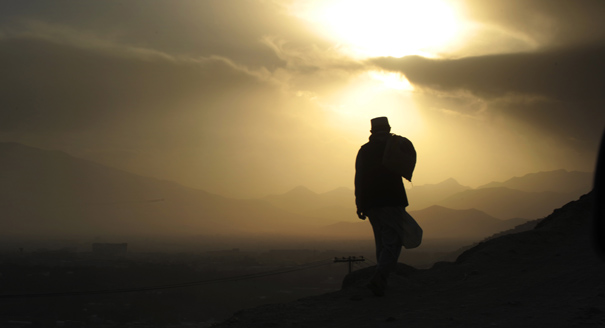
Source: Getty

Other
Carnegie India

Securing Afghanistan: Prospects for India-EU Cooperation

After 15 years of limited cooperation, India and the EU have the opportunity to join forces on promoting peace and stability in Afghanistan.

Link Copied
By C. Raja Mohan, Arushi Kumar, Constantino Xavier
Published on Nov 9, 2016

Source: Global Public Policy Institute

Executive Summary

With the US seeking to limit its international role amidst domestic political resistance, India and Europe are facing increased pressure to take on greater international responsibilities. Delhi and Brussels are both pursuing a more ambitious role in international security affairs, and the imperative for strategic cooperation between them is growing. After 15 years of limited cooperation, India and the EU have the opportunity to join forces on promoting peace and stability in Afghanistan. Despite extraordinary international attention paid to Afghanistan since the turn of the millennium, prospects for the current regime’s failure have increased. A Taliban victory in Afghanistan would impose severe costs on India and Europe in terms of refugee inflows and terrorist threats. To prevent this, cooperation between India and the EU should be directed towards improving Kabul’s odds of defeating the Taliban offensive and enhancing its leverage in the negotiations on regional reconciliation. This will require greater trilateral coordination between Kabul, Brussels and New Delhi, in conjunction with a dual track approach that demands short-term emphasis on political and military consultations on the changing ground conditions, along with with a long-term focus on continued economic assistance to strengthen a moderate and stable Afghan regime.

Policy Recommendations

  • Security consultations: Expand the working-level, low-frequency contacts on counterterrorism between EU and Indian domestic security institutions with a substantive and even more regular track between external security actors. This should include the sharing of intelligence and exchange of assessments between Indian and European security agencies in Brussels and Delhi as well as on the ground on the dynamic situation in Afghanistan. The EU and India should also not shy away from a frank dialogue on how best to leverage incentives and disincentives to ensure Pakistani cooperation to pressure the Taliban, facilitate reconciliation and strengthen the legitimate Afghan government.
  • Military coordination: Create high-level exchanges between EU and Indian military establishments on the evolving situation in Afghanistan and coordinating their training and assistance missions. This requires joint EU-India training for Afghan military and police forces.
  • Political cooperation: Increase political and diplomatic cooperation between the European Union and the Indian Foreign Ministry to heighten pressure on Pakistan to close the sanctuaries for the Taliban. Based on the US-India-Afghanistan trilateral, create a similar EU-India-Afghanistan trilateral consultative mechanism. Increase EU-India dialogue on the regional context shaping Afghanistan, including the Middle East and Iran, Central Asia, and the strategic implications of China’s One Belt, One Road projects. 
  • Development cooperation: Develop joint EU-India capacity-building projects for the Afghan civil services and public administration.

This policy paper was originally published by the Global Public Policy Institute.

About the Authors

C. Raja Mohan

Former Nonresident Senior Fellow, Carnegie India

A leading analyst of India’s foreign policy, Mohan is also an expert on South Asian security, great-power relations in Asia, and arms control.

Arushi Kumar

Constantino Xavier

Former Fellow, Carnegie India

Constantino Xavier was a fellow at Carnegie India, based in New Delhi. His research focus is on India’s foreign policy, with emphasis on relations with its neighboring countries and South Asian regional security.

Authors

C. Raja Mohan
Former Nonresident Senior Fellow, Carnegie India
Arushi Kumar
Constantino Xavier
Former Fellow, Carnegie India
Constantino Xavier
Foreign PolicySouth AsiaAfghanistanIndiaWestern Europe

Carnegie does not take institutional positions on public policy issues; the views represented herein are those of the author(s) and do not necessarily reflect the views of Carnegie, its staff, or its trustees.

More Work from Carnegie Endowment for International Peace

  • Commentary
    Strategic Europe
    Europe on Iran: Gone with the Wind

    Europe’s reaction to the war in Iran has been disunited and meek, a far cry from its previously leading role in diplomacy with Tehran. To avoid being condemned to the sidelines while escalation continues, Brussels needs to stand up for international law.

      Pierre Vimont

  • Commentary
    India Signs the Pax Silica—A Counter to Pax Sinica?

    On the last day of the India AI Impact Summit, India signed Pax Silica, a U.S.-led declaration seemingly focused on semiconductors. While India’s accession to the same was not entirely unforeseen, becoming a signatory nation this quickly was not on the cards either.

      Konark Bhandari

  • Commentary
    Carnegie Politika
    How Far Can Russian Arms Help Iran?

    Arms supplies from Russia to Iran will not only continue, but could grow significantly if Russia gets the opportunity.

      Nikita Smagin

  • Front of a damaged apartment building
    Commentary
    Emissary
    Is a Conflict-Ending Solution Even Possible in Ukraine?

    On the fourth anniversary of Russia’s full-scale invasion, Carnegie experts discuss the war’s impacts and what might come next.

      • +1

      Eric Ciaramella, Aaron David Miller, Alexandra Prokopenko, …

  • People in voting booths
    Commentary
    Emissary
    Indian Americans Still Lean Left. Just Not as Reliably.

    New data from the 2026 Indian American Attitudes Survey show that Democratic support has not fully rebounded from 2020.

      • +1

      Sumitra Badrinathan, Devesh Kapur, Andy Robaina, …

Get more news and analysis from
Carnegie Endowment for International Peace
Carnegie global logo, stacked
1779 Massachusetts Avenue NWWashington, DC, 20036-2103Phone: 202 483 7600Fax: 202 483 1840
  • Research
  • Emissary
  • About
  • Experts
  • Donate
  • Programs
  • Events
  • Blogs
  • Podcasts
  • Contact
  • Annual Reports
  • Careers
  • Privacy
  • For Media
  • Government Resources
Get more news and analysis from
Carnegie Endowment for International Peace
© 2026 Carnegie Endowment for International Peace. All rights reserved.