

Commentary
Judy Dempsey
{
  "authors": [
    "Judy Dempsey"
  ],
  "type": "legacyinthemedia",
  "centerAffiliationAll": "dc",
  "centers": [
    "Carnegie Endowment for International Peace",
    "Carnegie Europe"
  ],
  "collections": [],
  "englishNewsletterAll": "ctw",
  "nonEnglishNewsletterAll": "",
  "primaryCenter": "Carnegie Europe",
  "programAffiliation": "EP",
  "programs": [
    "Europe"
  ],
  "projects": [],
  "regions": [
    "Europe",
    "Western Europe",
    "Iran"
  ],
  "topics": [
    "Foreign Policy",
    "EU",
    "Security"
  ]
}
Source: Getty
Europe has been so weakened by the tumultuous events of 2016 that it is left unprepared to deal with the big foreign policy challenges of 2017.
Source: Washington Post
Europe has been so weakened by the tumultuous events of 2016 that it is left unprepared to deal with the three big foreign policy challenges of 2017.
The first is Donald Trump, who in January enters the White House as the next American president. The second is the increasing power of Vladimir Putin, the Russian president who feels emboldened after the collapse of the Syrian city of Aleppo. The third is terrorism.In 2016, the decision by the British to quit the European Union has robbed Europe of a member state that had a long tradition and experience in security, intelligence-gathering and defense.
The euro crisis continues to haunt the union. The fragile Italian banking system and the resignation of Italian Prime Minister Matteo Renzi were the latest casualties of the bloc’s financial woes and the weakness of its common currency.
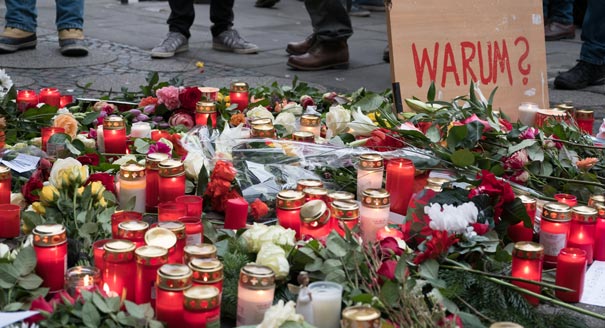
As for the refugee crisis, although the numbers reaching Europe have decreased, the human tide from the Middle East is being conflated with the most recent terrorist attacks, including the one in Berlin on Dec. 19. That attack exposed major failings by all E.U. member states. Their leaders have singularly failed to agree on a comprehensive asylum and refugee policy to check who enters the bloc. They have failed to secure Europe’s borders. And above all, they have yet to put in place an intelligence-sharing system or a strong security and defense policy.
The result is that Trump’s and Putin’s policies are going to test Europe’s ability to defend itself. Putin can only gain from a weakened Europe and a U.S. president who questions America’s commitment to Europe. By spreading disinformation, supporting populist movements and cooperating with leading European politicians in France, the Netherlands and Austria, the Kremlin has the ability to divide Europe. For example, Putin’s United Russia party signed a cooperation agreement with Austria’s far-right Freedom Party just weeks after its candidate was narrowly defeated in a presidential contest by an independent pro-European politician. Freedom Party leader Heinz-Christian Strache and other populist leaders in Europe want E.U. sanctions on Russia lifted.
As for Trump, his apparent intention to adopt a more pragmatic working relationship with the Kremlin will expose the inherent weaknesses of America’s European allies. For one thing, they are in no position to defend themselves against Russia if the United States weakens its security commitment.
Successive U.S. administrations have warned Europe to spend more on its own defense. Despite all the lip service paid by E.U. leaders to strengthening security, defense and intelligence-sharing policy, they have done little to make any of these pledges credible, as the terrorist attacks confirm.
“Europe is in a security crisis,” Julian Lindley-French, a veteran British security expert, argued. “Yet again the seemingly total inability of Europe’s leaders to properly secure and defend the very European citizens who elevate them has been revealed.”
The suspect in the Berlin terrorist attack, Anis Amri, was able to wander from Italy to Germany and back through France to Milan even though he was convicted of burning a detention center while in Italy. The German security services had him under observation but allowed him to slip through the net.
Looking back at 2016, Brexit and the euro, refugee and terrorist crises could have been the opportunity for the E.U. to pull together through further economic and political integration, including intelligence-sharing and a proper asylum and refugee policy. The opposite happened.
The member states are setting their own policies as populist movements across Europe chisel away at the E.U. Some of these movements are frustrated by the inability of the elites to address, among other issues, security and terrorism.
Others, such as the Polish and Hungarian governments, believe the nation state should take precedence over a Brussels bureaucracy that they see as remote and interfering over values such as the rule of law and the judiciary even thought these countries signed up to these standards when they joined the E.U. in 2004.
Such is the specter facing Europe in 2017: an American president who tells his European allies to pay up if they want America’s security to continue, and a Russian president whose policies are aimed at destroying the transatlantic alliance and weakening the E.U. But instead of reacting by pulling together, E.U. leaders seem to have left their citizens defenseless and vulnerable and the bloc increasingly less credible to deal with a new U.S. administration and Russia.

Nonresident Senior Fellow, Carnegie Europe
Judy Dempsey is a nonresident senior fellow at Carnegie Europe
Recent Work
Judy Dempsey
Judy Dempsey
Carnegie does not take institutional positions on public policy issues; the views represented herein are those of the author(s) and do not necessarily reflect the views of Carnegie, its staff, or its trustees.
Europe has an interest in supporting Armenian leader Nikol Pashinyan as he tries to make peace with neighbors and loosen ties with Russia. But it is depersonalized support in the long term, not quickfire flash, that will win the day.

Thomas de Waal
For the Middle Corridor to fulfill its promises, one of these routes must become scalable. At present, neither is.

Friedrich Conradi
If Washington cannot adapt to the ongoing transformations of a multipolar world, its superiority will become a liability.

Amr Hamzawy
Following Ursula von der Leyen’s gaffe equating Turkey to Russia and China, relations with Ankara risk deteriorating even further. Without better, more consistent diplomatic messaging, how can the EU pretend to be a geopolitical power?

Sinan Ülgen
Here’s why—and what the next president needs to do to fix the process.


Daniel C. Kurtzer, Aaron David Miller