• Research
  • Emissary
  • About
  • Experts
Carnegie Global logoCarnegie lettermark logo
DemocracyIran
  • Donate
{
  "authors": [
    "Sinan Ülgen"
  ],
  "type": "legacyinthemedia",
  "centerAffiliationAll": "dc",
  "centers": [
    "Carnegie Endowment for International Peace",
    "Carnegie Europe"
  ],
  "collections": [
    "Turkey’s Transformation"
  ],
  "englishNewsletterAll": "ctw",
  "nonEnglishNewsletterAll": "",
  "primaryCenter": "Carnegie Europe",
  "programAffiliation": "EP",
  "programs": [
    "Europe"
  ],
  "projects": [],
  "regions": [
    "Europe",
    "Türkiye",
    "Middle East",
    "Western Europe",
    "Iran"
  ],
  "topics": [
    "EU",
    "Security"
  ]
}
Source: Getty

In The Media
Carnegie Europe

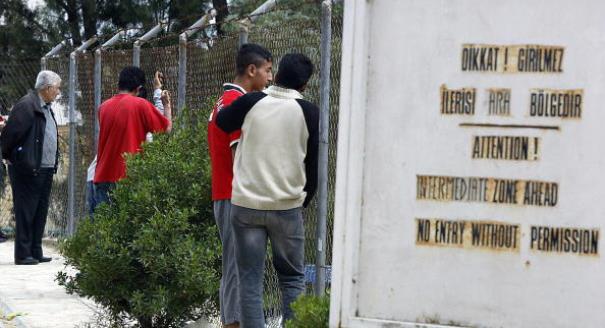
Why Are Cyprus Reunification Talks Taking Place Now?

More than forty years after Cyprus was split in two, Greek and Turkish Cypriot leaders meet in Switzerland for last-chance talks to reunify the island.

Link Copied
By Sinan Ülgen
Published on Jan 11, 2017
Program mobile hero image

Program

Europe

The Europe Program in Washington explores the political and security developments within Europe, transatlantic relations, and Europe’s global role. Working in coordination with Carnegie Europe in Brussels, the program brings together U.S. and European policymakers and experts on strategic issues facing Europe.

Learn More

Source: ABC News

Carnegie Europe’s Sinan Ülgen joined ABC’s Auskar Surbakti to discuss the Cypriot peace talks taking place in Geneva, Switzerland. Ülgen hoped that a settlement agreement would be reached but admitted that this could be problematic ahead of Turkey’s upcoming constitutional referendum.

This broadcast was originally aired on ABC Australia.

About the Author

Sinan Ülgen

Senior Fellow, Carnegie Europe

Sinan Ülgen is a senior fellow at Carnegie Europe in Brussels, where his research focuses on Turkish foreign policy, transatlantic relations, international trade, economic security, and digital policy.

    Recent Work

  • Q&A
    Can the EU Achieve Its Tech Ambitions?

      Raluca Csernatoni, Sinan Ülgen

  • Q&A
    Can the EU Overcome Divisions on Defense?

      Catherine Hoeffler, Sinan Ülgen

Sinan Ülgen
Senior Fellow, Carnegie Europe
Sinan Ülgen
EUSecurityEuropeTürkiyeMiddle EastWestern EuropeIran

Carnegie does not take institutional positions on public policy issues; the views represented herein are those of the author(s) and do not necessarily reflect the views of Carnegie, its staff, or its trustees.
More Work from Carnegie Endowment for International Peace

  • Trump and Netanyahu speaking
    Commentary
    Emissary
    The Diverging U.S. and Israeli Goals in Iran Are Making the Endgame Even Murkier

    The cracks between Trump and Netanyahu have become more pronounced, particularly over energy and leadership targets.

      • Eric Lob

      Eric Lob

  • Seoul traffic at night
    Commentary
    Emissary
    How the Hormuz Closure Is Testing the Korean President’s Progressive Agenda

    The crisis is not just a story of energy vulnerability. It’s also a complex, high-stakes political challenge.

      Darcie Draudt-Véjares

  • Commentary
    Diwan
    What Does the Strait of Hormuz’s Closure Mean?

    In an interview, Roger Diwan discusses where the global economy may be going in the third week of the U.S.-Israeli war with Iran.

      Nur Arafeh

  • Commentary
    Strategic Europe
    Russia’s Imperial Retreat Is Europe’s Strategic Opportunity

    The war in Ukraine is costing Russia its leverage overseas. Across the South Caucasus and Middle East, this presents an opportunity for Europe to pick up the pieces and claim its own sphere of influence.

      William Dixon, Maksym Beznosiuk

  • apan's Prime Minister Sanae Takaichi (L) reacts as US President Donald Trump delivers a speech in front of US Navy personnel on board the US Navy's USS George Washington aircraft carrier at the US naval base in Yokosuka on October 28, 2025.
    Article
    Takaichi’s Security Agenda After the Landslide Election

    Backed by a new LDP supermajority, Prime Minister Takaichi aspires to revise Japan’s long-standing security doctrine. Ahead of her visit to Washington, she faces fiscal hurdles for her proposed defense spending while needing to navigate President Trump’s request for naval assets to the Strait of Hormuz.

      • Harukata Takenaka

      Harukata Takenaka

Get more news and analysis from
Carnegie Endowment for International Peace
Carnegie global logo, stacked
1779 Massachusetts Avenue NWWashington, DC, 20036-2103Phone: 202 483 7600Fax: 202 483 1840
  • Research
  • Emissary
  • About
  • Experts
  • Donate
  • Programs
  • Events
  • Blogs
  • Podcasts
  • Contact
  • Annual Reports
  • Careers
  • Privacy
  • For Media
  • Government Resources
Get more news and analysis from
Carnegie Endowment for International Peace
© 2026 Carnegie Endowment for International Peace. All rights reserved.