

Research
A review of a detailed account of how antipathy toward Tehran has assumed a life and logic of its own in Washington, DC.
Jane Darby Menton
{
  "authors": [
    "Dmitri Trenin",
    "Andrei Trenin"
  ],
  "type": "legacyinthemedia",
  "centerAffiliationAll": "dc",
  "centers": [
    "Carnegie Endowment for International Peace",
    "Carnegie Russia Eurasia Center"
  ],
  "collections": [],
  "englishNewsletterAll": "ctw",
  "nonEnglishNewsletterAll": "",
  "primaryCenter": "Carnegie Russia Eurasia Center",
  "programAffiliation": "russia",
  "programs": [
    "Russia and Eurasia"
  ],
  "projects": [],
  "regions": [
    "North America",
    "United States",
    "East Asia",
    "China",
    "Russia",
    "North Korea"
  ],
  "topics": [
    "Foreign Policy"
  ]
}
Source: Getty
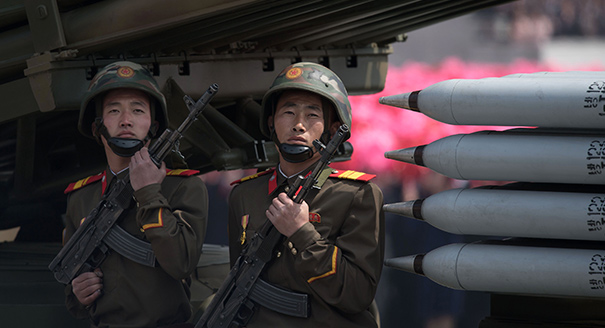
Should Trump be ready to offer Kim Jong-un US security guarantees for his regime in exchange for limiting North Korea’s missile program so that the US West Coast remains safe from North Korean projectiles, Russia could also offer to host a six-party summit in Vladivostok so close to the two Koreas, as well as China and Japan.
Source: International Politics and Society
In recent weeks, the Korean Peninsula has gone through yet another nuclear and missile crisis. In response to Pyongyang’s tests, US president Donald Trump ordered an aircraft carrier group to Korean shores, and vice-president Michael Pence warned that Washington’s strategic patience was running out. These steps looked even more threatening against the background of Trump’s decision to strike a Syrian airbase in response to an alleged use of chemical weapons by Syrian president Bashar Assad’s military. The firework show in Syria became an impressive culmination of the official dinner held by Donald Trump in honour of China's visiting President Xi Jinping, whom Trump was trying to engage in an effort to lean hard on North Korea.
By now, the shock has subsided, but the issue is still there, and new crises are virtually certain. To North Korea’s ruling Kim dynasty, nuclear weapons and a missile fleet are a guarantee of regime survival. The Kims are no crazy operators, rather they are brutal but rational rulers who have learned well the lessons of Saddam Hussein’s overthrow in Iraq and Muammar Qaddafi’s in Libya. Kim Jong-un is now aiming for a capability for his missiles to reach the US West Coast, and is unlikely to ever give up his deterrent. Neither political pressure, nor economic sanctions can dissuade Pyongyang from its nuclear quest. It is only a matter of time before North Korea becomes a full-fledged nuclear power.
Russia has intimate knowledge of North Korea. It shares a few dozen kilometers of border with the DPRK. It is no ally of Pyongyang, but over the decades it has built a keen understanding of the Stalinist regime there. As one of the guarantors of the non-proliferation regime, Moscow does not support Pyongyang’s nuclear ambitions. It was not amused when several years ago a malfunctioning North Korean missile landed within Russia’s exclusive economic zone. However, the Russians read the DPRK’s nuclear and missile programs as essentially a regime-protection strategy.
From Moscow’s perspective, US shows of force in and around Korea are more provocative than dissuasive. Particularly dangerous, however, would be a US preventative strike at the DPRK’s nuclear and missile assets. The Russians have not forgotten that US President John Kennedy risked an all-out war with the Soviet Union in 1962 when Soviet leader Nikita Khrushchev recklessly sought to balance US nuclear missiles in Turkey with Soviet ones in Cuba. Today, the Russians don’t like Washington’s use of the North Korean threat to deploy the THAAD missile defense system in South Korea, which adds to the US effort of building a global missile defense shield that eventually might chip away at Russia’s own deterrent.
In the eyes of Washington and the world, China is the key player on the North Korean issue. At the Florida get-together, Trump was pressing Xi to make Kim Jong-un abandon his efforts. Beijing is clearly angry with its ally in Pyongyang, neither is it thrilled to be seen running errands on Washington’s behalf. China's economic pressure and diplomatic moves, including bristling articles addressed to North Korea in its official media, are predictably rebuffed by Pyongyang, leading the China-US game into a stalemate.
This creates an opening for Moscow. Russia, of course, acknowledges the fact that North Korea is of paramount importance to China. Enjoying strategic partnership — a sort of contemporary major power entente — with Beijing, Moscow is careful not to do anything against China’s interests in an area which is so sensitive for Beijing. However, Russia is not simply following China. It has its own agenda and something approaching a strategy.
Russia’s agenda is, simply put, raising its global stature. It wants to be recognized as a key player in all major security issues, and certainly those concerning Eurasia. For starters, Moscow is keeping its channels of communication open to all parties — Beijing, Pyongyang, Washington, Seoul, and Tokyo. At the UN Security Council, Russia is part of the common front against nuclear proliferation. It has warned Pyongyang against further tests and urged it to resume six-party talks on the nuclear issue. At the same time, it deplores US muscle-flexing and its missile defense deployments in North-East Asia. However, Russia is pinning its main hopes on the two Korean states.
Koreans from the South as well as the North are intensely nationalistic and patriotic. Should the new South Korean president Moon Jae-in revive the “Sunshine policy” of one of his predecessors, Russia could then try and resurrect its idea of building a rail link and gas pipeline between North and South Korea, which would give Pyongyang a steady legal income.
Should Trump be ready to offer Kim Jong-un US security guarantees for his regime in exchange for limiting North Korea’s missile program so that the US West Coast remains safe from North Korean projectiles, Russia could also offer to host a six-party summit in Vladivostok, Russia's small metropolis on the Pacific, so close to the two Koreas, as well as China and Japan. This would be an appropriate setting for Trump and Kim Jong-un to meet face to face. Rather than stealing China’s lunch, Russia would be lifting a load off its chest.
This op-ed was originally published in the International Politics and Society magazine
Former Director, Carnegie Moscow Center
Trenin was director of the Carnegie Moscow Center from 2008 to early 2022.
Andrei Trenin
Carnegie does not take institutional positions on public policy issues; the views represented herein are those of the author(s) and do not necessarily reflect the views of Carnegie, its staff, or its trustees.

A review of a detailed account of how antipathy toward Tehran has assumed a life and logic of its own in Washington, DC.

Jane Darby Menton
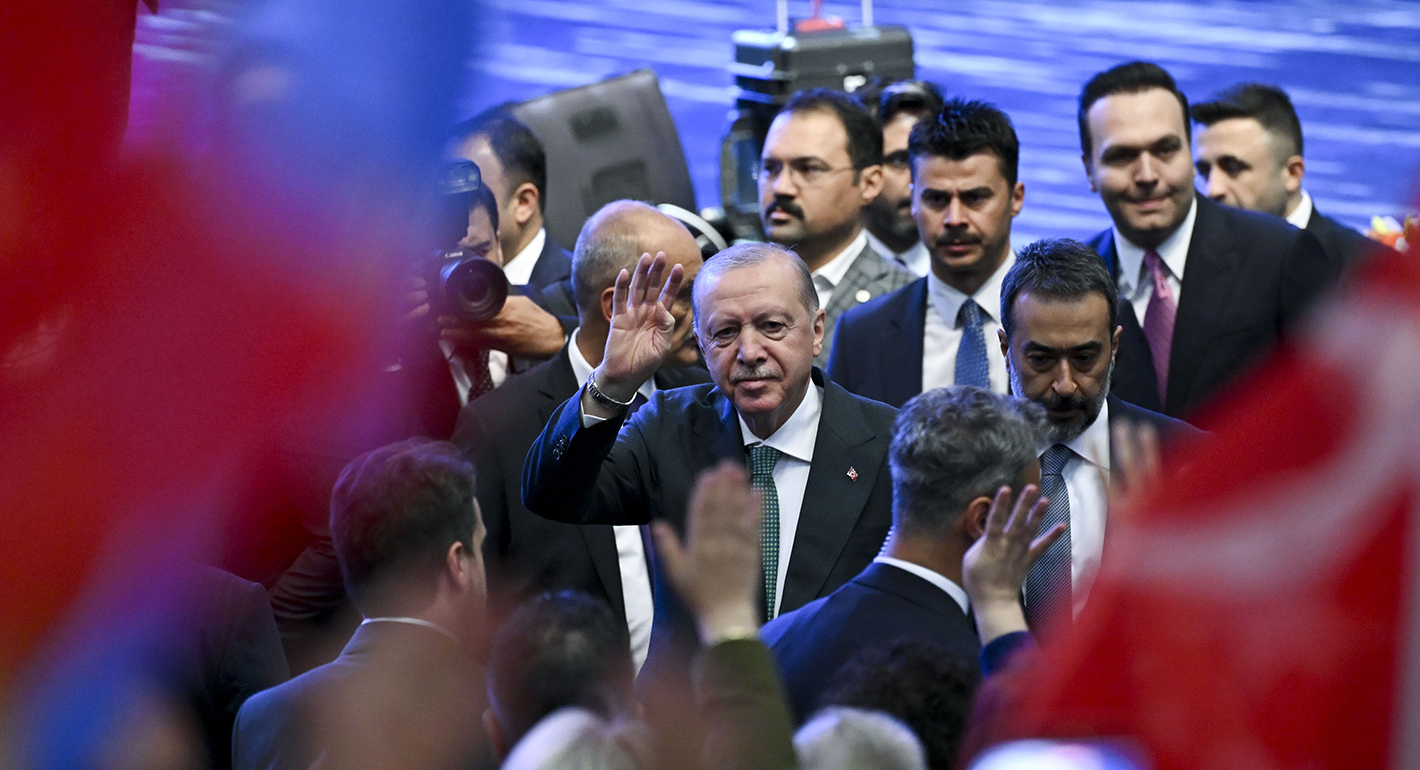
Turkish right-wing populists have been trying to advance the country’s middle-power goals based on perceptions of what the public wants, but they have been doing so in ways that reinforce their project of autocratic political consolidation.
Murat Somer

In Colombia and elsewhere in the region, the United States is trying to shape election outcomes—but at what cost?
Oliver Stuenkel, Adrian Feinberg
Russia looks set to reap economic benefits from closer ties with Southeast Asian countries that are keen to find reliable energy suppliers and diversify trade ties.

Alexander Gabuev
There is an elephant in the room when it comes to the EU’s upcoming security strategy: Donald Trump. Unless European leaders acknowledge the depth of the transatlantic crisis, true autonomy will remain out of reach.

Stefan Lehne