

Other
Michael D. Swaine
{
  "authors": [
    "Michael D. Swaine"
  ],
  "type": "other",
  "centerAffiliationAll": "dc",
  "centers": [
    "Carnegie Endowment for International Peace",
    "Carnegie China"
  ],
  "collections": [],
  "englishNewsletterAll": "asia",
  "nonEnglishNewsletterAll": "",
  "primaryCenter": "Carnegie Endowment for International Peace",
  "programAffiliation": "AP",
  "programs": [
    "Asia"
  ],
  "projects": [],
  "regions": [
    "East Asia",
    "South Korea",
    "China",
    "Taiwan",
    "Japan",
    "North Korea"
  ],
  "topics": [
    "Foreign Policy",
    "Nuclear Policy",
    "Security",
    "Arms Control"
  ]
}
Source: Getty
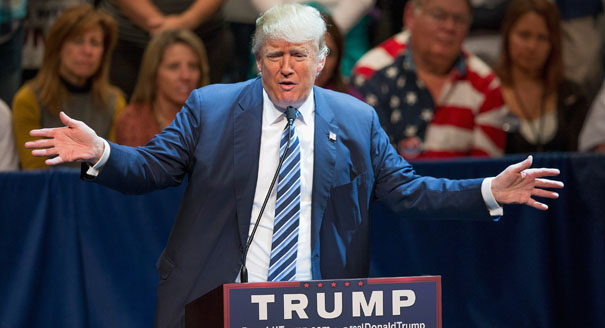
Authoritative and non-authoritative Chinese commentaries on the Trump administration’s foreign policy have tended to avoid making hostile remarks in response to some notable U.S. provocations.
Source: China Leadership Monitor
Authoritative and non-authoritative Chinese commentaries on the Trump administration’s foreign policy have tended to avoid making hostile remarks in response to some notable U.S. provocations. This cautious stance most likely reflects at least three factors. First, the Chinese now recognize that presidential campaigns often produce aggressive rhetoric, but a new administration eventually moderates its stance in the face of practical constraints. Second, the upcoming 19th Party Congress in fall 2017 strongly indicates the need for Beijing to avoid taking any actions that could generate a foreign policy crisis. Third, the Chinese probably believe that Trump is ultimately someone who will take a pragmatic and transactional approach toward the Sino-American relationship. The current Chinese viewpoint, however, could darken considerably if Washington or Beijing adopt confrontational stances toward sensitive and potentially volatile foreign policy issues such as North Korea, Taiwan, or the South China Sea.
In CLM 50, we examined Chinese views on presidential candidates Hillary R. Clinton and Donald J. Trump. In this issue, we take a close look at Chinese views toward President Trump’s policies toward Asia and China. The period covered begins with Trump’s election on November 8, 2016, and ends with the presidential summit between President Trump and Chinese president Xi Jinping, held at Trump’s Mar-A-Lago resort April 6–7.
As in previous Monitor articles, Chinese views in this essay are divided into authoritative and non-authoritative statements and actions. Five main foreign policy subjects are covered: 1) the state of overall current and future U.S.-China relations; 2) economic and trade policy, especially involving China; 3) the Taiwan issue; 4) the ongoing North Korea nuclear weapons crisis; and 5) maritime disputes in the South and East China Seas. The article ends with an assessment of the main features and trends of those views and their possible implications for the future...

Former Senior Fellow, Asia Program
Swaine was a senior fellow at the Carnegie Endowment for International Peace and one of the most prominent American analysts in Chinese security studies.
Recent Work
Michael D. Swaine
Michael D. Swaine
Carnegie does not take institutional positions on public policy issues; the views represented herein are those of the author(s) and do not necessarily reflect the views of Carnegie, its staff, or its trustees.

It should address the shortcomings of previous crisis communication efforts and adapt to the demands of frontier AI.

Lucy Luo

Washington’s decision to support some UN functions while letting others wither is pulling the organization apart at the seams.

Stewart Patrick, Theodore Zaritsky

Are Germany’s economic, industrial, and political struggles becoming a liability for the EU’s ability to rise to the geopolitical moment?

Rym Momtaz, ed.

China’s police training infrastructure construction projects provide benefits to recipient countries, promote China’s image as a major global security provider, and are likely to reinforce alignment between Beijing’s security priorities and those of countries in the Global South.


Cameron Waltz, Sheena Chestnut Greitens, Kim Nguyen, …
AI capabilities are moving fast. Most institutions—including governments—can’t keep up.


Anton Leicht, Scott Singer