

Commentary
Despite a new textbook, an influx of Russian teachers and managers, and an end to the teaching of Ukrainian, the Kremlin is unlikely to have “reprogrammed” locals.
Konstantin Skorkin
{
  "authors": [
    "Aaron David Miller",
    "Richard Sokolsky"
  ],
  "type": "legacyinthemedia",
  "centerAffiliationAll": "",
  "centers": [
    "Carnegie Endowment for International Peace"
  ],
  "collections": [],
  "englishNewsletterAll": "",
  "nonEnglishNewsletterAll": "",
  "primaryCenter": "Carnegie Endowment for International Peace",
  "programAffiliation": "",
  "programs": [],
  "projects": [],
  "regions": [
    "North America",
    "United States",
    "Middle East",
    "Syria"
  ],
  "topics": [
    "Political Reform",
    "Security",
    "Military",
    "Foreign Policy"
  ]
}
Source: Getty
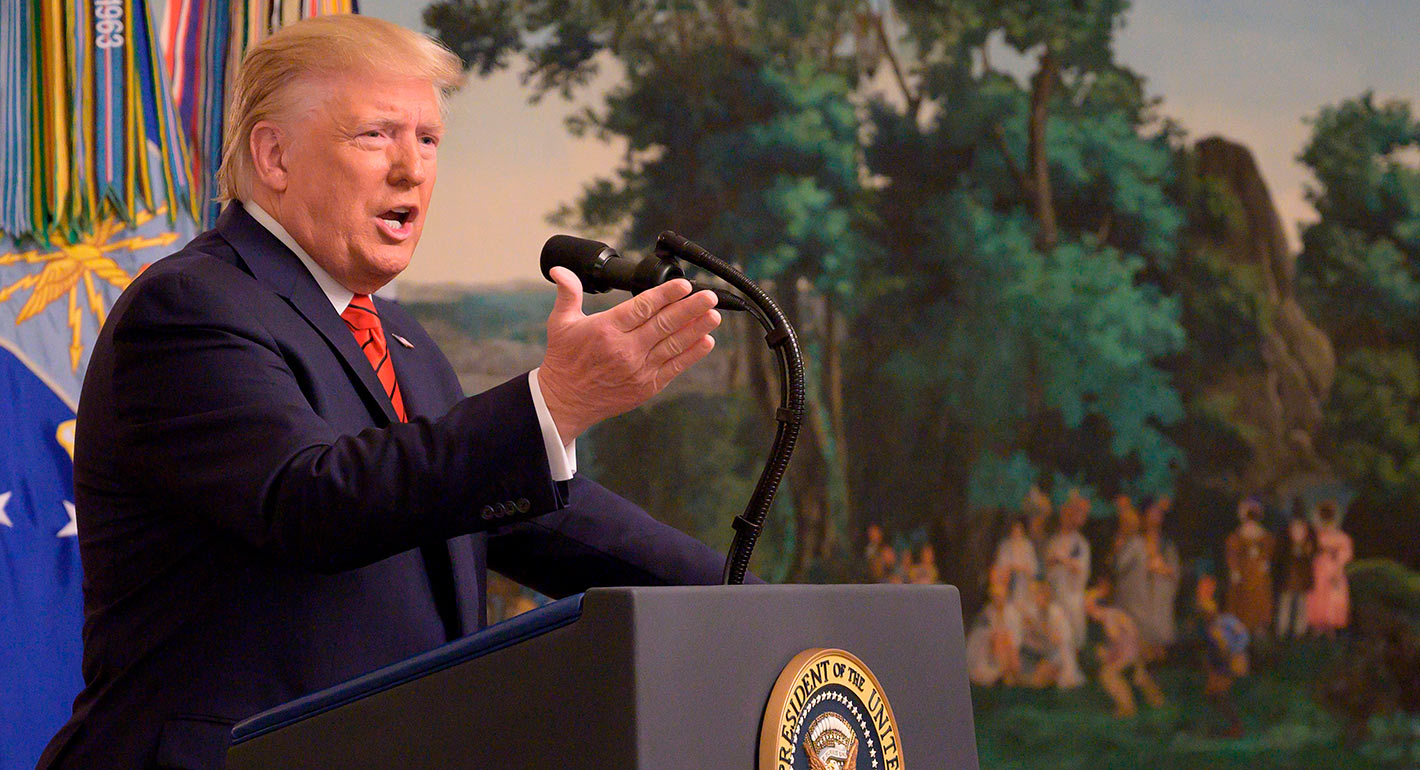
Trump’s public rollout, his overt partisanship, and the absence of a post-Baghdadi strategy to deal with the self-proclaimed Islamic State in Syria may well rob the administration of any lasting political and strategic gain from a well-deserved accomplishment.
Source: CNN
The killing of Abu Bakr al-Baghdadi was a tremendous victory for US counterterrorism policy and a demonstration of the skill and capacity of US intelligence agencies and special operators.
For an embattled president, it also offers a rare moment to act as an effective commander-in-chief and to counter the steady drip, drip of White House scandal and dysfunction revealed by the impeachment inquiry.
But in Trumpland, nothing is entirely untethered from the president's personal politics, massive ego and consistent inconsistencies.
Beyond his bombast in Sunday's announcement of Baghdadi's death, here are some of the more complicated takeaways.
Baghdadi's death represents a significant blow to ISIS and a major victory in the US campaign against the terrorist group. But it does not end the threat from ISIS or from other global jihadis.
Baghdadi may been effective at inspiring his followers, but the territorial caliphate he headed, which once controlled territory the size of Great Britain and had 8 million adherents, is dead and not likely to come roaring back; indeed, its demise significantly diminished Baghdadi's influence and opened the way to further scatter his already decentralized organization.
The ability of ISIS to recruit foot soldiers for its insurgency rests on a toxic combination of religious and millenarian ideology, poor governance and ethnic and sectarian strife. As long as these conditions persist, it will not be possible to bring about the enduring defeat of ISIS in the way that the United States and allied powers crushed the will to fight of Nazi Germany and Imperial Japan in World War II.
ISIS has survived previous losses among its leadership and will doubtless regroup and seek to use what they will message as his martyrdom to keep the insurgency alive. In short, Baghdadi was important -- but not irreplaceable. Al-Qaeda survived Osama bin Laden's death and has continued to operate. And so will ISIS.
It's instructive and ironic that President Trump has consistently railed against the forces that made the Baghdadi operation such a success.
First, there is the US intelligence community, without which the operation could never have succeeded.
In answering questions Sunday at a press conference announcing Baghdadi's death, Trump never mentioned CIA Director Gina Haspel; he praised "great intelligence professionals" in a general way but took shots at others, particularly when it came to investigating Russian interference in US elections. "When we use our intelligence correctly, what we can do is incredible," Trump said on Sunday. "When we waste our time with intelligence that hurts our country, because we had poor leadership at the top, that's not good."
Second, despite Trump's criticism of deploying US forces in endless wars, it was the limited deployment of US special forces, supported by intelligence collection by the Kurds, that provided the granular information on the location of Baghdadi's compound.
Indeed, the US worked with the Kurds to identify and confirm Baghdadi's whereabouts. Trump, who had never been all that enamored of America's relations with the Kurds, downplayed any significant Kurdish role, saying merely that Kurdish forces in Syria had supplied "information that turned out to be helpful."
For an embattled president beset by an impeachment inquiry, it was all but inevitable that Trump would try to turn the Baghdadi raid to his political advantage. Former President Barack Obama claimed credit for bringing Bin Laden to justice, too.
But Trump's manipulation of the Baghdadi raid went well beyond claiming credit. From teasing the world with a tweet the night before ("Something very big has just happened!"), to scheduling a statement on the raid to coincide with the Sunday talk shows, Trump was determined to dominate the narrative.
Indeed, Trump's prepared statement was only eight minutes long. But he stayed for an additional 45 minutes, ostensibly to answer questions but really to take a victory lap -- and to establish in the public's mind that the Baghdadi operation had been his decision and his personal victory.
The Baghdadi operation likely won't divert attention for long from Trump's political travails, though it might shore up support from Republicans angry over his abandonment of the Kurds and withdrawal from Syria -- it will provide a compelling accomplishment to tout in the general election next year.
Trump has made no secret that he has little use for the Kurds. His new Syria policy, as he made clear at Sunday's press conference, will rely primarily on Russia, Turkey and Syria to contain and diminish ISIS and to deal with the mess in Syria. What stood out Sunday was Trump's heavy reliance on these state actors and on their authoritarian governments, including Syria, which he thanked twice.
Gone are any illusions that the US has the capacity to remove Assad from power, to steer Syria toward a democratic path, to stabilize and reconstruct the battered country, to kick the Iranians out of Syria and to prevent Russia from emerging as the key external power in Syria. Indeed, in deferring to Vladimir Putin, Trump has implicitly assented to Russia's desire to help the Assad regime consolidate its control over Syria.
In his curious obsession with Syrian oil fields the Kurds now control, Trump suggested the US would be key in keeping oil out of ISIS control, including a plan to get a US oil company to develop the Syrian oil fields -- or simply to seize the oil fields for US interests.
Both of these solutions are untethered from reality.
No American company would agree to enter such a fraught arena. And the idea that Washington could simply take Syrian oil poses major legal, logistical and political problems. The oil fields that ISIS had used to enrich itself are in a different part of Syria altogether from the fields that the Kurds now control -- and in any event are in no condition for development.
Trump's announcement and briefing on the Baghdadi raid, not surprisingly, employed hot and boastful rhetoric that other presidents would not have used and struck a decidedly partisan tone. Trump made it clear that he didn't trust Democrats and feared they would compromise the mission; as a result, he broke with established precedent and only briefed select members of his own party ahead of the Baghdadi operation.
House Speaker Nancy Pelosi said it was inappropriate that the Russians had learned of the operation before Congress, and Senate Minority Leader Chuck Schumer said he learned of Baghdadi's death from watching television.
Compare Trump's tone to Obama's when he announced the death of Osama bin Laden in 2011. Obama took no questions, was calm and measured and referred to the importance of overcoming terrorism by adhering to American values.
By contrast, Trump referred proudly to his administration's ban on travelers from certain Muslim-majority countries. "We have a very effective ban, and it's very hard for people to come to our country," Trump said. And, in another act of politics and partisanship, he arranged to have Sen. Lindsey Graham go to the White House briefing room to deliver the administration's talking points.
Baghdadi's death is not, as Graham claimed in the briefing room, a "game-changer."
Still, it's a significant accomplishment for an embattled president. Trump's public rollout, his overt partisanship and the absence of a post Baghdadi strategy to deal with ISIS in Syria, however, may well rob the administration of any lasting political and strategic gain from a well-deserved accomplishment.

Senior Fellow, American Statecraft Program
Aaron David Miller is a senior fellow at the Carnegie Endowment for International Peace, focusing on U.S. foreign policy.
Nonresident Senior Fellow, Russia and Eurasia Program
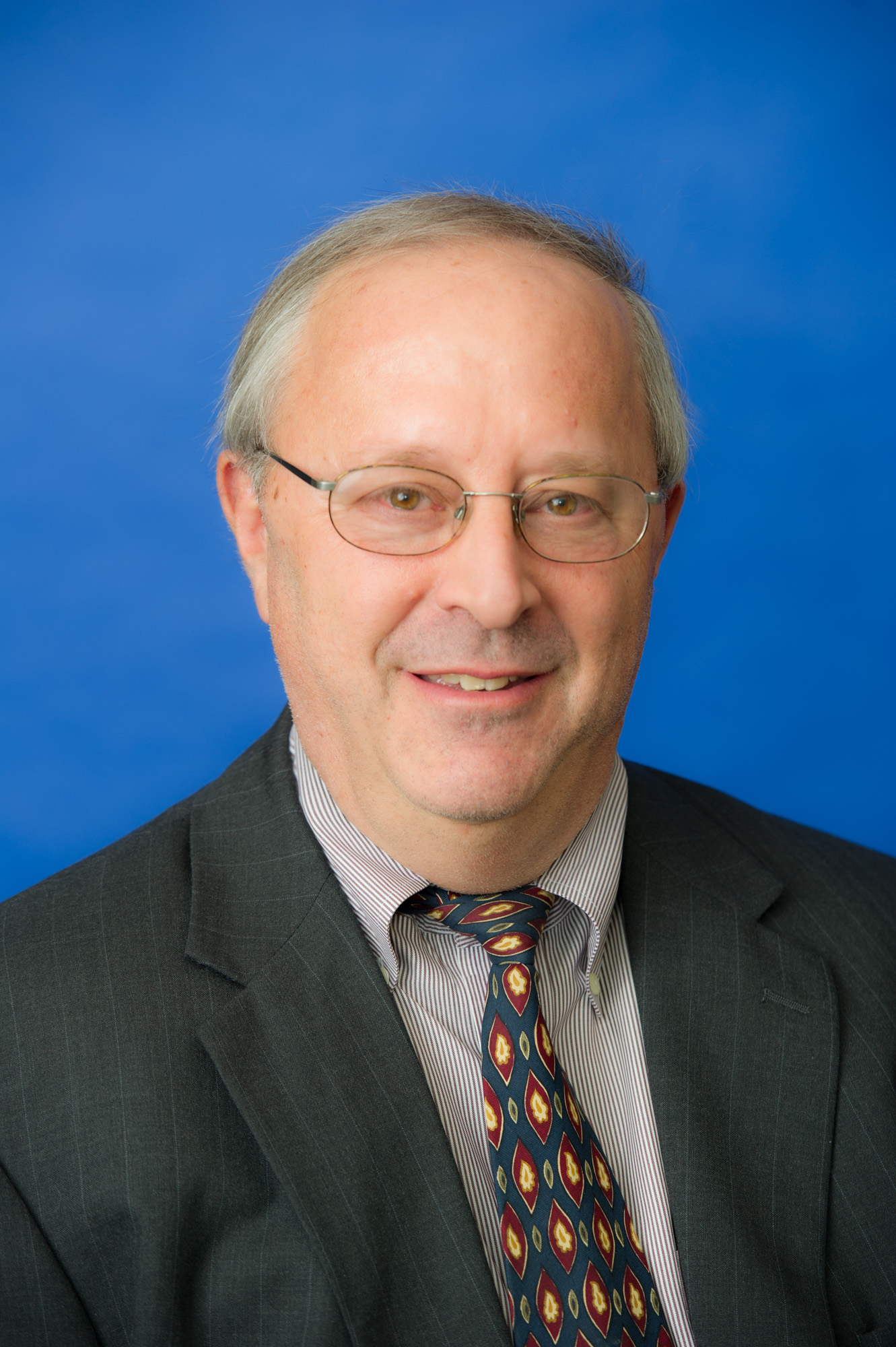
Richard Sokolsky is a nonresident senior fellow in Carnegie’s Russia and Eurasia Program. His work focuses on U.S. policy toward Russia in the wake of the Ukraine crisis.
Carnegie does not take institutional positions on public policy issues; the views represented herein are those of the author(s) and do not necessarily reflect the views of Carnegie, its staff, or its trustees.

Despite a new textbook, an influx of Russian teachers and managers, and an end to the teaching of Ukrainian, the Kremlin is unlikely to have “reprogrammed” locals.

Konstantin Skorkin

The acknowledgment has sparked fears of a new arms race with China and Russia.

Chris O’Meara

Smaller powers cannot go it alone, but Canadian history shows that integration with the United States will not always be benign.
Paul Samson

The European Commissioner for Trade is headed to China. But after President Xi’s bridge-building visit to Washington, can a more isolated EU overcome Beijing’s stranglehold on critical raw materials? Who will blink first?

Rym Momtaz, ed.
The summit may be remembered as a fatal blunder, when Washington, Beijing, and the AI industry collectively chose ceremony over action.
Jeffrey Prescott