Source: Washington Post
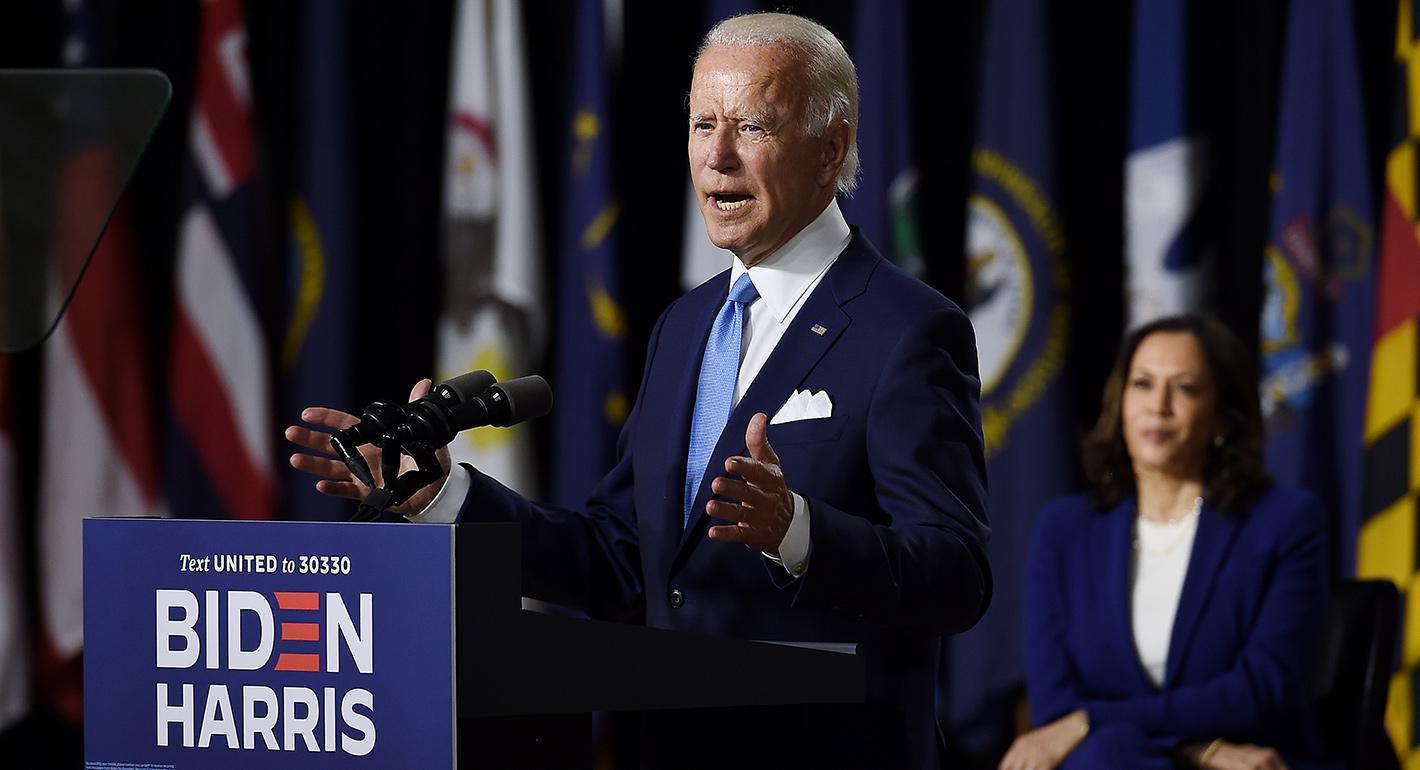
Earlier this year, former vice president Joe Biden wrote about his foreign policy goals — should he win election as president — including his intent to “organize and host a global Summit for Democracy to renew the spirit and shared purpose of the nations of the free world.” In a speech last month, Secretary of State Mike Pompeo said, “Maybe it’s time for a new grouping of like-minded nations, a new alliance of democracies.”
For Pompeo, the idea was built into talking points probably meant to bash and isolate China and its leaders. For Biden, it has long been a central component of his view that the United States must take affirmative steps to reclaim the mantle of global leadership forfeited by President Trump.
That they’re both attracted to the idea is understandable: In theory, an alliance of democracies can expand freedom around the world and cooperate on solutions to some of the most challenging global and regional problems. Cobbling together a brand-new alliance of democracies looks good on paper. But in practice, creation of a new Club Democracy would be counterproductive because it would create another fault line between the United States and rival countries who would not qualify for membership but whose cooperation would be necessary to address some of the international system’s most formidable challenges. To advance American interests, Washington and its democratic partners will need to find a way to work productively with these countries even if they are not democratic and don’t respect human rights.
Two decades ago, under the leadership of former secretary of state Madeleine Albright, the Community of Democracies was formed with a mandate to strengthen democratic institutions, advance common democratic values and standards, and promote cooperation in supporting new and emerging democratic societies. Its primary focus was not tackling the most serious global problems, in part because progress on climate change, improving global trade, reducing proliferation of weapons of mass destruction and combating international terrorism all require cooperation and accommodation with governments that aren’t democracies — you can’t take on a global pandemic, for instance, without Russia and China. As Brookings scholar Theodore J. Piccone observed in a 2008 report on the efficacy of the Community of Democracies, “If the world’s democracies have so much trouble finding common ground in promoting democracy and human rights, then surely there is little hope for a more ambitious agenda of cooperation, particularly on issues that by their nature require the cooperation of non-democracies.”
Convening fellow democracies with the United States “at the head of the table” — as Biden suggests — might help reassert American global leadership post-Trump and create greater leverage to defuse crises and solve problems. But the unipolar moment, with America as the sole indispensable power, is over. So, too, is the notion that democracies alone are the key players on the chess board, who can and will change the political orders of powerful countries that see democracy as an existential threat to regime survival. And any strategy for taking on the world’s most complicated challenges requires a recognition of this shift.
To have any chance of stabilizing Syria, the United States and its democratic allies will need to talk to Russia, Iran, Turkey and Syria’s ruling regime. If a Biden administration expects to cut a new nuclear deal with Iran, Moscow and Beijing will have to be on board. To have any hope of concluding an arms control agreement with North Korea, American diplomats will need to keep their bags packed for Beijing, Moscow and Pyongyang. If a Biden administration wants to put serious negotiations back on track for a two-state solution between Israel and the Palestinians, it can hold repressive governments in Saudi Arabia and Egypt to account for their anti-democratic policies, but will need to engage them, too.
The same is true for other daunting foreign policy challenges. There are millions of refugees around the world who need humanitarian relief and longer-term economic assistance. Delivery of this aid in many areas will not be possible without the cooperation of countries such as Syria, or with nonstate actors like the Houthi insurgency in Yemen, that do not meet U.S. democratic standards. Likewise, how can any measurable progress be made on climate change without cooperation from China, Brazil and an increasingly undemocratic India?
As coalitions such as the Group of Seven and NATO have demonstrated, democratic alliances have appeal and value. Democracies are best equipped to provide security, prosperity and protection of individual rights. But that doesn’t mean that shared values guarantee an inevitable alignment of interests, or that the world’s democracies are begging to be led by the United States. The open international economy has been severely damaged by the trade and anti-globalization policies of the Trump administration. The rhetoric and style of a Biden administration would be less inflammatory than its predecessor’s, but its trade policies still might lean toward greater protectionism, making it more difficult to restore American leadership on this issue.
Geography, political culture, security, history and economics play key roles, too, in producing conflicting interests in the democratic camp. History is replete with examples of discord among democracies: from tensions between the United States, France, Britain and Israel resulting from the 1956 Suez crisis; to America caught between Britain and Argentina over the status of the Falkland Islands; to French opposition to the U.S. invasion of Iraq. Where you stand in the world has a good deal to do with where you sit. And this invariably leads to different politics, calculations and interests, even among the closest of friends. Trump’s overall approach to foreign relations is clearly an aberration. But our allies now question whether America remains as committed to democratic values and is fit to lead.
A Biden administration might be in a position to repair much of this damage. But given Biden’s domestic priorities and other foreign policy challenges, the idea of assembling a functional and durable organization of the world’s democracies to do what he wants — “to strengthen our democratic institution, honestly confront nations that are backsliding, and forge a common agenda” — seems like a tall order because of the diversity of views that are likely to exist even among mostly like-minded democratic governments, including on how to engage with the globe’s more troublesome actors. And because few nations, including the United States, will have the will, skill, time or resources during a global pandemic to fulfill the mandate of the alliance of democracies Biden wants to create.
It is no longer America’s world. If our foreign policy going forward is going to advance our goals, it means that leaders on both sides of the political aisle will have to acknowledge that diplomacy isn’t just about working with our democratic friends, but engaging our nondemocratic adversaries, too.
This article was originally published by the Washington Post.