

Commentary
H. A. Hellyer
{
  "authors": [
    "H. A. Hellyer"
  ],
  "type": "legacyinthemedia",
  "centerAffiliationAll": "dc",
  "centers": [
    "Carnegie Endowment for International Peace"
  ],
  "collections": [],
  "englishNewsletterAll": "menaTransitions",
  "nonEnglishNewsletterAll": "",
  "primaryCenter": "Carnegie Endowment for International Peace",
  "programAffiliation": "MEP",
  "programs": [
    "Middle East"
  ],
  "projects": [],
  "regions": [
    "Middle East",
    "Western Europe",
    "United Kingdom",
    "France",
    "Germany"
  ],
  "topics": [
    "Political Reform",
    "Democracy",
    "Religion"
  ]
}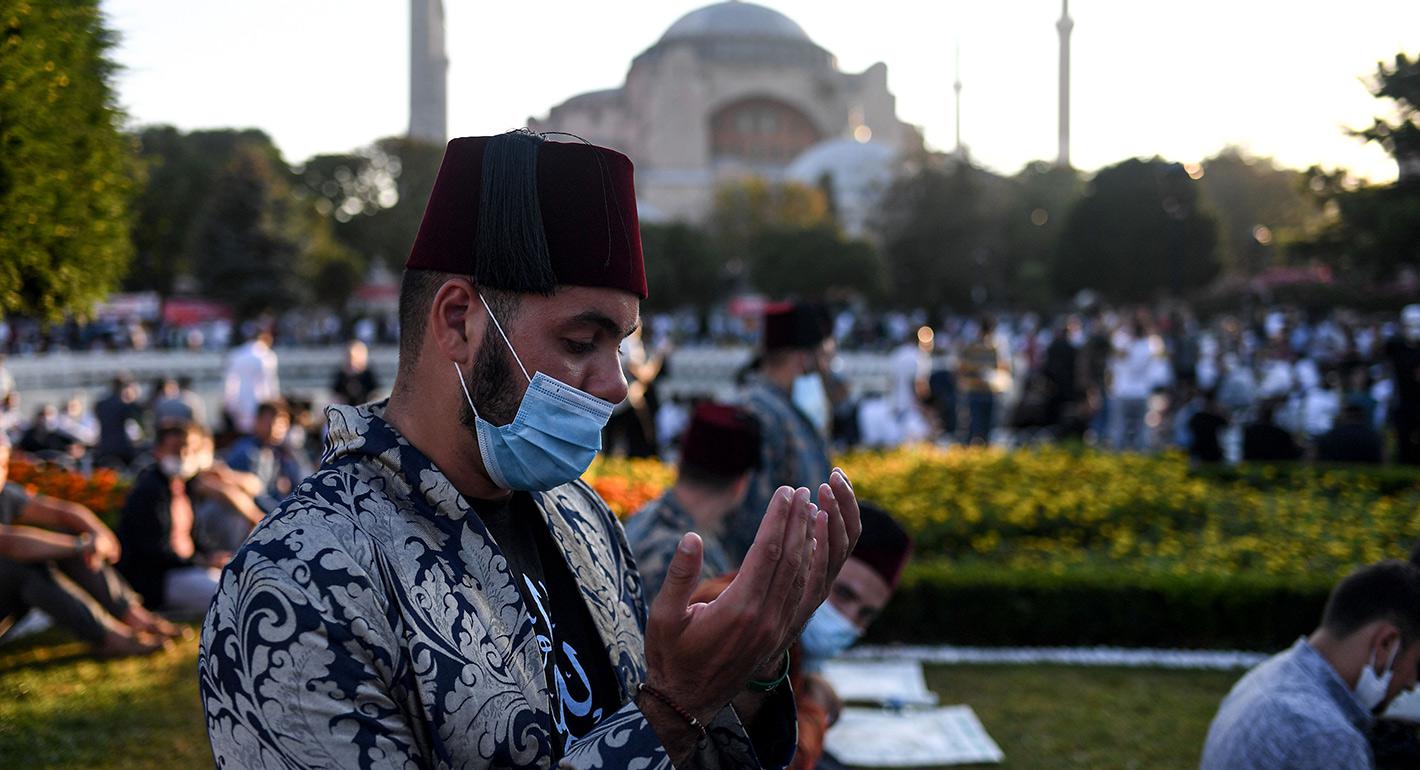
Source: Getty
There is a deepening of anti-Muslim bigotry in some pockets within Europe's mainstream institutions. This is of concern to anyone who considers pluralism to be a worthy value, not just in Europe. It is not clear that those who do are increasing in number.
Source: National
“I cannot accept that someone comes to participate in our work at the National Assembly wearing a hijab,” said Anne-Christine Lang, a member of France’s parliament earlier this month. Ms Lang then led a walkout to protest the presence of a Muslim lady in a headscarf (hijab) in the institution. This is not an isolated incident.
Rather, it is the latest deepening of anti-Muslim bigotry in some pockets within Europe's mainstream institutions. This is of concern to anyone who considers pluralism to be a worthy value, not just in Europe. It is not clear that those who do are increasing in number.
Former Nonresident Scholar, Middle East Program
Dr. H.A. Hellyer was a nonresident scholar at the Carnegie Endowment for International Peace. He serves as a senior associate fellow at the Royal United Services Institute for Defence and Security Studies in London, and as a Cambridge University fellow.
Recent Work
H. A. Hellyer
H. A. Hellyer
Carnegie does not take institutional positions on public policy issues; the views represented herein are those of the author(s) and do not necessarily reflect the views of Carnegie, its staff, or its trustees.

If the Russian-speaking community in Latvia cannot articulate their interests without being seen as disloyal, they could end up embracing a pro-Kremlin agenda.

Sergejs Potapkins

Are Germany’s economic, industrial, and political struggles becoming a liability for the EU’s ability to rise to the geopolitical moment?

Rym Momtaz, ed.

Russia’s ruling party would have benefited from Putin appearing as its distant patron, but as an active frontman imposing his views on the public, he has done nothing but harm both the party’s election campaign and the ruling system overall.

Andrey Pertsev
Despite myriad challenges and occasional stumbles, the new Hungarian government is moving ahead with energy and conviction to uproot years of illiberalism and corruption and rebuild Hungarian democracy.

Thomas Carothers
Understanding the climatic pain points is necessary for policymakers hoping to minimize the war’s negative environmental consequences.



Alejandro Martin Rodriguez, Joy Arkeh, Sarah Yerkes