• Research
  • Emissary
  • About
  • Experts
Carnegie Global logoCarnegie lettermark logo
DemocracyIran
  • Donate
{
  "authors": [
    "Milan Vaishnav"
  ],
  "type": "legacyinthemedia",
  "centerAffiliationAll": "dc",
  "centers": [
    "Carnegie Endowment for International Peace"
  ],
  "collections": [],
  "englishNewsletterAll": "democracy",
  "nonEnglishNewsletterAll": "",
  "primaryCenter": "Carnegie Endowment for International Peace",
  "programAffiliation": "DCG",
  "programs": [
    "Democracy, Conflict, and Governance",
    "South Asia"
  ],
  "projects": [],
  "regions": [
    "South Asia",
    "India"
  ],
  "topics": [
    "Political Reform",
    "Democracy"
  ]
}
REQUIRED IMAGE

REQUIRED IMAGE

In The Media

Women and Work: How Much Does Measurement Matter?

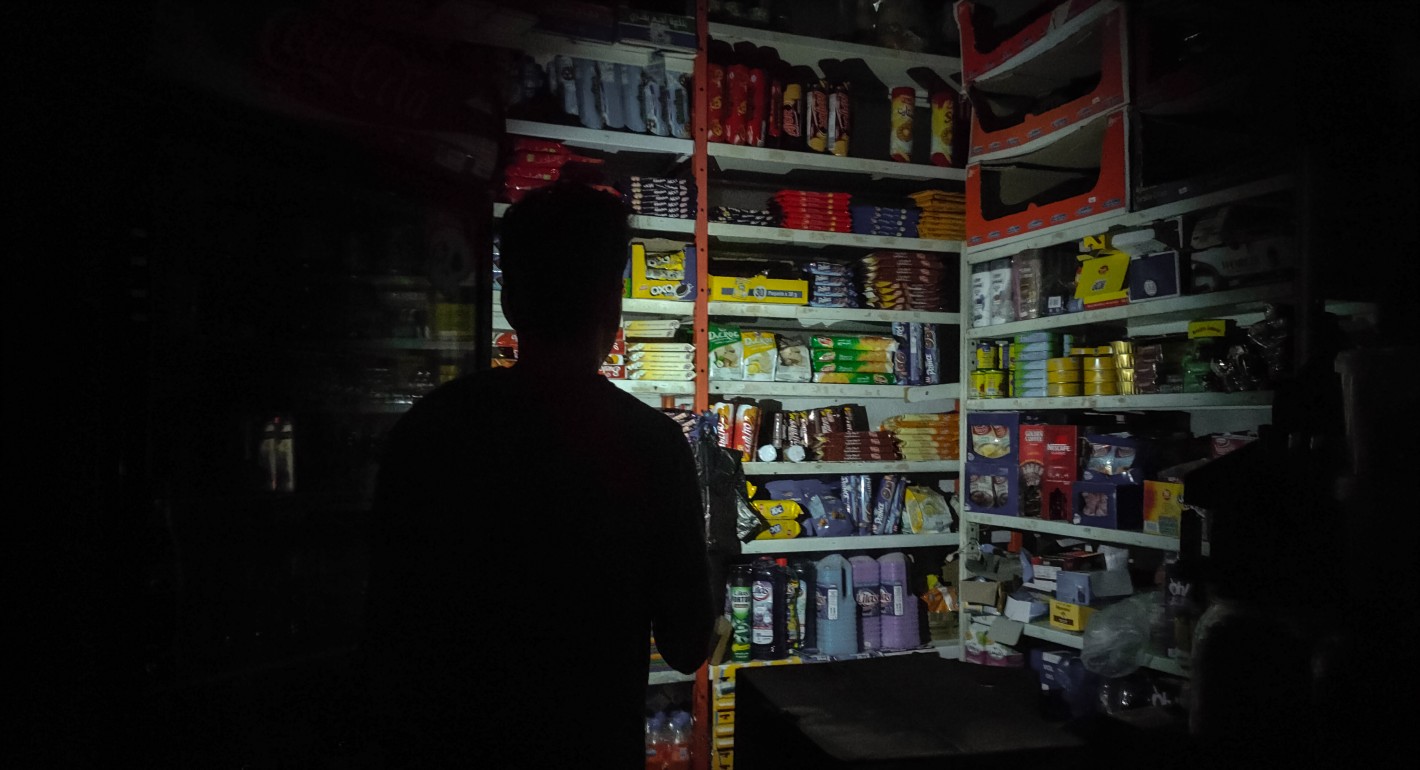
Female labour force participation in India has been on the decline – dropping from an already low 29% in 2004-05 to 17% in 2017-18.

Link Copied
By Milan Vaishnav
Published on May 10, 2021
Program mobile hero image

Program

Democracy, Conflict, and Governance

The Democracy, Conflict, and Governance Program is a leading source of independent policy research, writing, and outreach on global democracy, conflict, and governance. It analyzes and seeks to improve international efforts to reduce democratic backsliding, mitigate conflict and violence, overcome political polarization, promote gender equality, and advance pro-democratic uses of new technologies.

Learn More
Program mobile hero image

Program

South Asia

The South Asia Program informs policy debates relating to the region’s security, economy, and political development. From strategic competition in the Indo-Pacific to India’s internal dynamics and U.S. engagement with the region, the program offers in-depth, rigorous research and analysis on South Asia’s most critical challenges.

Learn More

Ideas For India

About the Author

Milan Vaishnav

Director and Senior Fellow, South Asia Program

Milan Vaishnav is a senior fellow and director of the South Asia Program and the host of the Grand Tamasha podcast at the Carnegie Endowment for International Peace. His primary research focus is the political economy of India, and he examines issues such as corruption and governance, state capacity, federalism, and electoral behavior. He also conducts research on the Indian diaspora.

    Recent Work
  • Commentary
    Carnegie’s Summer Beach Reads
      • Steve Feldstein
      • +8

      Sophia Besch, Eric Ciaramella, Steve Feldstein, …

  • Paper
    Delimitation After Defeat: India’s Unfinished Debate Over Representation
      • Louise Tillin
      • Andy Robaina

      Louise Tillin, Milan Vaishnav, Andy Robaina

Milan Vaishnav
Director and Senior Fellow, South Asia Program
Milan Vaishnav
Political ReformDemocracySouth AsiaIndia

Carnegie does not take institutional positions on public policy issues; the views represented herein are those of the author(s) and do not necessarily reflect the views of Carnegie, its staff, or its trustees.

More Work from Carnegie Endowment for International Peace

  • Commentary
    Carnegie Politika
    Russia Is Approaching a Political Crossroads

    Two divergent trends—Putin’s hardline vision of how to prosecute the war in Ukraine, and a growing desire for change in Russia—could tear the regime apart. 

      Tatiana Stanovaya

  • Commentary
    Carnegie Politika
    Control Above Reform: What’s Behind Ukraine’s Government and Security Reshuffle?

    Ultimately, Zelensky sided neither with the reform camp nor with the military establishment as such, but with political control.

      Balázs Jarábik

  • Article
    India’s Stake in the Global Subsea Cable Race

    The Indian Ocean Region hosts one of the densest concentrations of subsea cables in the world. Yet, despite accounting for a significant share of global internet traffic, India’s participation remains limited.

      Charukeshi Bhatt

  • Commentary
    Carnegie Politika
    Where Are President Tokayev’s Political Reforms Leading Kazakhstan?

    Tokayev’s predecessor, Nursultan Nazarbayev, outlined arrangements for a power transition too soon and in too much detail, ultimately losing control over the process. Tokayev is determined not to meet the same fate.

      Temur Umarov

  • Europe from Scratch: Visions for a New European Order
    Report
    Europe from Scratch: Visions for a New European Order

    As the EU confronts profound challenges, several leaders have called for fundamental reform to the union’s model—but only modest, superficial changes have resulted. What if Europe really could be reimagined from zero today: What should such a redesigned European order look like?

      Richard Youngs, ed.

Get more news and analysis from
Carnegie Endowment for International Peace
Carnegie global logo, stacked
1779 Massachusetts Avenue NWWashington, DC, 20036-2103Phone: 202 483 7600
  • Research
  • Emissary
  • About
  • Experts
  • Donate
  • Programs
  • Events
  • Blogs
  • Podcasts
  • Contact
  • Annual Reports
  • Careers
  • Privacy
  • For Media
  • Government Resources
Get more news and analysis from
Carnegie Endowment for International Peace
© 2026 Carnegie Endowment for International Peace. All rights reserved.