

Paper
Folashadé Soulé, Mawuenyega Makafui Butu, Emmanuel Amoah-Darkwah
{
  "authors": [
    "Folashadé Soulé"
  ],
  "type": "commentary",
  "centerAffiliationAll": "dc",
  "centers": [
    "Carnegie Endowment for International Peace"
  ],
  "collections": [
    "Chart of the Month",
    "Africa’s Shifting Politics and Geopolitics"
  ],
  "englishNewsletterAll": "africa",
  "nonEnglishNewsletterAll": "",
  "primaryCenter": "Carnegie Endowment for International Peace",
  "programAffiliation": "AFP",
  "programs": [
    "Africa"
  ],
  "projects": [],
  "regions": [
    "Southern, Eastern, and Western Africa"
  ],
  "topics": [
    "Economy",
    "Security",
    "Global Governance"
  ]
}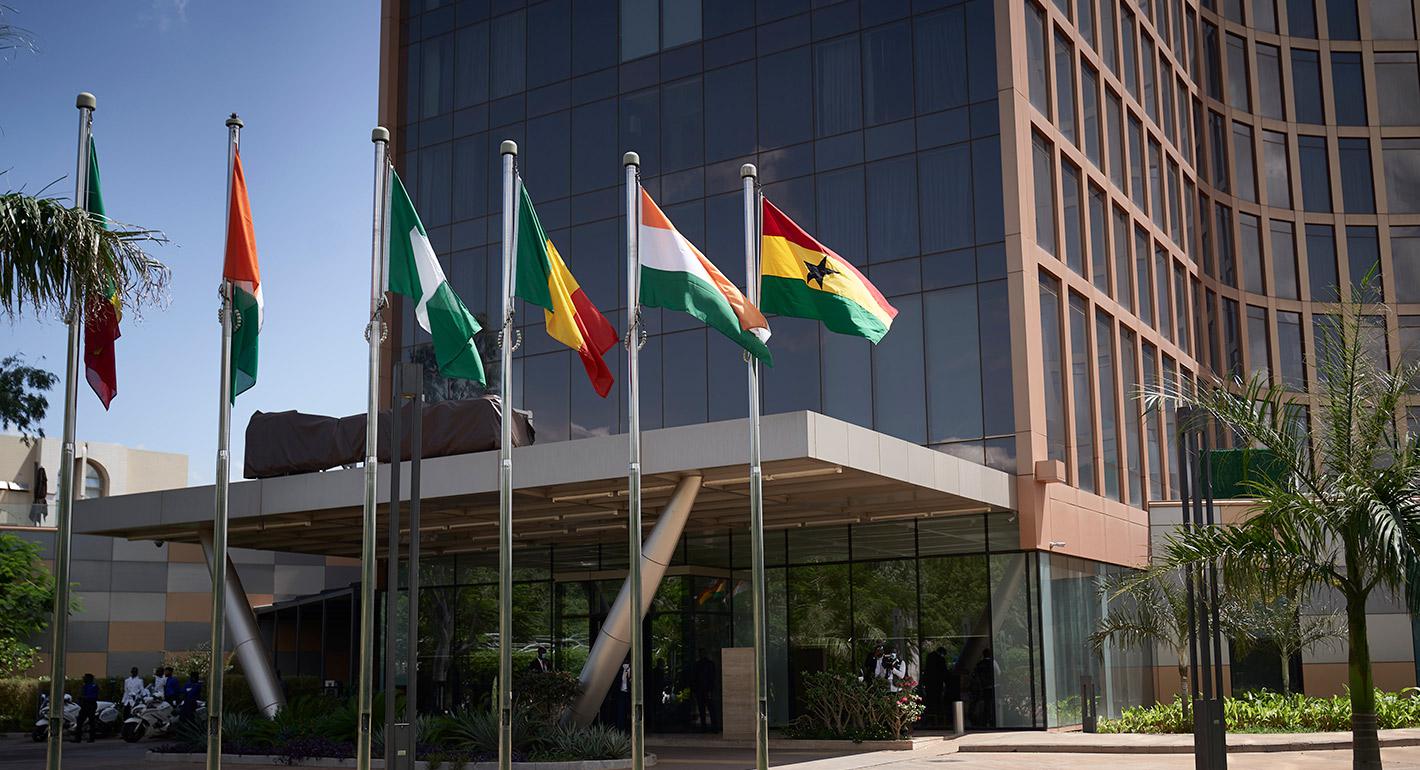
Source: Getty
A closer look at African summitry offers a better understanding of the motives and strategies underlying African leaders’ involvement in these diplomatic exercises and shows how engaging African leaders in these summits could be done in ways that align more with their interests.
Summits often get a bad reputation: critics consider such diplomatic exercises too costly, overly time-consuming, and unable to deliver enough on expectations. Yet the last decade has seen a surge of high-level summits involving African heads of state, ministers, and more recently civil society organizations. As the continent has drawn even more external interest and growing investment flows, high-level meetings that have been dubbed Africa+1 summitry have increased too. This has been the case even though such engagement has been disrupted by the pandemic and tends to be more concentrated in regional hubs like South Africa, Egypt, the Democratic Republic of the Congo, Nigeria, and Ethiopia.
This Africa+1 summitry is often analyzed through the lens of geopolitical rivalry between traditional and new powers reflecting what the Economist called a “new scramble for Africa.” This framing does not sufficiently capture the motives and strategies adopted by the African leaders who attend these meetings. A closer look at the frequency of these summits, the attendance of African leaders, and the financial outputs offers a better understanding of the dynamics at play and why these leaders increasingly engage in Africa+1 summitry.

Many African leaders attend Africa+1 summits. The 2018 Forum on China-Africa Cooperation (FOCAC) was attended by fifty-one African heads of state and governments; the 2021 FOCAC was a ministerial forum—comparable to the forty-three presidents and prime ministers who attended the U.S.-Africa Leaders Summit in 2014 (see figure 1). At the UK-Africa Investment Summit in 2020, there were around fifteen African heads of state and top government officials. Similarly, African attendance at the first Russia-Africa summit in Sochi reached forty-three major African leaders. By comparison, there were twenty-seven African leaders at the UN General Assembly in September 2017 in New York. Forums associated with rising powers like Russia and China are highly attended by African leaders.
This high level of participation by African leaders may not be unconnected to the large financial commitments associated with some summits. In particular, Africa+1 summits with rising powers, such as the 2021 FOCAC ($40 billion in various forms plus 1 billion COVID-19 vaccines) and the India-Africa Forum Summit ($10 billion in concessional credit over five years) were associated with financial commitments including for infrastructure, a sector where the continent is dealing with an important financing gap. The 2014 U.S.-Africa Leaders Summit came with $6 billion in new private-sector money for the Power Africa initiative. Commitments on infrastructure finance, matched in the case of some global powers with speed of execution in terms of construction projects, proves appealing to African leaders keen to deliver on electoral promises to provide infrastructure.
The frequency of the summits is also worth noting. The U.S.-Africa summit (in 2014), UK-Africa summit (in 2020), and Germany’s Compact With Africa Conference (in 2021) meetings have been one-off occasions. Summits with growing partners like China, India, Turkey, and Russia seem to be recurring at regular intervals. Yet nearly thirty France-Africa summits have taken place since 1973 as well as seven meetings of the Tokyo International Conference on African Development with Japan since 1993.
The appeal of Africa+1 summitry can also be linked to many African leaders’ desire to diversify their economies and rosters of external partners as key priorities of their national development strategies. The interest exhibited by rising powers like China, India, Turkey, and the United Arab Emirates offer African leaders a broader spectrum of partners as African countries also compete among themselves to attract investment.
To conclude, a closer look at African summitry offers a better understanding of the motives and strategies underlying African leaders’ involvement in these diplomatic exercises and shows how engaging African leaders in these summits could be done in ways that align more with their interests.
Folashadé Soulé is a senior research associate in the Global Economic Governance Programme at the University of Oxford’s Blavatnik School of Government. Her research areas focus on Africa-China relations, the study of agency in Africa’s international relations, and the politics of South-South cooperation. She was a postdoctoral fellow at the London School of Economics and a recipient of the Oxford-Princeton Global Leaders Fellowship. Her research has been published in several peer-reviewed journals including African Affairs, Global Governance, and Foro Internacional.
Former Nonresident Scholar, Africa Program
Folashadé Soulé was a nonresident scholar in the Carnegie Endowment for International Peace’s Africa Program. She is also a senior research associate at the University of Oxford and a visiting scholar at the University of Ghana.
Recent Work
Folashadé Soulé, Mawuenyega Makafui Butu, Emmanuel Amoah-Darkwah
Carnegie does not take institutional positions on public policy issues; the views represented herein are those of the author(s) and do not necessarily reflect the views of Carnegie, its staff, or its trustees.

Despite public disputes over trade and immigration, the strategic partnership’s foundations remain sturdy.

Sameer Lalwani
It signals a new era of tech diffusion and warfare.

Steve Feldstein

With its public finances in shambles, the far right polling at 35 percent ahead of the 2027 presidential election, and a growing protest movement, is France’s crisis a threat to the EU’s geopolitical awakening?

Rym Momtaz, ed.

International law has a PR problem.



Federica Du Pasquier, Oona A. Hathaway, Stewart Patrick

Russia’s AI-driven propaganda campaigns operate in a fragmented, chaotic, and often illogical manner. That’s not necessarily a problem for the Kremlin, though: It’s much easier to mimic genuine public debate that way.

Ilya Klishin