

Commentary
Andrei Kolesnikov
{
  "authors": [
    "Andrei Kolesnikov"
  ],
  "type": "other",
  "centerAffiliationAll": "dc",
  "centers": [
    "Carnegie Endowment for International Peace",
    "Carnegie Russia Eurasia Center"
  ],
  "collections": [],
  "englishNewsletterAll": "ctw",
  "nonEnglishNewsletterAll": "",
  "primaryCenter": "Carnegie Russia Eurasia Center",
  "programAffiliation": "russia",
  "programs": [
    "Russia and Eurasia"
  ],
  "projects": [],
  "regions": [
    "Russia",
    "Eastern Europe",
    "Ukraine"
  ],
  "topics": [
    "Political Reform"
  ]
}
Source: Getty
It has immersed itself in an anti-utopian delusion.
This article was originally published in Russian in the New Times.
A significant number of those Russians who support Vladimir Putin’s “special military operation” in Ukraine vehemently refuse to listen to any arguments that would challenge their blinkered vision of the world. This is a sign of a society that is no longer authoritarian, but partly totalitarian, and accepts the state position as its own.
Once spoken about in terms of hybrid authoritarianism, Russia later turned out to be a fully mature authoritarian regime. Now, following the evisceration of civil society and civic life in general, including independent media, and following the “special operation”—unprecedented in its negative consequences—there are elements of totalitarianism in Putin’s authoritarian system that can no longer be ignored.
Even before the “special operation,” the sociologist Lev Gudkov defined the system as “recurring totalitarianism,” meaning the regeneration of totalitarian elements that had been briefly paused under the Boris Yeltsin model of governance. What has happened to Russia as a result of Putin’s twenty-two-year rule could be termed “neo-totalitarianism.” However, given the preservation of a range of key elements of authoritarianism, I would propose the term “hybrid totalitarianism” to describe the regime.
In their book, Spin Dictators: The Changing Face of Tyranny in the 21st Century, Daniel Treisman and Sergei Guriev argued that modern dictators rely more on the manipulation of information than on more traditional methods such as repression, especially on a mass scale. This was also true of Putin up to a certain point, but it became clear back in 2020—the year that the Russian constitution was changed to allow him to remain in power beyond his present term, and also the year that the opposition leader Alexei Navalny was poisoned—that his “spin dictatorship” was degenerating into something more uncompromising and repressive. Putin, who retreated to his bunker during the pandemic and has never really left it, has become increasingly embittered and ruthless, as has his system, based on the complete subjugation of the political and economic establishment and the silent assent of the masses.
The silent assent of the majority, according to the sociologist and philosopher Ralf Dahrendorf, is one of the key signs of authoritarianism. Those who refuse to submit, he wrote, are persecuted, silenced, imprisoned, sometimes exiled, but the state, as a rule, no longer kills them.
Those who stay silent together are acting according to a kind of unwritten social contract: the government provides people with a basic level of wellbeing or stability, and ordinary people refrain from interfering in state affairs, or even taking an interest in them.
From 2014, wellbeing was replaced by something akin to “making Russia great again,” but the general public was still required to do one thing only: keep out of the affairs of the elites. Ultimately, however, wherever there is a central thesis about a state’s greatness, there will always be mobilization: in support of the government and the flag, and now, as it turns out, in support of military “feats.”
This is the mobilized model that Dahrendorf called totalitarian: when regimes use complete mobilization of each and every person in the name of some kind of ideology, and in the interests of the leader, or a small ruling clique. War, the German-British political scientist observed, is invariably built into this kind of regime as the inevitable culmination of its development. Of course, mobilization requires artificially provoked crises, which are used to consolidate power.
In the 1950s, Zbigniew Brzezinski and Carl Friedrich devised a theory about totalitarian dictatorship versus autocracy. In their interpretation, the main element of authoritarianism is prohibitions, and understandings of what people must not do, while totalitarianism encompasses both prohibitions and imperatives or prescribed behavior. In other words, subjects have to know not only what they should not do, but also what they should do, at the direct behest of the state. It’s not just repression and control that are important, but also the mobilization of the already submissive masses.
Sure enough, elements of such interaction between the state and society appeared in full force following the start of Russia’s war in Ukraine. It’s no longer enough to keep a demobilized silence; people must trumpet their support for the regime, whether by arranging young children in kindergartens into the shape of the letter Z (the symbol of the “special operation”), holding lessons in schools on combating “fake news” about Russia’s actions, or encouraging students and teachers to denounce each other for any expression of opposition to the war.
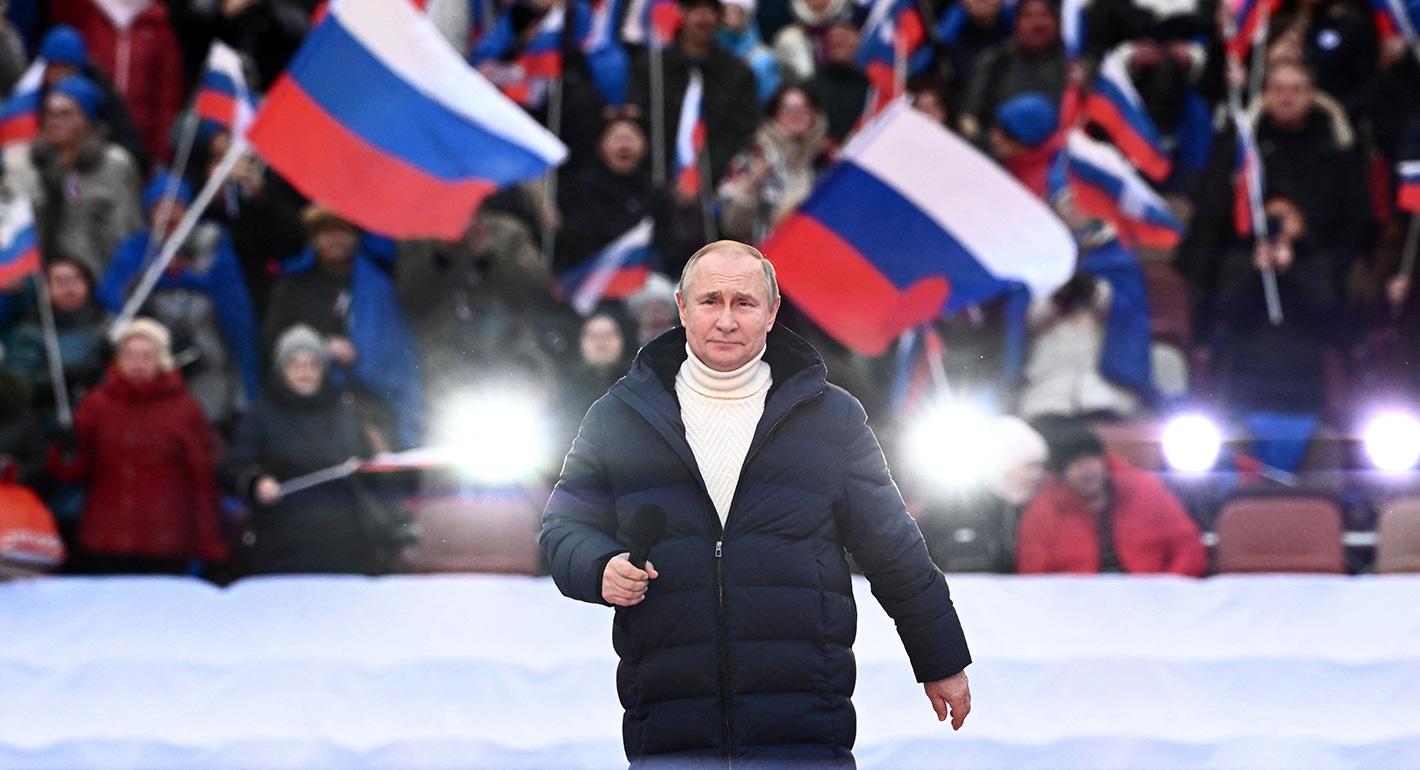
Putin’s public call for a “self-cleansing” of society is a totalitarian practice, rather than authoritarian. So is dividing the population into “patriots” versus “national traitors” or a “fifth column.” In other cases, it’s not enough simply to sit in silent assent; it must be spoken aloud. Loyalty must be demonstrated. This is a sign of a good citizen—or rather, a good subject.
Hatred of the enemy is also required, without motivation and without thinking. This applies not just to the foreign foe, but also to the enemy within. A totalitarian system cultivates a love for violence against its enemies, and looks for justification in historical examples. This partly explains why in the modern Russian public consciousness, Stalin has in recent years been transformed into a positive figure.
An (anti)culture of hatred toward everything declared alien justifies the comprehensive purging of civil society and the public sphere in general: from this stems the complete block on independent media, the destruction of reputable educational organizations, and the ban on work by any foreign research structures. All authoritarian legislation rests on this culture of hatred and intolerance, including the much-used law designating organizations and even individuals as “foreign agents.”
This culture of hatred is expressed through the language of hatred. The problem is that in a society gripped by aggressive submission, the discussion gets broader and broader. You can call your compatriot—a fellow citizen, but one who happens to have a different opinion—a “traitor” and consider them an inferior kind of person. You can, like the most senior state officials, speculate freely and quite calmly on the prospects of nuclear war: something that was certainly never permitted in Soviet times during Pax Atomica, when the two sides understood that the ensuing damage was completely unthinkable. Now that understanding is waning, and that is yet another sign of the anthropological disaster Russia is facing.
It was only through sheer good fortune that a nuclear crisis was avoided during the occupation of the Chernobyl nuclear power plant by Russian troops. The people who contrived to dig trenches in a radioactive zone are being taught non-existent lessons from a non-existent history by Putin, but don’t know the real lessons of history, not even from Chernobyl.
Totalitarian practices are self-destructive. They reduce the quality of human capital, because the best people are hunted down, while the worst are promoted, resulting in negative selection. They facilitate the deterioration of the economy. But imagined political expedience is put above socio-economic rationality.
The presence of the state in Russia is enormous everywhere, not just in the economy. But economically, the dependence of millions of people on the state as their employer and, effectively, an ATM, is an additional factor in keeping workers subjugated. Economic dependence engenders political dependence.
Meanwhile, the state—forced in turn to maintain high budget revenues in order to buy the political loyalty of the majority—is dependent on oil. Oil and gas have made their own invaluable contribution to the evolution of the political and ideological system of Putin’s Russia. Dutch disease is also, it turns out, a political disease. Back in the 1970s, the former Venezuelan oil minister and OPEC co-founder Juan Pablo Perez Alfonzo warned: “Ten years from now, twenty years from now, you will see: oil will bring us ruin.” That is exactly what happened, only the economic collapse is also accompanied by political degradation.
One final sign of totalitarianism is self-isolation and false beliefs about a country’s ability in the modern world to live solely by its own means, eschewing anything foreign. Russia is no stranger to such thinking: Stalinist ideology claimed Soviet/Russian superiority in everything, from the invention of the radio to cultural achievements.
Russia has immersed itself in an anti-utopian delusion. This truly is “recurring totalitarianism,” but it has elements and properties that are difficult to explain, given that the country does, after all, now have some idea of what political democracy, a civic culture and market economy, and rights and freedoms look like.
One important question is how long this aggressively conformist mood can be sustained—and indeed the hybrid regime itself, given that it relies on bayonets, police batons, and orders from the Justice Ministry and communications regulator. From the inside, the current situation seems not only hopeless, but irrevocable. History has shown, however, that totalitarian regimes are inefficient, and that their rulers are capable of hacking away at the very pillars supporting them. This won’t help the Russian people, but it’s a case, unfortunately, of us having proven the most banal and trite political truth: that every nation has the government it deserves.
Whether or not Russia deserves better than this recurring totalitarianism remains for us to prove in the coming years.
Former Senior Fellow, Carnegie Russia Eurasia Center
Kolesnikov was a senior fellow at the Carnegie Russia Eurasia Center.
Recent Work
Andrei Kolesnikov
Andrei Kolesnikov
Carnegie does not take institutional positions on public policy issues; the views represented herein are those of the author(s) and do not necessarily reflect the views of Carnegie, its staff, or its trustees.
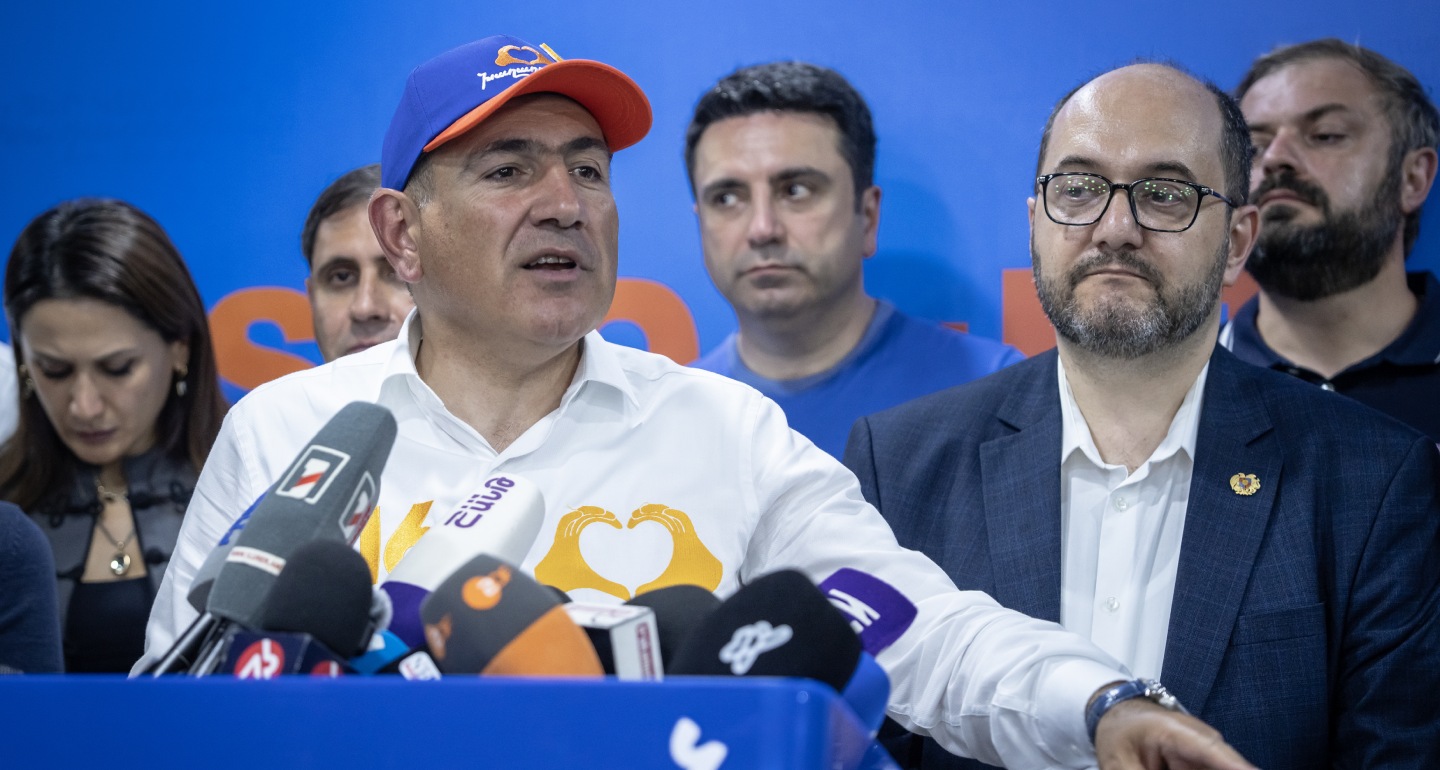
Pashinyan’s pro-European party has been re-elected with a decisive victory. But the pro-Russian opposition could still slow Armenia’s progress toward peace with Azerbaijan and rapprochement with Europe.
Mikayel Zolyan
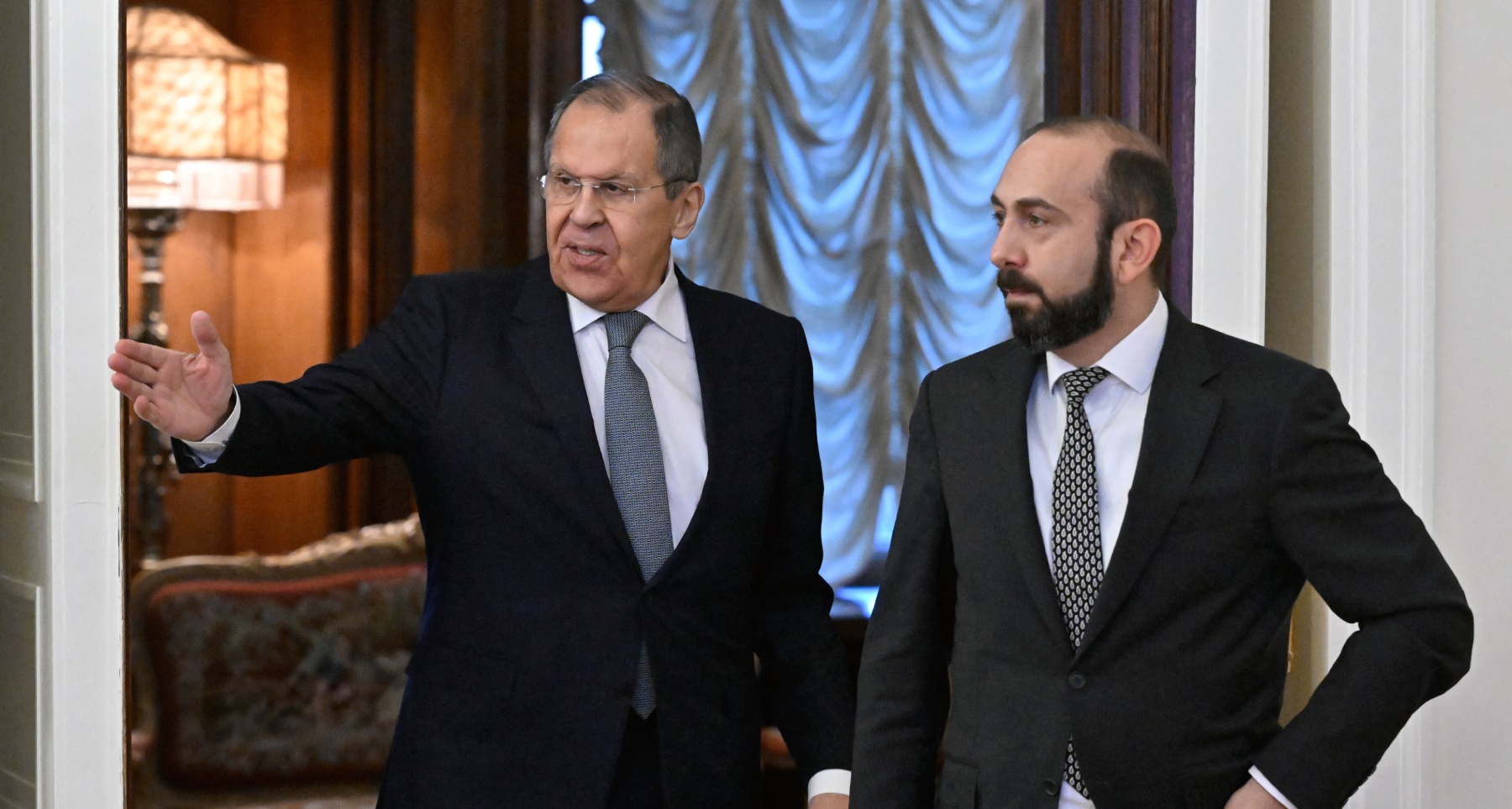
For all the menacing rhetoric, the Armenian prime minister remains a leader with whom Putin is prepared to interact: not as an ally, but as a partner, albeit a problematic one.
Alexander Atasuntsev
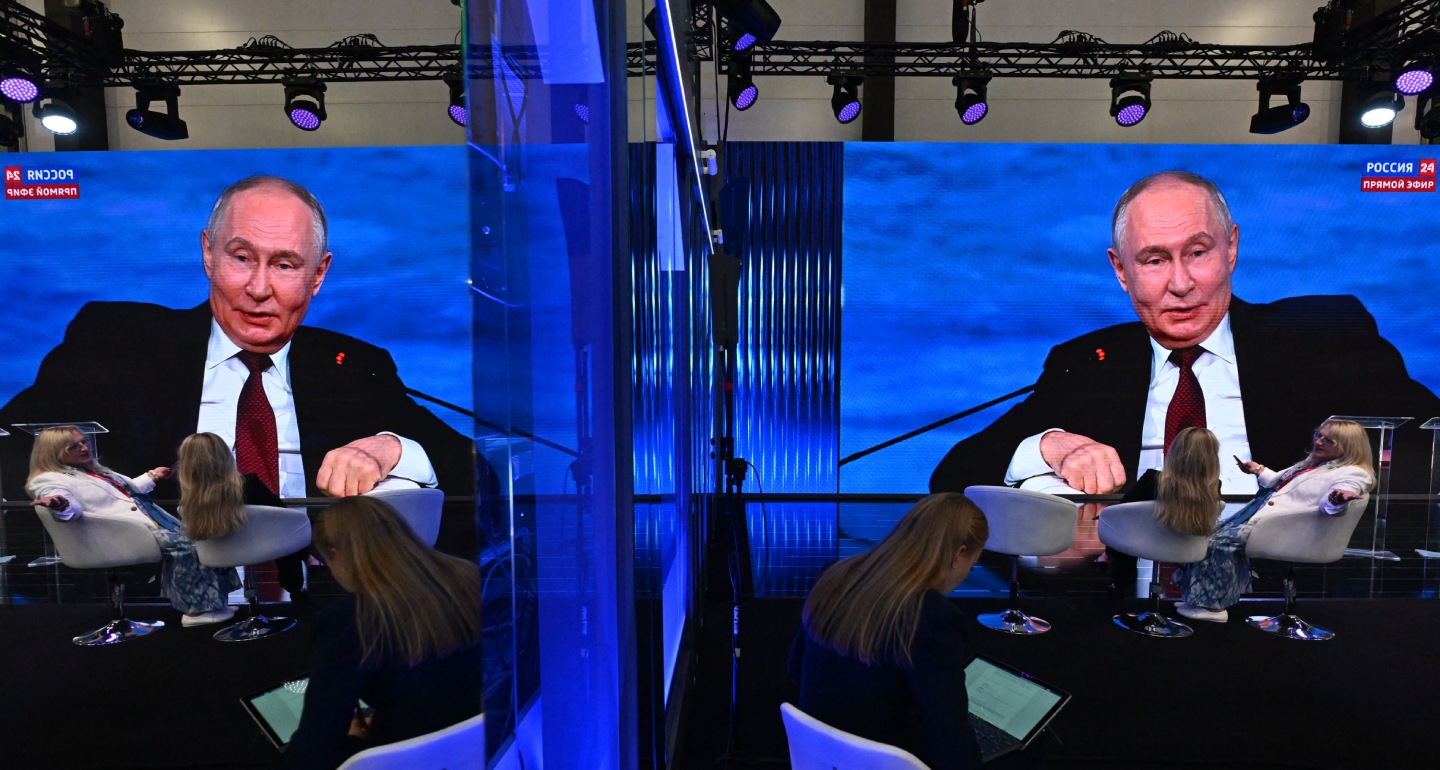
The issue is not that the president only has selective information at his disposal, but that the decision-making process consists of one person with an unshakeable vision of how the world works.

Tatiana Stanovaya
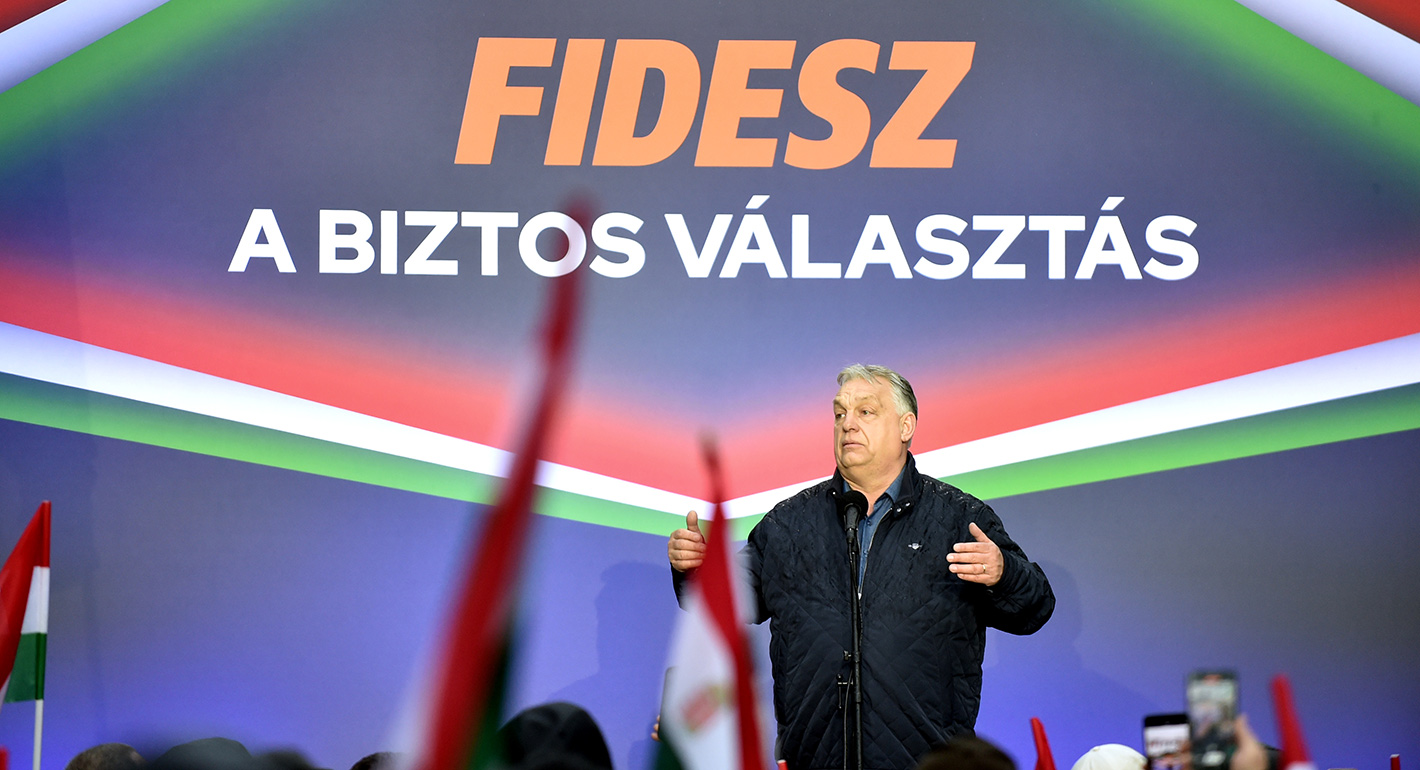
Hungary under Viktor Orbán deployed right-wing populism as a foreign policy strategy, embedding the country in a web of illiberal transnational networks whose legacy will endure even after his April 2026 electoral defeat.
Zsuzsanna Végh
By fueling the arguments of both supporters and opponents of Armenian Prime Minister Nikol Pashinyan, Azerbaijan wants to ensure he is re-elected with a weaker mandate.

Bashir Kitachaev