

Paper
The U.S. midterm elections signal the opening of a narrow window for bold Saudi diplomacy on Palestine.
Andrew Leber, Zaha Hassan
{
  "authors": [
    "Shibani Mehta",
    "Saheb Singh Chadha"
  ],
  "type": "commentary",
  "centerAffiliationAll": "",
  "centers": [
    "Carnegie Endowment for International Peace",
    "Carnegie India"
  ],
  "collections": [],
  "englishNewsletterAll": "",
  "nonEnglishNewsletterAll": "",
  "primaryCenter": "Carnegie India",
  "programAffiliation": "",
  "programs": [],
  "projects": [
    "Security Studies"
  ],
  "regions": [
    "South Asia",
    "India",
    "East Asia",
    "China"
  ],
  "topics": [
    "Foreign Policy",
    "Security",
    "Military"
  ]
}
Source: Getty
It also speaks to Beijing’s concerns that extend beyond the Russia-Ukraine war.
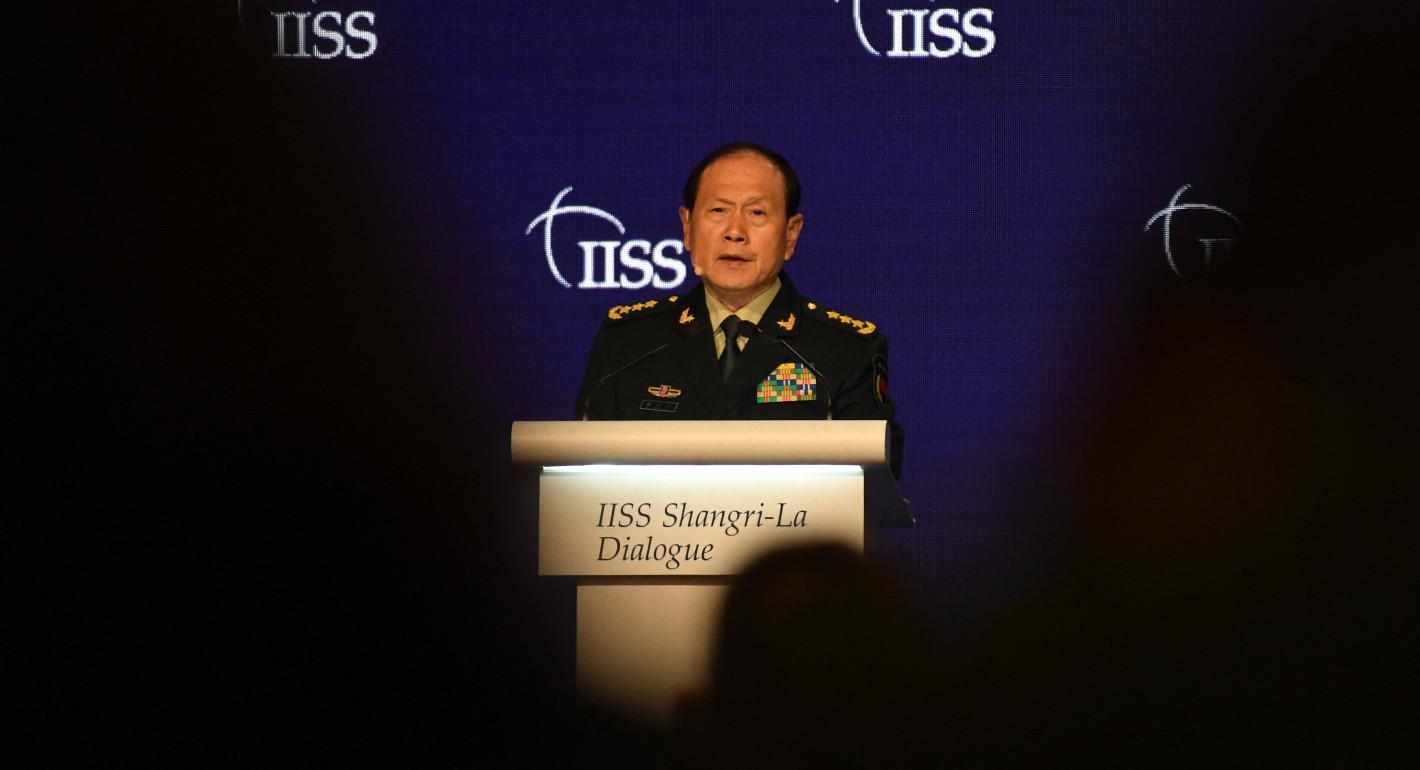
In April, Chinese President Xi Jinping unveiled a Global Security Initiative (GSI) that he claimed would resolve the global security dilemma by opposing a country’s pursuit of its own security at the cost of others’. In his speech, Xi emphasised the need for “common, comprehensive, cooperative and sustainable” security that rejected Cold War thinking and upheld the principle of “indivisible security.” This vision was reiterated by Chinese Defense Minister Wei Fenghe at the Shangri-La Dialogue, Asia’s premier defense summit, in June. Most reactions to the announcement labeled it as an immediate rebuke to the West’s coordinated sanctions on Russia for its invasion of Ukraine. However, this view overlooks how the initiative is China’s sustained attempt to place itself at the center of agenda-setting and dictating the rules of engagement in the Asia-Pacific.
Statements made following the announcement make clear that the GSI builds on a security vision that China has been evolving for the past decade. Chinese Foreign Minister Wang Yi noted that several security challenges have created a peace deficit in the Asia-Pacific, and China has consistently opposed exclusive “small cliques,” such as AUKUS and the Quad, that could lead to confrontation and threaten China’s interests in the region. Security, Beijing has realized, will play a key role in forming and sustaining partnerships and expanding its influence. India, which sees itself as a net provider of security in the Indian Ocean region, should anticipate a fortified Chinese component in its neighborhood’s security apparatus.
Beijing also cites two key events to bolster its argument for the initiative. First, it says that the “wanton use of unilateral sanctions” against Russia transformed a “regional crisis into a global one.” Second, it believes that the resurgence of extremist groups following the Taliban’s takeover of Afghanistan in August 2021 risks spilling over into China’s Xinjiang region and other parts of its western periphery. Chinese leaders have consistently highlighted these issues at regional security forums, such as the Conference on Interaction and Confidence Building Measures in Asia and the Shanghai Cooperation Organization, elevating the relevance of these challenges for all players.
The guiding principles of the GSI also speak to concerns that extend beyond the Russia-Ukraine war. First, multilateralism and what China sees as the UN-centered international system will be at the front of the pursuit of international security—a rejection of small circles such as the Quad. Second, maintaining dialogue geared toward peace and the joint pursuit of political solutions for hot-spot issues such as Afghanistan are key. Major countries play a special role in this dialogue process, and they must be “anchors of peace instead of fire bellows in the likelihood of conflicts,” China’s foreign minister noted. Third, the pursuit of international security under the GSI will extend to nontraditional challenges such as COVID-19 and threats from non-state actors. The rules of governance around maritime security, the polar regions, space, and cyberspace will also need to be improved. Fourth, development must be pursued in tandem with security. Finally, a new regional security architecture needs to be built to protect peace and stability in Asia. This would spotlight mutual respect, account for the diversity of Asian countries, and accommodate the interests of all parties—an alternative to, as well as a rejection of, the West’s Indo-Pacific strategy and the “attempt to piece together an Asia-Pacific version of NATO.”
In addition, the GSI is not detached from China’s strategic objectives, which have been guided by Xi’s thinking on regional security since 2013. It comes on the back of three significant initiatives: the Belt and Road Initiative (2013), the Health Silk Road (2017), and the Global Development Initiative (2021). These four efforts are aimed at specific global challenges such as connectivity and healthcare, but, taken together, they constitute a package that aims to achieve and sustain security at a greater scale.
Further signifying that China’s thinking on regional security policy was evolving, the State Council Information Office released a white paper in 2017 that stated that “the key to maintaining the long-term stability of the Asia-Pacific region is to build a security framework which is oriented to the future.” The paper acknowledged the centrality of existing frameworks such as the Shanghai Cooperation Organization and clarified that building a security framework “does not mean starting all over again but improving and upgrading the existing mechanisms,” indicating that the GSI is likely to retain whichever features of the present order continue to serve China’s interests.
The GSI highlights China’s attempt to safeguard its national interest through the pursuit of alliances and partnerships. Little is known about how it will be implemented, yet the GSI is already attracting some support, especially from Latin America, where ties with China have previously been defined by economic cooperation and trade. By launching an effort that speaks to stakeholders of an international system that remains influenced by the United States, China is trying to prevent the domination of the Asia-Pacific by others.

Former Senior Research Analyst, Security Studies Program
Shibani Mehta was a senior research analyst with the Security Studies Program at Carnegie India. Her research focuses on the India-China boundary dispute with the purpose of analyzing India’s foreign and security policy decision-making.

Former Senior Research Analyst, Security Studies Program
Saheb Singh Chadha was a senior research analyst in the Security Studies Program at Carnegie India. His research focuses on China’s foreign and security policies, India-China relations, and India’s military modernization.
Carnegie does not take institutional positions on public policy issues; the views represented herein are those of the author(s) and do not necessarily reflect the views of Carnegie, its staff, or its trustees.
The U.S. midterm elections signal the opening of a narrow window for bold Saudi diplomacy on Palestine.

Andrew Leber, Zaha Hassan
A leak of Russian gas price data helps establish that China is paying Russia far less than Central Asian countries and Gazprom’s former European customers.

Sergey Vakulenko

China’s political future will be shaped between now and next October. As the Communist Party enters its intense “campaign season” to prepare for a major political transition in 2027, reading Beijing's actions and responses may become more difficult as domestic politics weigh on its behavior more than usual.

Damien Ma

The EU can impose sanctions but struggles to enforce them without the United States. With Washington increasingly disinterested in backing European interests, the bloc must now fend for itself.


Nicu Popescu, Tiago Antunes
Global and rising powers will need to engage with Africa’s priorities and agency in order to secure the continent’s increasingly attractive partnerships.

Fonteh Akum