

Commentary
The EU can impose sanctions but struggles to enforce them without the United States. With Washington increasingly disinterested in backing European interests, the bloc must now fend for itself.
Nicu Popescu, Tiago Antunes
{
  "authors": [
    "Joshua Shifrinson"
  ],
  "type": "commentary",
  "centerAffiliationAll": "dc",
  "centers": [
    "Carnegie Endowment for International Peace"
  ],
  "collections": [
    "Debating NATO Enlargement",
    "A More Disciplined American Global Leadership"
  ],
  "englishNewsletterAll": "americanStatecraft",
  "nonEnglishNewsletterAll": "",
  "primaryCenter": "Carnegie Endowment for International Peace",
  "programAffiliation": "ASP",
  "programs": [
    "American Statecraft"
  ],
  "projects": [],
  "regions": [
    "North America",
    "United States",
    "Russia",
    "Eastern Europe",
    "Ukraine"
  ],
  "topics": [
    "NATO",
    "Defense"
  ]
}
Source: Getty
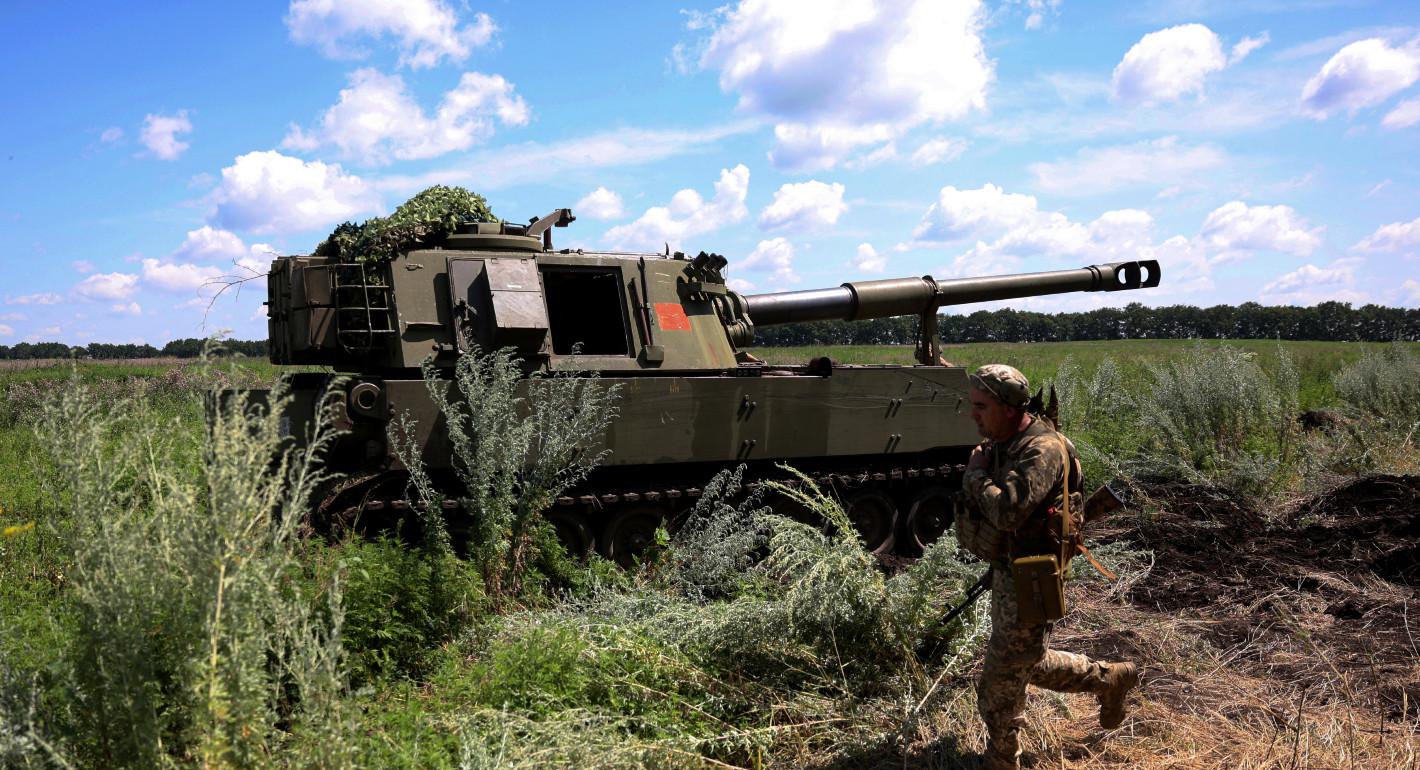
Advocating for Kyiv’s membership doesn’t make sense without addressing Article V guarantee credibility.
In this series from the American Statecraft Program, James Goldgeier and Joshua Shifrinson discuss and debate the issues surrounding NATO enlargement in a twenty-first-century exchange of letters. Read the previous entry here.
Dear Jim,
You argue that only NATO’s Article V guarantee will deter Russia from reinvading Ukraine, while you allow that it won’t be easy to make deterrence work. We differ over whether admitting Ukraine into NATO is in the United States’ interest, but I’d really like to pin you down on what actions NATO would need to take in order to make such an Article V guarantee credible in Moscow’s eyes in the first place. It doesn’t make sense to advocate Ukraine’s admission into NATO without answering that crucial question.
You’ve mentioned that Russia doesn’t want to fight NATO, so perhaps your view is that the sheer disparity in power is enough: NATO is much more powerful than Russia, so Russia won’t attack a NATO-protected Ukraine. I’m not so sure.
If power disparities alone were enough to ensure international success, then Japan would not have attacked Pearl Harbor, the Soviet Union would not have menaced the West during the Cold War, Israel would have little to fear from its regional rivals, and so on. Instead, the sort of deterrence we’re talking about is contingent on the parties and stakes involved. It requires careful calibration of ends and means in light of the parties’ specific interests at stake.
Moscow has shown it cares a lot about what happens in Ukraine, whereas NATO countries have declined to use military force over Ukraine since Russia first invaded the country in 2014. Therefore, NATO would need to take large and costly actions in order to make a pledge to protect Ukraine credible and make deterrence work.
Before the United States and its NATO allies promise to fight and potentially risk nuclear war for Ukraine, they need to determine what this commitment will entail. Is the United States—where only 17 percent of the public favors sending U.S. military forces to fight in Ukraine, according to the latest CNN poll—really prepared to go to war for Ukraine? Are the other allies? Are leaders and citizens willing to escalate to a possible nuclear war on Kyiv’s behalf? If the nuclear option is to be avoided, what forces will need to be stationed in Ukraine for deterrent purposes? Who will provide them? How much will they cost? Are the European allies willing to shoulder meaningful parts of this collective burden, or are they likely to revert to form and cheap-ride on the United States?
Too many advocates of Ukraine joining NATO avoid addressing these necessary questions. We’re past the point where proponents of enlargement can wave their hands about the practicalities, including the costs and risks, of further enlarging the alliance. For too long, Washington has expanded NATO as a political decision (if not an ideological mission) without considering how to see the alliance’s security commitments through operationally. In 2004, NATO admitted the Baltic states into the alliance without even a superficial plan for their defense. It cannot continue down this path. The stakes of a war with Russia are potentially catastrophic. Boosters of NATO enlargement are glossing over core issues when clarity and candor are needed. To treat practicalities and costs as an afterthought deeply disserves the American people, U.S. allies, and countries like Ukraine that have to decide whether to seek NATO membership.
Turning to the role of NATO enlargement in bringing about the current war, you and I aren’t going to see eye to eye, but I want to clarify where each of us stands. As I see it, there are three schools of thought:
Your recent letter invokes positions in several camps. You acknowledge that enlargement contributed to “the deterioration in U.S.-Russia relations,” but also imply Russia would have committed aggression against Eastern Europe if not for NATO enlargement. I’m wondering where you ultimately come down: Did NATO enlargement play little if any role in negatively shaping Russian foreign policy (relative to how Russia would have acted absent enlargement), or did it play a significant role in causing the current crisis (albeit one that, in your view, was worth the price)? Was Burns right or wrong? As I see it, an alliance that deters aggression can, for the same reason, also be perceived as a threat to the goals (no matter how thuggish) of the would-be aggressor. While no single factor determined Russia’s direction, the salient point is that enlargement played a significant role in undermining East-West relations, setting the stage for tension, confrontation, and conflict.
As we continue to consider Ukraine’s relationship with NATO, perhaps we should turn back to the 1990s. I think the mistakes many are making today are rooted in ideas and habits developed in those years. When former president Bill Clinton’s administration formally launched the enlargement process, U.S. officials convinced themselves that expanding the alliance either wouldn’t cause Russia to react harshly or, if it did, would only reveal that Russia was implacably aggressive and needed to be contained. These two positions don’t fit together analytically, but they mesh well politically. As George Kennan warned, the result was a heads-I-win-tails-you-lose logic that generated a self-fulfilling case for enlargement while giving the West license to ignore the costs and risks of expanding too far and ending up in a confrontation with Russia.
Even if you disagree with Kennan’s position, would you agree that U.S. policymakers have long employed wishful thinking to minimize the costs and risks of expanding NATO? If so, what needs to change in terms of how Americans think about and discuss transatlantic relations?
Yours sincerely,
Josh
Read more from Debating NATO Enlargement:
Joshua Shifrinson
Joshua Shifrinson is an associate professor of international policy with the University of Maryland’s School of Public Policy and a nonresident senior fellow with the Cato Institute’s Defense and Foreign Policy program. A graduate of Brandeis University and MIT, he is the author of Rising Titans, Falling Giants: How Great Powers Exploit Power Shifts and co-editor (with Jim Goldgeier) of Evaluating NATO Enlargement: From Cold War Victory to the Russia-Ukraine War.
Carnegie does not take institutional positions on public policy issues; the views represented herein are those of the author(s) and do not necessarily reflect the views of Carnegie, its staff, or its trustees.

The EU can impose sanctions but struggles to enforce them without the United States. With Washington increasingly disinterested in backing European interests, the bloc must now fend for itself.


Nicu Popescu, Tiago Antunes
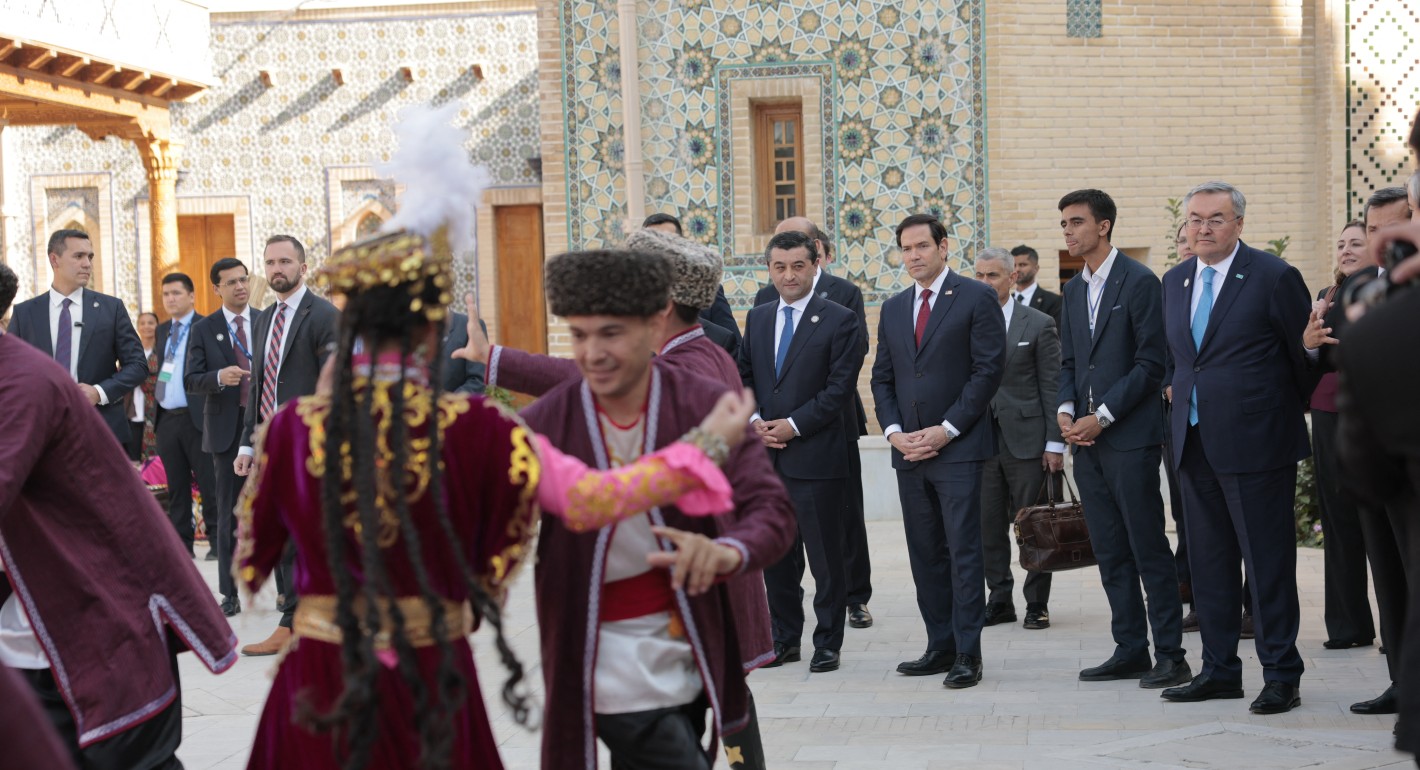
Rubio’s recent visit brought welcome attention, but more capital requires governance changes that may be a hard sell for regional governments.

Jennifer B. Murtazashvili
America’s foreign-policy objectives have grown more demanding while Americans have demanded greater focus on their own affairs.

Stephen Wertheim

Japan’s long-term security policy is driven by concerns about China, and there is little appetite for (or interest in) pursuing a confrontation with Moscow.

James D.J. Brown

Russia is testing the waters of NATO’s mutual defense clause. What do strikes in Romanian territorial waters mean for the alliance’s posture toward Moscow?

Dimitar Bechev