

Commentary
Nur Arafeh
{
  "authors": [
    "Nur Arafeh"
  ],
  "type": "commentary",
  "centerAffiliationAll": "",
  "centers": [
    "Carnegie Endowment for International Peace",
    "Malcolm H. Kerr Carnegie Middle East Center"
  ],
  "collections": [
    "Political Economy Program"
  ],
  "englishNewsletterAll": "",
  "nonEnglishNewsletterAll": "",
  "primaryCenter": "Malcolm H. Kerr Carnegie Middle East Center",
  "programAffiliation": "",
  "programs": [],
  "projects": [
    "Political Economy Program"
  ],
  "regions": [
    "North Africa",
    "Middle East",
    "Levant",
    "Maghreb",
    "Gulf",
    "Lebanon",
    "Egypt",
    "Jordan"
  ],
  "topics": [
    "Economy"
  ]
}
Source: Getty
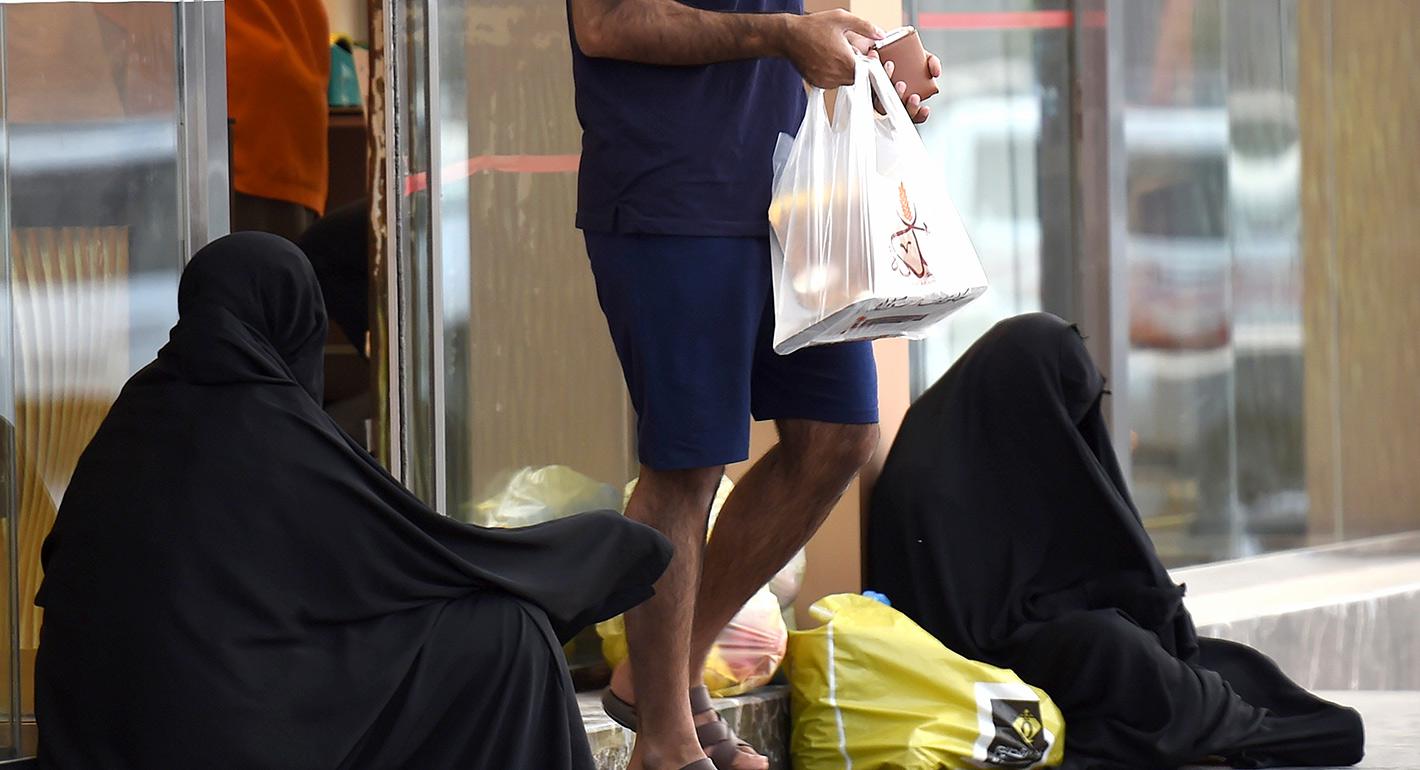
The Middle East and North Africa is characterized by inequalities, and this will have profound consequences for economic growth, social cohesion, and, ultimately, political stability in the region.
Socioeconomic discontent has been rising in several countries of the Middle East and North Africa. In 2019, there was a surge of protests in these countries, including Sudan, Iraq, Lebanon, Morocco, Jordan, and Algeria, which did not experience the Arab uprisings of 2010–2011. Beyond calling for changes in their political systems, protesters demanded a comprehensive overhaul of their economic systems as well, denouncing soaring prices, wealth disparities, elite capture of resources and rent streams, and the absence of economic justice.
The Middle East and North Africa is marked by exceptionally high economic inequality compared to other regions of the world. The COVID-19 pandemic, the war in Ukraine, and the ensuing debt, food and energy crises that hit the region, have further exacerbated socioeconomic disparities. This has left the most vulnerable and marginalized segments of the population struggling to keep up with food shortages, price fluctuations, increases in temperatures due to climate change, water scarcity, land degradation, and limited government spending on public services. Combating inequality has not been a priority of governments in the region. However, it should be, given the implications for economic growth, social cohesion, and the potential to undermine representative institutions and consolidate populist regimes.
The Middle East and North Africa is the most unequal region in the world. A study that sought to measure the extent and evolution of income concentration in the region between 1990 and 2016 found that approximately 64 percent of total income went to the top 10 percent of income earners, compared with 37 percent in Western Europe, 47 percent in the United States, and 55 percent in Brazil. Meanwhile, the bottom 50 percent of the region’s population received only 9 percent of overall income, compared with 18 percent in Europe.
These high levels of income concentration stem from both inequality within countries as well as among countries, especially between the wealthier Gulf Cooperation Council (GCC) states and others with large populations. However, even when the GCC countries are removed from the analysis, inequality levels remain very high, with the top 10 percent of income earners receiving more than 50 percent of total regional income throughout the 1990–2016 period. The income gap is also evident when we look at the Gini coefficient across the Middle East and North Africa, which measures the degree of economic inequality in countries. Between 2015 and 2020, the Gini coefficient remained within the range of 65 to 75 percent across several Arab countries, with 100 percent reflecting maximal inequality.
These trends in inequality have been associated with a shrinking middle class in the region. The size of the middle class began decreasing around 2013 and has fallen below 40 percent in recent years, as countries, especially low- and middle-income countries (LMICs), have been grappling with recurrent debt crises, austerity, rising poverty levels, underfunded public services, an unequal distribution of resources, conflicts, rising economic informality, high unemployment rates, unfair tax systems, and climate change, among other challenges.
These inequalities were further deepened and entrenched during the COVID-19 pandemic, which disproportionately impacted the most vulnerable communities, including the poor, refugees, and those working in the informal sector. As 16 million people were pushed into poverty during the pandemic, raising the total number of impoverished individuals in the region to over 116 million, the poorest half of the population in the Middle East and North Africa saw its wealth fall by a third. The median resident in the region, in turn, saw a decrease in wealth of approximately 28 percent.
Meanwhile, the region’s wealthy increased their control over assets and holdings. They saw a 60 percent increase in their net wealth between 2019 and 2022, while billionaires benefited from a 22 percent increase, reflecting a sharpening of wealth inequality in the Middle East and North Africa following the pandemic.
For example, while Lebanon’s economic and financial collapse since 2019 resulted in 60 percent of its population falling into poverty, the net wealth of the country’s wealthiest people almost doubled between 2020 and 2022. Similarly, while Egypt has been grappling with a debt and cost-of-living crisis, the rich saw their wealth increase by more than half during that period, just like in Jordan. Indeed, according to the UN’s Economic and Social Council for Western Asia, Arab countries accounted for half of the sixteen countries in the world that experienced the most significant rise in wealth inequality in the aftermath of the pandemic.
The extreme level of wealth concentration in the region is underscored by the fact that the combined wealth of the three wealthiest individuals in the region, which amounted to $26.3 billion during the pandemic, surpassed the total wealth of the bottom 222.5 million citizens in the region, which stood at $25.5 billion.
Such high levels of inequality are further compounded by the soaring levels of debt in the region. This is accompanied by shrinking fiscal space, high inflation rates, currency devaluations, and a cost-of-living crisis, which have been characteristic of the Middle East and North Africa (especially LMICs) in the past few years, especially following the outbreak of the conflict in Ukraine.
Addressing inequality should be a primary concern for countries in the region, which have largely overlooked the problem. The reason to prioritize reducing inequality is that it affects social justice, but also because socioeconomic disparities have profound economic, social, and political consequences that will impact the Middle East and North Africa’s long-term development.
Economic inequality is a structural causal driver of global instability and financial crises. It has been proven that it results in unstable and less efficient economic structures that stifle economic growth and people’s participation in the labor market. Since the wealthy, who have a larger share of income, tend to spend a smaller portion of their income than the poor, the uneven distribution of income ends up diminishing aggregate demand and can thus impede economic growth. Economic inequality also undermines poverty-reduction efforts and leads to wasted productive potential and inefficient resource allocation.
On the social front, economic inequality is known for undermining social mobility, leading to the continuation of unequal opportunities from one generation to the next. It also creates poverty traps, whereby individuals at the lower end of the income spectrum become trapped in a cycle of poverty, since the absence of resources leads to further resource constraints.
More specifically in the Middle East and North Africa, the concentration of income and wealth in the hands of a few has led to the emergence of a dual society, where one category of people can access good quality private services such as education, health, and other basic services, while another can only access much lower quality basic services that are usually inadequately provided by the public sector. By creating schisms within society, economic inequality erodes a sense of community, reduces social cohesion, and fuels social tension and conflict, paving the way for societal disintegration, political unrest, and increased human insecurity.
Combatting inequality is also crucial because high economic inequality, with the fractures it creates within the economy and society, has been associated with the emergence of plutonomies—systems in which a small wealthy segment of the population mainly benefits from economic growth. Since the distribution of income and wealth largely determines the distribution of power in political systems, this leads to two outcomes. First, it results in a vicious cycle, where economic inequality leads to political inequality, allowing the wealthy to use their political power to entrench their economic interests in social institutions and protect their status, which only further reinforces economic inequalities. This is sometimes referred to as an “inequality trap,” which prevents the wealthy from slipping down the socioeconomic ladder while simultaneously impeding the upward mobility of the impoverished.
A second result is that political inequality, at a time when economic disparities are more pronounced, increasingly jeopardizes representative institutions and erodes trust in public institutions. Indeed, several studies have shown that economic inequality tends to strengthen autocratic power and is one of the key factors behind popular discontent and rising populism in the world. Accordingly, one could hypothesize that in the Middle East and North Africa, rising inequality could be a driving factor behind the surge of strongman politics and the growing success of populist figures who capitalize on public resentment and frustration.
Without effective policies, the current high levels of inequality will not only persist but will very probably increase further. Climate change is likely to exacerbate this trend, as it will disproportionally affect the poor and most vulnerable, who will bear the brunt of rising temperatures, land degradation, and problems related to food availability and prices. Artificial intelligence, emerging digital technologies, and automation could also aggravate inequality, as they might disproportionately increase the earnings of high-income workers and owners of capital.
Therefore, it is of the utmost urgency to tackle inequality in the region by undertaking serious structural reforms rooted in the pursuit of economic justice. An urgent reform, among many others, involves expanding fiscal space and enhancing domestic resource mobilization, largely by widening the tax base and making the tax system more progressive to ensure a fairer tax structure. The diversification of government financing sources would allow the public sector to increase spending on social security, social assistance, and education, which would be crucial to improving social welfare and combating the different dimensions of inequality.
Without such reforms, and amid continuing government disregard for the problem of inequality, a significant crisis looms on the region’s horizon.
This work is licensed under a Creative Commons Attribution 4.0 International License. For more details regarding the license deed, please visit: CC BY 4.0 Deed | Attribution 4.0 International | Creative Commons.
Former Nonresident Scholar, Malcolm H. Kerr Carnegie Middle East Center
Nur Arafeh is a senior fellow and head of the Political Economy Program at the Arab Center Washington, DC. Until August 2026, she was a fellow at the Malcolm H. Kerr Carnegie Middle East Center and co-leader of its Political Economy Program.
Recent Work
Nur Arafeh
Nur Arafeh
Carnegie does not take institutional positions on public policy issues; the views represented herein are those of the author(s) and do not necessarily reflect the views of Carnegie, its staff, or its trustees.
Reconciliation councils are emerging throughout the country to mediate in intracommunal disputes, many from the war years.
Natacha Danon

Russian strikes are weakening the economy sustaining Ukraine’s war effort. Closing the growing funding gap will require more European support and politically contentious reforms in Kyiv.

Balázs Jarábik
The civil war in Syria may have ended, but the country continues to serve as a source for the trafficking of illegal substances into and via Jordanian territory.

Armenak Tokmajyan, Laith Qerbaa
Economic recovery has brought Sri Lanka a modicum of stability, but domestic strains and great-power rivalry could test how long it lasts.
Avinash Paliwal
Policy proposals on sovereign debt must both match the scale of the challenge and be implementable within existing political constraints.
David McNair