

Event
May 19, 2026
{
  "authors": [
    "Noah Barkin",
    "Anu Bradford"
  ],
  "type": "commentary",
  "centerAffiliationAll": "",
  "centers": [
    "Carnegie Endowment for International Peace",
    "Carnegie Europe"
  ],
  "englishNewsletterAll": "",
  "nonEnglishNewsletterAll": "",
  "primaryCenter": "Carnegie Europe",
  "programAffiliation": "",
  "projects": [
    "Europe Head-to-Head"
  ],
  "regions": [
    "China",
    "Europe",
    "United States"
  ],
  "topics": [
    "Global Governance",
    "Foreign Policy",
    "Economy",
    "Security",
    "EU"
  ]
}
Source: Getty
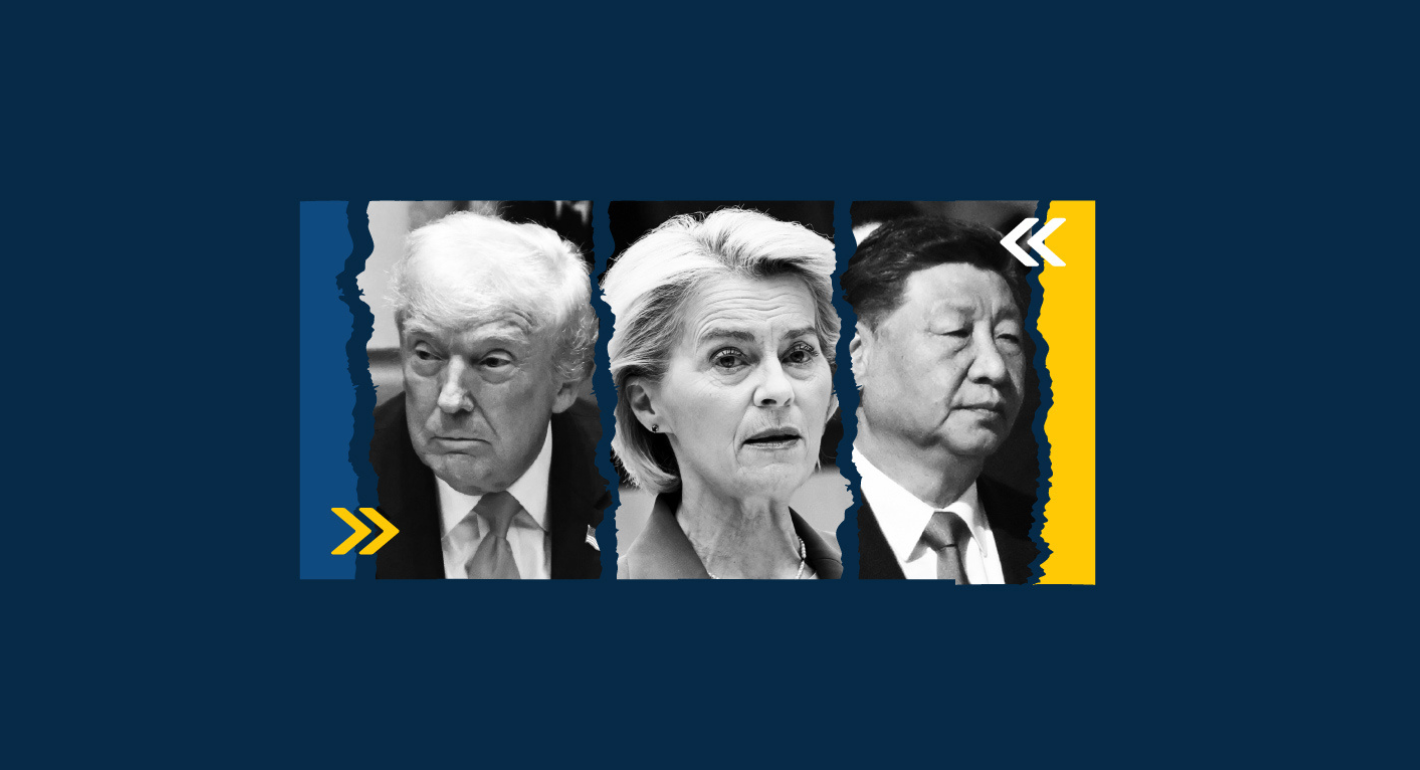
Between the United States’ market-driven approach and China's state-led industrial strategy, Europe is reckoning with how it can remain competitive in the global economy. But is Europe in danger of becoming a U.S. or China colony?
In a public debate moderated by Carnegie Europe Director Rosa Balfour, leading experts Noah Barkin and Anu Bradford exchanged views on the question, “Is Europe in danger of becoming a U.S. or China colony?” The event took place in the context of Carnegie’s Europe Head-to-Head project. Watch the full discussion here.
Senior Advisor, Rhodium Group
We are emerging from a decades-long period in which the United States exerted outsize influence in Europe, and are entering a new era in which China will be filling the gaps left by the U.S. retreat. This puts Europe, which depends heavily on both the United States and China, in an extremely vulnerable position. Still, I am more optimistic about the continent’s ability to resist a United States in disarray than a China that has amassed huge economic leverage by systematically building out its control over global industrial supply chains.
Today, China represents a far greater threat to Europe’s prosperity, security, and way of life than the United States. This is sometimes lost in the outrage—understandable as it may be—over U.S. President Donald Trump and the fast-motion train wreck of his second term.
For three quarters of a century, U.S. influence in Europe was underpinned by its role as a guarantor of the continent’s security within NATO. But it was also based on shared values centered around democracy and the rule of law. Despite periods of friction, the United States and Europe were like-minded partners with a deep economic relationship, common security interests, and close people-to-people ties. This was a win-win relationship in the truest sense of the term.
Then Donald Trump arrived and hit the accelerator on a transatlantic crash that had been unfolding in slow motion since the turn of the century. Few in Europe would describe the White House as a like-minded partner anymore. Europeans now understand, with or without NATO’s Article 5 on collective defense, that they can no longer count on Washington coming to their aid. Europe must rapidly build up its own, long-neglected military capabilities.
There is also a yawning transatlantic values gap that is playing out in the digital realm. Europeans are right to worry about the influence of U.S. big tech firms and a new generation of American oligarchs whose power has expanded exponentially under Trump. Europe remains heavily dependent on U.S. security guarantees, but also on its cloud infrastructure, software, digital services, and American advances in artificial intelligence—a sector where the Europeans have looked like mere bystanders.
It will take years for Europe to address these vulnerabilities. But Trump, the so-called tech bros, and their blunt, in-your-face hostility toward Europe are a powerful unifying force. China is a different kettle of fish. Its President Xi Jinping doesn’t publish social media posts vowing to hit Europe with tariffs. He doesn’t threaten to seize European territory by force. He doesn’t issue strategies that spell out plans to cultivate resistance to European governments. The threat of China is akin to that of climate change—it is still seen in many European capitals as a creeping, long-term issue that can be dealt with tomorrow, or even better, the day after.
The reality is quite different. China has emerged in a very short span of time as a global manufacturing powerhouse, with a dominant position in a wide range of commodities and industries on which Europe and the world depend. These range from critical minerals and chips to pharmaceutical ingredients and green technologies like batteries, solar panels, and electric vehicles. These dependencies give China political leverage, as we saw a year ago when Beijing imposed export controls on rare earths that squeezed Western automotive, medical technology, and defense firms, ultimately forcing Trump to retreat on his so-called Liberation Day tariffs.
China’s industrial dominance is also a threat to manufacturing economies like Germany, which are struggling to compete with Chinese rivals that manufacture products that are between 30 and 50 percent cheaper. Germany is losing 10,000 manufacturing jobs a month in the face of this competition. Some of the country’s biggest firms are ramping up investments in China as they slash staff at home. The only way to compete with Chinese firms, the thinking in the boardrooms of Munich and Stuttgart goes, is to integrate more China into supply chains.
Unless Europe and its allies are able to muster a forceful, collective response to China’s manufacturing dominance, we are likely to enter a dangerous downward spiral in which we become ever more dependent on Chinese supply chains, lose our industrial skills and know-how, and increasingly our political and economic autonomy.
Standing up to China is already a challenge. In the years ahead, it risks becoming far more difficult. This has implications for the future of Taiwan, but also for Europe’s ability to shape its own policy course on everything from climate action to digital regulations. Recent decrees from China’s State Council have given a taste of what is to come. They make clear that Beijing will retaliate if countries try to de-risk or diversify away from its supply chains. The message is: Protect yourself, and you will pay a price. It is not the message of a benign hegemon.
This future is not written in stone. Nor is China the 800-pound gorilla that we often make it out to be. Its manufacturing dominance masks deep flaws in its own economy, from stubbornly weak demand and a creaking, inefficient financial system to a looming demographic crunch. China depends on foreign demand, above all from Europe, to keep its industrial machine humming. This gives Europe leverage. But it will require far more European unity, a willingness to accept short-term pain, and a joined-up response with allies—including the United States—to avert worst-case scenarios. Trump’s placatory visit to Beijing in May 2026 showed just how far away we are from this path.
Nonresident Scholar, Europe Program, Carnegie Endowment for International Peace
The following is a partial transcript of remarks made during the event, edited for brevity and clarity.
The dependencies Europe has vis-à-vis the United States have provoked conversation in Brussels, for an understandable reason: Europeans are obsessed with pursuing greater strategic autonomy and technological sovereignty.
If you talk about our day-to-day interactions with technology—the platforms we use, the cloud services our companies rely on, the payment systems we need—all roads lead to America. And in the past, we were not particularly worried about Europe’s dependencies in those areas because we have historically had a strong political alignment with Washington.
But the United States under the second Trump administration is butting up against Europe’s values and fundamental geopolitical interests. This is causing concern that dependency will be weaponized against Europe, limiting our ability to shape our own destiny as a continent, and threatening our values.
We need a serious discussion, as Europeans, on how to mitigate these vulnerabilities.
Regulatory sovereignty should lie at the heart of that discussion: It is the ability to write laws that reflect our own values, and it forms a core aspect of sovereignty writ large. The concept has always been central to the European project, but more than that, it has become one of the EU’s core sources of power on the global stage, giving it significant leverage at home and abroad.
This means regulatory powers are no longer simple technocratic exercises. They are no longer sets of laws policymakers in Brussels can enact without triggering a response from Washington. With Trump back in the White House, European regulations have become politicized: Europe’s laws on privacy, content moderation, and antitrust are facing severe criticism from the president.
The arguments are that regulations like the Digital Services Act unfairly target U.S. tech giants, that they exist merely as a façade for European protectionism, that the EU is exporting censorship and suppressing free speech. But what is really new in all this is how much the politicization of the agenda is potentially eroding Europe’s regulatory autonomy. The United States is now folding these critiques into a broader trade and technology war, sending the message that if regulations are enforced, Europe will face tariffs or the withdrawal of U.S. security guarantees from institutions like NATO.
As a result, Europe must now accept the reality that defending its values may come with severe consequences.
So, what can be done to address this new challenge? Before anything else can happen, the EU needs to overcome the fragmentation of its decisionmaking. In the past, Brussels has had the luxury of isolating different policy domains and pursuing the best possible outcomes in a series of silos. Now, it must reckon with the fact that separating trade from security is no longer viable.
One solution could be establishing an EU economic security council modelled on the U.S. National Security Council. It would bring together decisionmakers at the highest level—from member state governments, the European Commission, and so on—that are in charge of trade, defense, national security, and technological regulation. It would make sure Europe can have a more holistic strategy that accounts for its dependencies. The EU would then be much better prepared to respond to attacks on policy domains that are simultaneously separate and yet somehow fused together.
We cannot afford to go back to a worldview that separates economic security from national security, especially in a union as highly economically integrated as the EU. It is all part of this broader weaponization we are facing.
Institutional changes alone, though, are not enough. Europe needs to flick a mental switch: from a defensive, reactive posture to a proactive agenda that recognizes the strengths we possess. We have a strong market that American companies rely on. For many of the U.S. tech giants, the EU represents between 20 and 25 percent of annual revenue. Yes, we have dependencies, but those dependencies go both ways, and it would not be in the interests of the United States for Europeans to lose trust in the reliability of the services American companies provide. Excessive coercion would create exactly that backlash.
European leaders have tried capitulation and submission as a strategy: It did not work. It has shown the Trump administration that bullying is the most effective way of extracting concessions from Brussels. One set of demands will lead to another, and the situation will snowball. It is simply not sustainable for Europe. The EU should instead approach U.S. economic coercion from the position of strength that its robust internal market offers.
If Brussels cannot be technologically sovereign, there is an assumption that it will become subservient to Washington or Beijing. But that is not true. If the EU fails this test, then so will the others, because there is no single world power that can repatriate the entire AI stack or the complex supply chains of semiconductors.
Dependency goes both ways. In a sense then, complete technological sovereignty—and the theoretical competitive edge it implies—is an illusion. China can hold the United States hostage by restricting access to rare earths, the United States can hold Europe hostage by forcibly dismantling its regulations, Europe can hold both hostage by using the power of its market. In the competitiveness game, all the players on the field are constrained and need to find ways to coexist.

Noah Barkin
Senior Advisor, Rhodium Group
Noah Barkin is a senior advisor at the Rhodium Group and visiting senior fellow in the Indo-Pacific Program at the German Marshall Fund of the United States.

Nonresident Scholar, Europe Program
Anu Bradford is a nonresident scholar in the Europe Program at the Carnegie Endowment for International Peace.
Carnegie does not take institutional positions on public policy issues; the views represented herein are those of the author(s) and do not necessarily reflect the views of Carnegie, its staff, or its trustees.

Amid increased polarization and the influence of disinformation, radical-right parties are once again gaining traction across Europe. With landmark elections on the horizon in several countries, are the EU’s geostrategic vision and fundamental values under existential threat?


Catherine Fieschi, Cas Mudde

Despite offering security benefits to candidates and the EU alike, the enlargement agenda appears stalled. Why is progress not being made, and is it time for Europe to rethink its approach?


Sylvie Goulard, Gerald Knaus
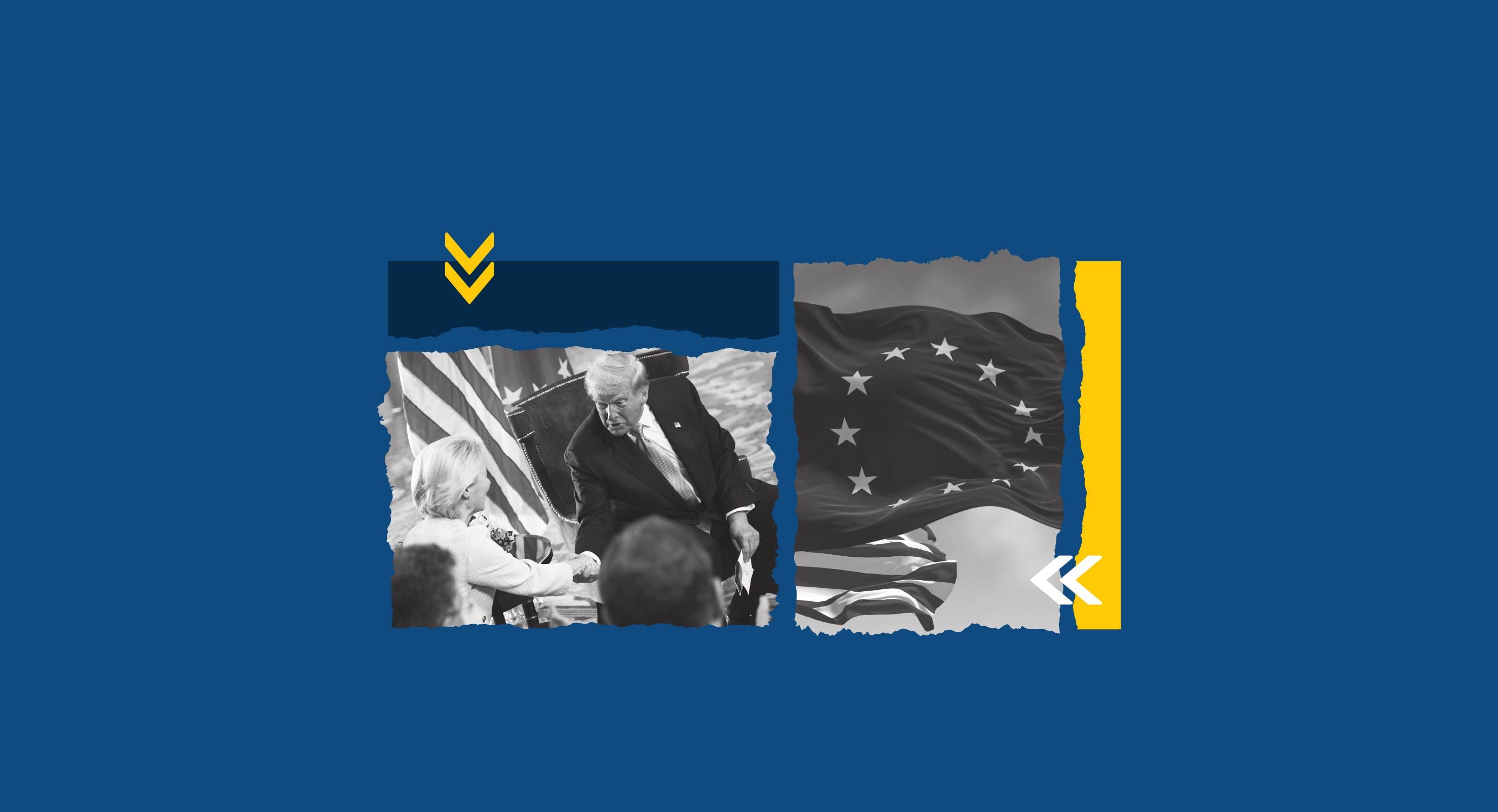
In Donald Trump’s second term in office, the transatlantic relationship that helped define the postwar European project and global order appears broken. Is it time for Brussels to chart its own path?


Nathalie Tocci, Jan Techau

Japan’s long-term security policy is driven by concerns about China, and there is little appetite for (or interest in) pursuing a confrontation with Moscow.

James D.J. Brown

Russia is testing the waters of NATO’s mutual defense clause. What do strikes in Romanian territorial waters mean for the alliance’s posture toward Moscow?

Dimitar Bechev