

Commentary
The EU can impose sanctions but struggles to enforce them without the United States. With Washington increasingly disinterested in backing European interests, the bloc must now fend for itself.
Nicu Popescu, Tiago Antunes
Source: Getty
The threat of bioterrorism has been greatly exaggerated. There are fewer state bioweapons programs today than 15 years ago and to date, no state is known to have assisted any nonstate or terrorist group to obtain biological weapons.

Leitenberg notes at the beginning of his report:
For the past decade the risk and imminence of the use of biological agents by nonstate actors/terrorist organizations—“bioterrorism”—has been systematically and deliberately exaggerated. In the last year or two, the drumbeat had picked up. It may however become moderated by the more realistic assessment of the likelihood of the onset of a natural flu pandemic, and the accompanying realization that the U.S. Government has been using the overwhelming proportion of its relevant resources to prepare for the wrong contingency.
Leitenberg points out that there are fewer state bioweapons programs today than 15 years ago and “to date, no state is known to have assisted any nonstate or terrorist group to obtain biological weapons.” Additionally, “there is no justification for imputing to real world terrorist groups capabilities in the biological sciences that they do not possess.”
According to Leitenberg, the exaggeration of the threat developed as “bioterrorism” became an all-encompassing term for any biological weapon use, be it by state or non-state actors. He writes,
That simple switch in language made it easy to transfer levels of state capability to “terrorists.” Everything became and was referred to as “bioterrorism.” This wiped out any discrimination, or attempt to discriminate, between the relevant capabilities of state programs and existing terrorist groups as they are known to date.
The perceived threats were blown out of proportion:
The possibility of incidents involving low numbers of casualties evolved in 2 or 3 years to “mass casualty” terrorism, and in several more years to “Apocalyptic Terrorism.” Generic terrorist groups…were endowed with the prospective ability to genetically engineer pathogens. Yet the resources and capabilities available to states and to terrorist groups are vastly different.
His carefully written monograph puts the bioterrorism threat in context with other pressing problems, such as malaria, tuberculosis, and HIV/AIDS (that together kill 5 million people a year), diarrheal diseases (kill 3.5 million a year), and smoking (kills 5 million people a year) – not to mention the massive casualties from a possible pandemic flu outbreak.
Leitenberg systematically dissects the inflated assumptions behind scenarios used as the basis for bioterrorism gaming exercises in the US. For example, the 2001 Dark Winter exercise, a scenario involving aerosolized smallpox, “used a person-to-person secondary transmission rate (RO) of 10, three times the historical average of three.” The 2005 Atlantic Storm exercise made “grossly misleading assumptions” about the ease of creating and then dispersing the same biological agent, again a dry powder smallpox preparation, a feat that neither the US nor Soviet BW programs ever achieved.
Is bioterrorism, as Dr. Tara O’Toole, head of the Center of Biosecurity at the University of Pittsburgh says, “one of the most pressing problems that we have on the planet today.”? Leitenberg concludes, “No. Absolutely not.”
This is a must-read for all who want to understand the interplay of biological weapons, terrorism and global threats.
Related Links:
“Assessing the Biological Weapons and Bioterrorism Threat,” Strategic Studies Institute of the U.S. Army War College (December 2005)
“Bioterrorism, Hyped,” LA Times op-ed by Milton Leitenberg (17 February, 2006)
“Bioweapons,” Book Review of Leitenberg’s book The Problem of Biological Weapons (2004)
Ben Bain
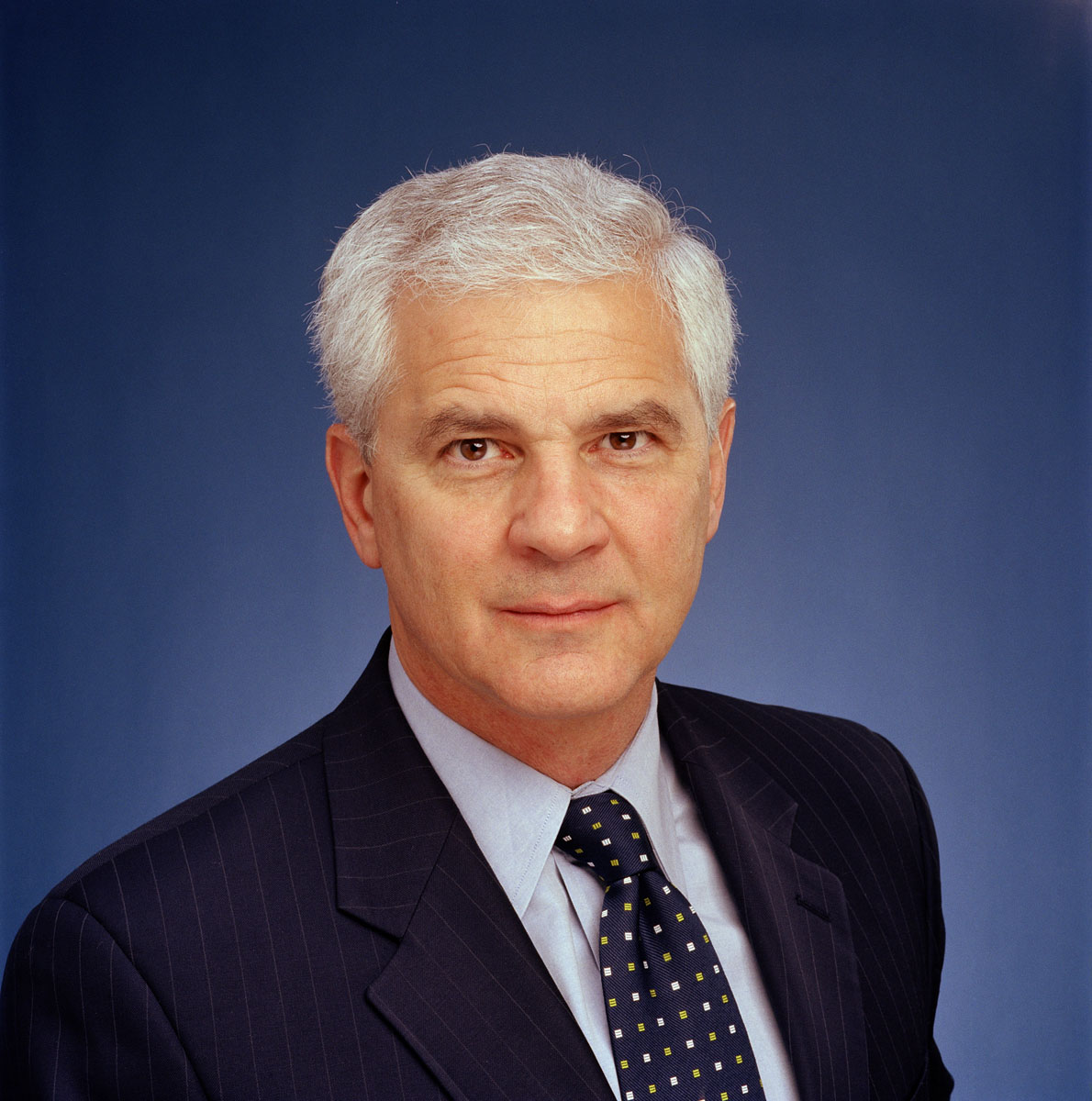
Former Senior Associate, Director for NonProliferation
Carnegie does not take institutional positions on public policy issues; the views represented herein are those of the author(s) and do not necessarily reflect the views of Carnegie, its staff, or its trustees.

The EU can impose sanctions but struggles to enforce them without the United States. With Washington increasingly disinterested in backing European interests, the bloc must now fend for itself.


Nicu Popescu, Tiago Antunes

Rubio’s recent visit brought welcome attention, but more capital requires governance changes that may be a hard sell for regional governments.

Jennifer B. Murtazashvili

America’s foreign-policy objectives have grown more demanding while Americans have demanded greater focus on their own affairs.

Stephen Wertheim

Japan’s long-term security policy is driven by concerns about China, and there is little appetite for (or interest in) pursuing a confrontation with Moscow.

James D.J. Brown

Russia is testing the waters of NATO’s mutual defense clause. What do strikes in Romanian territorial waters mean for the alliance’s posture toward Moscow?

Dimitar Bechev