

Commentary
Riad al Khouri

REQUIRED IMAGE
Free trade agreements between the West (U.S. and EU) and Middle East and North African (MENA) countries, while containing beneficial elements, have strengthened negative perceptions of “western-led globalization” because they benefit unpopular elites and impose serious short term economic adjustment.
Source: Carnegie Endowment
Free trade agreements between the West (U.S. and EU) and Middle East and North African (MENA) countries, while containing beneficial elements, have strengthened negative perceptions of “western-led globalization” because they benefit unpopular elites and impose serious short term economic adjustment, concludes Riad al Khouri, a Carnegie Middle East Center economist specializing in MENA countries.
Examining the socio-economic and political effects of American and European trade agreements on Jordan, Morocco, and Egypt in EU and U.S. Free Trade Agreements in the Middle East and North Africa, al Khouri notes the more active pursuit of FTAs as an economic policy tool with political goals by the United States and the European Union in recent years.
Key Findings:
• Trade between the United States and MENA countries grew in a relatively balanced manner, while FTAs between the EU and the Mediterranean region favored the EU.
• Bilateral security cooperation between the United States and MENA countries strengthened after signing free trade agreements.
• The United States is keen on full trade agreements with MENA countries, in contrast to the EU, whose agreements with MENA countries do not include agriculture and immigration.
• If the EU and MENA countries could come to broader agreement on liberalizing agricultural products and promoting controlled immigration, the Southern Mediterranean region would benefit greatly.
He concludes:
“The current U.S. and EU initiatives are a step in the right direction, but they alone cannot lead to robust, sustainable growth in the MENA region or create regional stability. The overall growth and precarious stability that the region has been able to achieve still has little to do with bilateral economic links with the U.S. or the EU. Nevertheless, FTAs and similar agreements show signs of increasing importance for both the West and the MENA region, with implications for EU and U.S. trade relations with other regions as well.”
Click on icon above for the full text of this Carnegie Paper.
A limited number of print copies of this Carnegie Paper are available.
Request a copy
About the Author
Riad al Khouri is a visiting scholar with the Carnegie Middle East Center based in Beirut, Lebanon. He has undertaken extensive research on regional trade and political economy, among other topics, and writes widely about development issues.
Former Visiting Scholar, Middle East Center
Riad al Khouri is an economist specializing in the Middle East and North Africa region. He has undertaken extensive research on regional trade and political economy, among other topics, and writes widely about development issues. He taught economics at the American University in Beirut (AUB) and Beirut University College (now the Lebanese American University) and worked as a consultant for the European Commission, ESCWA, GTZ, ILO, IOM, OPEC Fund, UNDP, UNIDO, USAID, and the World Bank, among many other public sector organizations, as well as for numerous private firms.
Recent Work
Riad al Khouri
Carnegie does not take institutional positions on public policy issues; the views represented herein are those of the author(s) and do not necessarily reflect the views of Carnegie, its staff, or its trustees.

The books, podcasts, and films that explain the world it made.

Andrew Leber
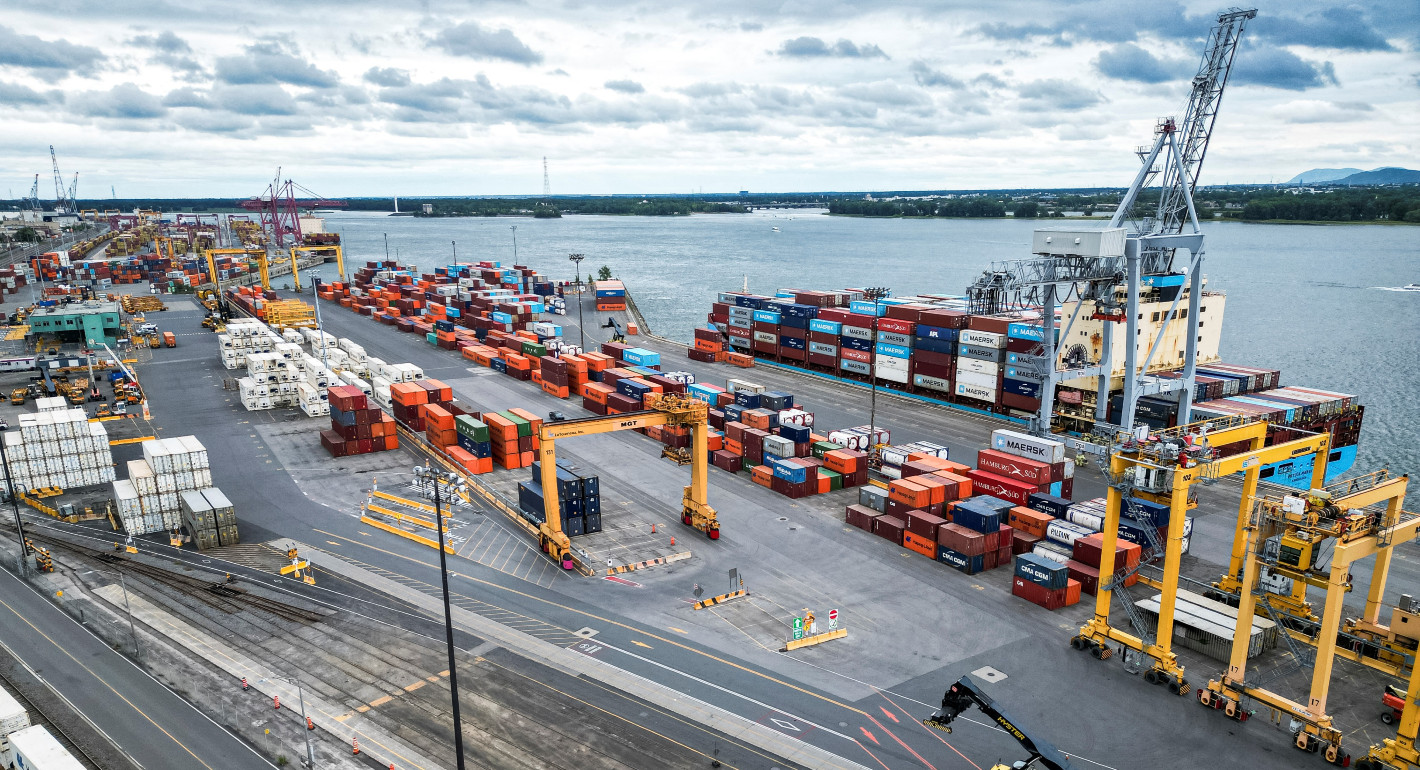
U.S. trading partners in Asia are closely watching the dispute for signs of how it may affect their own interests.

Barbara Weisel

The aftermath of the Ceuta crisis shows Europe has drawn the wrong lessons. Rather than doubling down on failed migration policies, the EU needs to address the underlying roots of such episodes.

Richard Youngs
By abandoning past U.S. pro-democracy policies and adopting several lines of pro-autocratic action, the Trump administration has fundamentally repositioned the United States vis-à-vis democracy in the world.

Thomas Carothers

Chinese strategists are once again debating whether American power is declining and whether U.S. hegemony is experiencing irreversible decay.
Wu Xinbo