• Research
  • Emissary
  • About
  • Experts
Carnegie Global logoCarnegie lettermark logo
DemocracyIran
  • Donate
REQUIRED IMAGE
Report
Malcolm H. Kerr Carnegie Middle East Center

Corporate Capital Structure Choices in MENA: Empirical Evidence from Non-Listed Firms in Morocco

A multi-decade survey of Moroccan manufacturing firms reveals the rationale behind their financial choices and provides the basis for an assessment of the severity of the financial constraints they face.

Link Copied
By Lahcen Achy
Published on Dec 16, 2009

Additional Links

Full Text

Source: Middle East Development Journal

According to multi-decade survey results, more than three quarters of Moroccan manufacturing firms identify access to finance as one of the major constraints affecting their performance. Compared to a number of emerging countries, however, Moroccan firms appear relatively undercapitalized and more reliant on external finance. These two findings have very different policy implications.
 
In a new paper, Lachen Achy provides a rigorous understanding of the rationale behind financial choices made by Moroccan firms, and assess the severity of the financial constraints they face. The paper uses a panel dataset covering 550 non-listed manufacturing firms over the period 1998–2003 and investigates both long-term and short-term measures of leverage with the objective of understanding the factors that shape “debt-equity choice” as well as “debt maturity structure”.
 
His analysis reveals the existence of a negative relationship between asset tangibility and both aggregate leverage and short-term debt ratio.Small firms tend to increase their debt instead of opening their capital to outside investors and larger firms seem to rely much more on their retained earnings for their long-term financial needs. For short-term debt, size does not appear to matter. The impact of growth is positive on short-term leverage and irrelevant for long-term leverage. Profitability is found to exert a positive effect on long-term leverage and a negative one on short term leverage.

About the Author

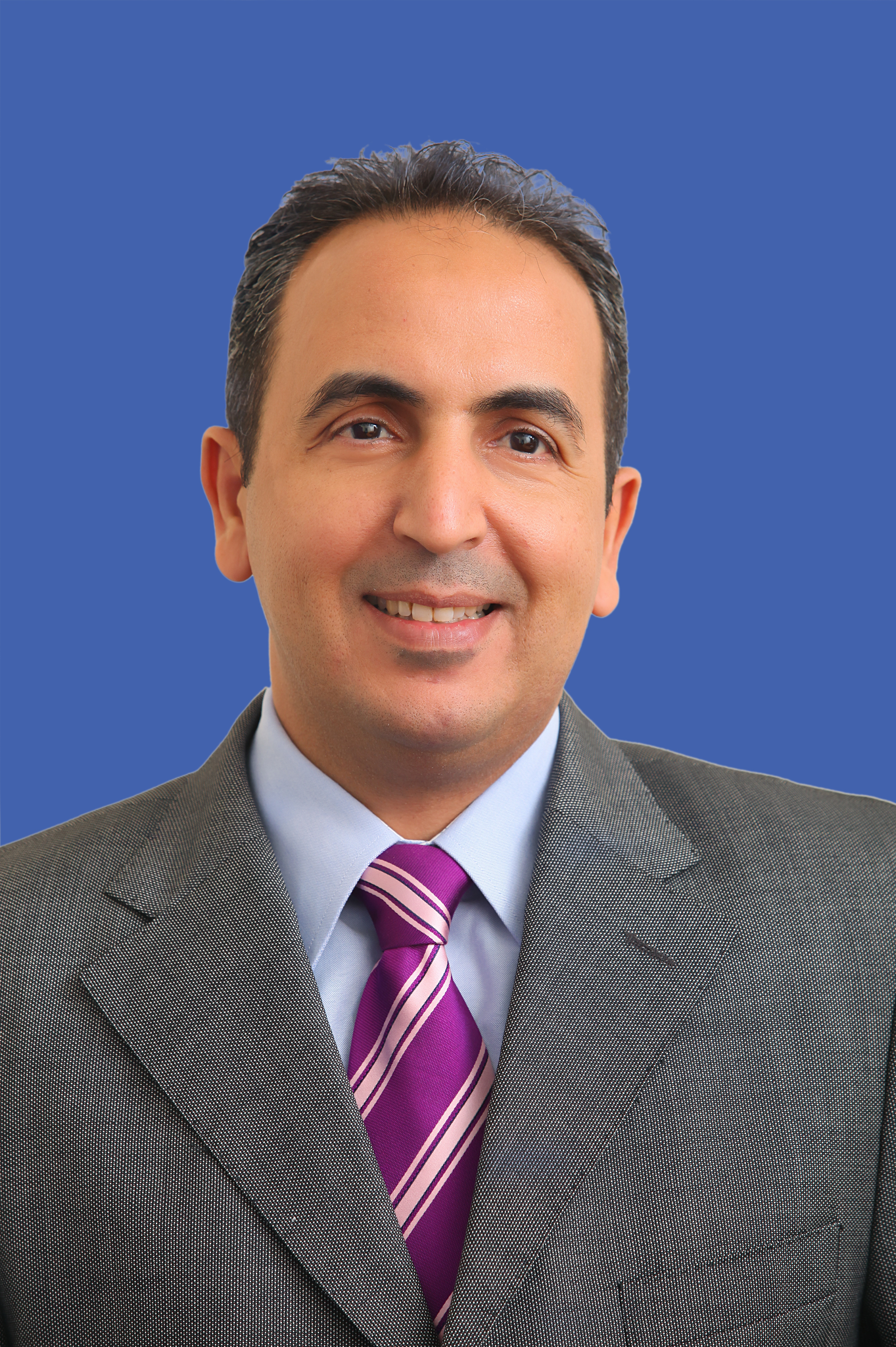
Lahcen Achy

Former Nonresident Senior Associate, Middle East Center

Achy is an economist with expertise in development, institutional economics, trade, and labor and a focus on the Middle East and North Africa.

    Recent Work

  • In The Media
    Arab States Need Industrial Policy Reform

      Lahcen Achy

  • Paper
    The Price of Stability in Algeria

      Lahcen Achy

Lahcen Achy
Former Nonresident Senior Associate, Middle East Center
Lahcen Achy
MaghrebEconomy

Carnegie does not take institutional positions on public policy issues; the views represented herein are those of the author(s) and do not necessarily reflect the views of Carnegie, its staff, or its trustees.

More Work from Carnegie Endowment for International Peace

  • Article
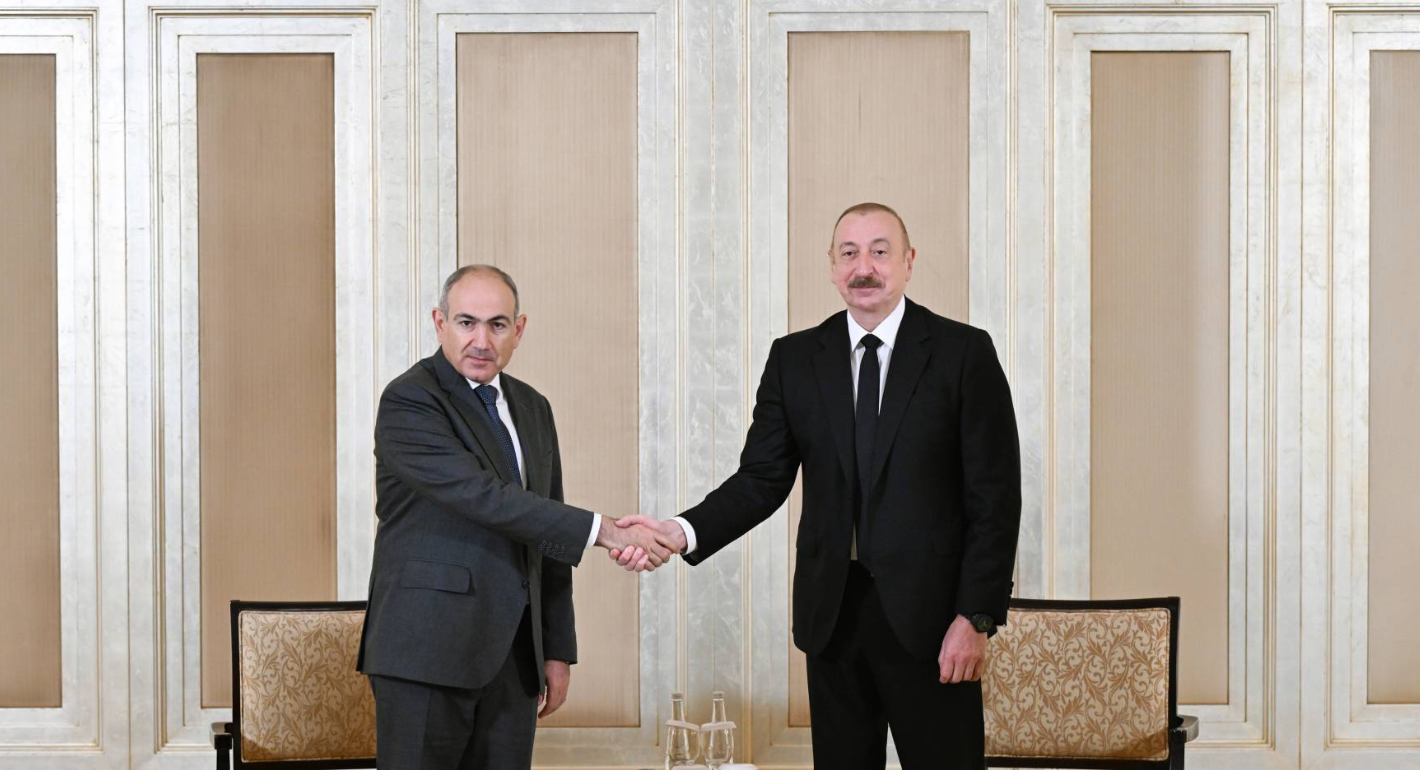
    Rewiring the South Caucasus: TRIPP and the New Geopolitics of Connectivity

    The U.S.-sponsored TRIPP deal is driving the Armenia-Azerbaijan peace process forward. But foreign and domestic hurdles remain before connectivity and economic interdependence can open up the South Caucasus.


      • Areg Kochinyan

      Thomas de Waal, Areg Kochinyan, Zaur Shiriyev
  • A Black man pulls a trolley. He is small in the bottom center of the frame; in the background are stacks of large, colorful shipping containers and the parts of a large crane or similar piece of equipment.
    Article
    Africa’s Global Economic Edge: Advancing Strategic Sectors

    In key sectors such as critical minerals, specialty agriculture, and fintech, Africa can become a global powerhouse by investing more in manufacturing, value-add, and scaling.

      • Kholofelo Kugler

      Kholofelo Kugler, Georgia Schaefer-Brown

  • Xi walking into a room with people standing and applauding around him
    Commentary
    Emissary
    The Xi Doctrine Zeros in on “High-Quality Development” for China’s Economic Future

    In the latest Five-Year Plan, the Chinese president cements the shift to an innovation-driven economy over a consumption-driven one.

      • Damien Ma

      Damien Ma

  • A white humanoid robot with a black head and hips stands behind a rope barrier. It stands with its feet apart, knees bent, and elbows raised at its sides.
    Commentary
    Europe Is Falling Behind in General-Purpose Robotics. Here’s What It Can Do to Catch Up.

    The continent needs to improve conditions for production of complete AI robotic systems and preserve its edge in hardware.

      Pavlo Zvenyhorodskyi
  • Worker pushing machinery toward a car frame
    Commentary
    Emissary
    Europe’s New Industrial Policy Can Learn From U.S. Mistakes

    Although the IAA often differs from the IRA, European policymakers can still take note of the U.S. act’s shortcomings.

      Milo McBride

Get more news and analysis from
Carnegie Endowment for International Peace
Carnegie global logo, stacked
1779 Massachusetts Avenue NWWashington, DC, 20036-2103Phone: 202 483 7600Fax: 202 483 1840
  • Research
  • Emissary
  • About
  • Experts
  • Donate
  • Programs
  • Events
  • Blogs
  • Podcasts
  • Contact
  • Annual Reports
  • Careers
  • Privacy
  • For Media
  • Government Resources
Get more news and analysis from
Carnegie Endowment for International Peace
© 2026 Carnegie Endowment for International Peace. All rights reserved.