

Commentary
It’s time to build momentum, and Ankara is the venue of the next opportune diplomatic window to do this.
Alper Coşkun, Garo Paylan
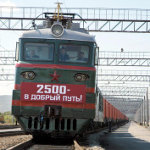
Source: Getty
Russia’s accession to the WTO—which would benefit both Russia and the global trading system—has been stalled since June. To move forward, Russia must clarify its accession plan and prove its commitment to the WTO.
Sixteen years after its application process began and despite broad international agreement that it should be a member, Russia—one of the world’s largest economies and a nuclear superpower—remains outside the World Trade Organization (WTO) looking in. This situation is anomalous and both Russia, which needs to clarify its intentions, and the broader WTO membership need to correct it soon.
Russia’s Accession Progress
The requirements for accession to the WTO are clear: acceding states must be fully autonomous and have the capacity to implement WTO regulations. From the day of accession onwards, acceding states must strengthen the WTO system and not threaten its stability.
The Russian accession process, which began in 1993, had nearly concluded in June 2009. By that time, Russia had signed agreements relating to its accession with 53 member countries—the largest number of any accession country—and the WTO Secretariat was working to consolidate them.
Russia’s decision to pursue the customs union, only to abandon it several months later, understandably raised eyebrows. There is no precedent of nations acceding as a customs union.
On June 9, however, in a move that surprised both WTO officials and representatives of member governments, Russia announced plans to join the WTO as a customs union with Belarus and Kazakhstan, who are also seeking accession. In another twist, Russia had abandoned this plan by October and elected instead to pursue autonomous, yet simultaneous, accession with the two countries. It provided no other details about its intended procedure.
Subsequently, Russia formalized the creation of the union with a unified customs tariff, which went into effect earlier this month. In December, Russian officials promised to provide WTO members with a position memo outlining the country’s accession plan. The accession process remains suspended until the note can be completed.
Russia’s Rationale
Russia’s decision to pursue the customs union, only to abandon it several months later, understandably raised eyebrows. There is no precedent of nations acceding as a customs union, and Moscow has repeatedly stated that it aims to accede as quickly as possible; making such a dramatic change after sixteen years in the process clearly impedes this goal.
In explaining its actions, Russia has pointed to historically close ties between itself, Kazakhstan, and Belarus, as well as the need for heightened regional cohesion in the face of the financial crisis.
The customs union may have been designed to slow the accession process until the global economy improves.
Others have speculated that the customs union may have been designed to slow the accession process until the global economy improves. Russia was hit especially hard by the Great Recession, with GDP contracting by an OECD-high of 9.1 percent in the first quarter of 2009. The effects of trade liberalization could add to uncertainty and require the expenditure of political capital at a time when the Russian economy is struggling, but the long-term benefits remain even if Russia delays accession until after its economy recovers.
Reasonable Accession Conditions
Russian Prime Minister Vladimir Putin has claimed that WTO member countries, including the United States, are blocking Russian accession. However, analysis suggests that the demands placed on Russia are not unusual, with the exception of gas pricing restrictions. In fact, Russia was allowed to avoid opening its territory to foreign banking, a commitment that the United States has demanded from all other acceding countries not classified as “least developing.”
Russia has a great deal to gain from WTO accession, including faster growth and much-needed institutional reform.
Since the early 1990s, official U.S. policy has strongly supported Russia’s accession to the WTO. A number of trade disputes between the United States and Russia have arisen, on issues ranging from intellectual property rights (IPR) to chicken, and despite them (or because of them) the United States understands that it stands to gain from Russian accession.
The WTO Secretariat has emphasized that no single member is holding up Russia’s accession. Though the WTO consensus requirement provides each member with a veto in theory, it is difficult for any individual country to resist the broader community in practice.
Gains From WTO Accession
Russia has a great deal to gain from WTO accession, including faster growth and much-needed institutional reform. While not all sectors will improve, estimates suggest that Russia would see a gain of 3.3 percent of GDP in the medium term, and a gain of 11 percent of GDP in the long term. These gains would come largely from liberalization of policies in Russia, not from greater market access provided by the WTO, since Russia’s commodity exports already enjoy unfettered access.
The improvements would be spread across Russia, though regions most able to attract foreign investment—likely the Far East and Northwest—would see the biggest gains. The benefits would also be slightly progressive, with the poor gaining slightly more than the rich.
It is important to note, however, that different sectors of the Russian economy would be unequally affected. Raw material producers would benefit, while producers of food and light industry goods would likely suffer. This would significantly complicate Russia’s goal of economic diversification and shows that not all groups in Russia are convinced of the benefits of accession.
Both options now before Russia—proceeding as a customs union or pursuing a strategy of autonomous, yet simultaneous, accession—will delay the country’s accession.
Finally, Russian accession could provide the impetus for institutional reform that is less likely otherwise. Russia has a poor business climate and ranks poorly in corruption and ease of doing business indices, including those that measure trade logistics. WTO accession—which requires stronger and more accountable governance—could provide important support for reforms.
Given these potential gains and the significant progress Russia has already made, Russian officials feel strongly that it is time for the WTO to accept Russia as a member. Russian leadership has argued that resolving trade disputes within the WTO would be much more efficient than dealing with problems outside the Organization. The WTO, and not the accession process, they argue, should be the tool used to correct trade issues.
The Way Forward
Moving forward on Russia’s accession first requires Russia to clarify its plan for coordinated accession with Belarus and Kazakhstan. Even once it does so, however, a number of issues will remain unresolved.
If Russia chooses to proceed as a customs union, it is unclear what role, if any, Russia’s 53 already negotiated bilateral agreements will play. In order to match Russia’s commitments, Kazakhstan will have to make over 3,000 changes to its tariff lines, a process that would likely take years. Alternatively, if Russia pursues a strategy of autonomous, yet simultaneous, accession, Russia must wait until Belarus is able to meet WTO requirements, which is many years away as well. In short, both options will delay Russian accession.
The international community must recognize that Russia’s accession would strengthen the global trading system—and indeed the coherence of the G8 and G20, of which Russia is a member.
In addition to asking Russia to clarify its accession strategy, WTO members expect the country to demonstrate its commitment to the implementation of WTO conditions. Though a number of bilateral agreements have been signed, implementation remains weak, causing some WTO members to remain skeptical of Russia’s level of commitment, particularly with respect to IPR and its ability to enforce agreements. The passage of legislation in Russia to support WTO commitments prior to—rather than contingent on—accession, would help alleviate these concerns.
Regardless of the outstanding issues, Russia’s accession to the WTO can and should be brought to a close. The longer the process takes, the harder it becomes as new issues and points of conflict will continually arise until they can be discussed under the WTO framework. Russia will have to develop a clearer strategy for moving forward, clarify the link between its accession and that of Kazakhstan and Belarus, and establish a calendar for completing the process. At the same time, the international community must recognize that Russia’s accession would strengthen the global trading system—and indeed the coherence of the G8 and G20, of which Russia is a member—and should therefore strongly support Russia’s efforts.
James Collins, former U.S. ambassador to Russia, is the Director of Carnegie’s Russia and Eurasia Program. Bennett Stancil is a Junior Fellow in Carnegie’s International Economics Program.
Nonresident Senior Fellow, Russia and Eurasia Program; Diplomat in Residence
Ambassador Collins was the U.S. ambassador to the Russian Federation from 1997 to 2001 and is an expert on the former Soviet Union, its successor states, and the Middle East.
Bennett Stancil
Former Research Assistant, International Economics Program
Carnegie does not take institutional positions on public policy issues; the views represented herein are those of the author(s) and do not necessarily reflect the views of Carnegie, its staff, or its trustees.
It’s time to build momentum, and Ankara is the venue of the next opportune diplomatic window to do this.

Alper Coşkun, Garo Paylan

The EU is putting together a new security strategy to meet today’s myriad challenges. But for any proposal to be effective, the union needs to grapple with its identity and ambitions.

Pierre Vimont
For all the menacing rhetoric, the Armenian prime minister remains a leader with whom Putin is prepared to interact: not as an ally, but as a partner, albeit a problematic one.

Alexander Atasuntsev
The issue is not that the president only has selective information at his disposal, but that the decision-making process consists of one person with an unshakeable vision of how the world works.

Tatiana Stanovaya
The impacts of the Faye-Sonko rupture could go well beyond the country’s borders.

Lesley Anne Warner