

Commentary
Russian strikes are weakening the economy sustaining Ukraine’s war effort. Closing the growing funding gap will require more European support and politically contentious reforms in Kyiv.
Balázs Jarábik
Source: Getty
While autocratic governments that incorporate elements of democracy may be stable in the short term, such systems cannot be sustained in the long term. In Russia’s case, the system is unlikely to survive Putin himself.
Can autocratic governments that incorporate elements of democracy provide good governance? The authors approach this question with an inductive study of Russia, which is widely regarded as a leading hybrid regime and an innovator in the field. They argue that for most of the past decade, and especially during Vladimir Putin’s second term as president, Russia has been characterized by a hybrid regime that strongly resembles those in many other Eurasian states, as well as Venezuela and Iran. This type of regime combines a high degree of state centralization with the gutting of democratic institutions, and their systematic replacement with substitutions that are intended to serve some of their positive functions without challenging the incumbent leaders’ hold on power.
The label chosen for this system, overmanaged democracy, reflects three central findings. First, this system has enabled Russia’s leaders to govern more by a non-participation pact with society than by outright repression—though some very repressive elements play a role. Second, the more centralized this system becomes, the more likely political outcomes are to diverge from social ideals, and the more vulnerable the regime becomes to shocks. The survival of the regime depends heavily on the personal reputation and skill of the top leaders, who must increasingly exercise manual control over the system. And third, political outcomes in a hybrid regime are closer to social ideals and the system is less vulnerable than would be the case in a regime that relies primarily on outright repression—allowing no political opposition to exist and creating no substitutions to serve any of the functions of democratic institutions. But the authors conclude that while overmanaged democracy may be stable in the short term, it will not last in the long term. In Russia’s case, the system is unlikely to survive Putin himself.

Former Scholar-in-Residence, Society and Regions Program, Moscow Center
Nikolay Petrov was the chair of the Carnegie Moscow Center’s Society and Regions Program. Until 2006, he also worked at the Institute of Geography at the Russian Academy of Sciences, where he started to work in 1982.
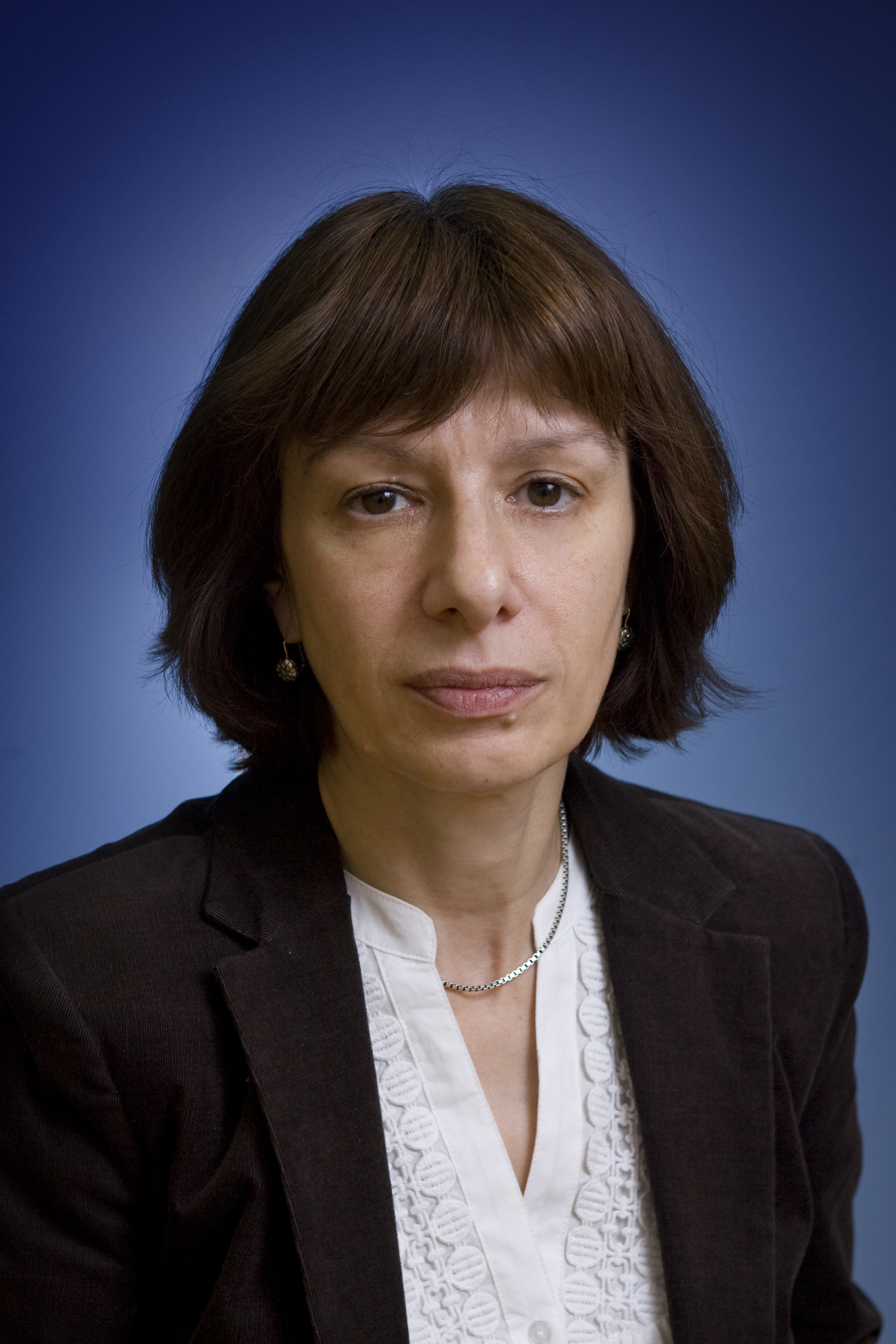
Former Scholar in Residence, Society and Regions Program, Editor in Chief, Pro et Contra, Moscow Center
Lipman was the editor in chief of the Pro et Contra journal, published by the Carnegie Moscow Center. She was also the expert of the Carnegie Moscow Center’s Society and Regions Program.
Henry E. Hale
Institute for European, Russian & Eurasian Studies
Carnegie does not take institutional positions on public policy issues; the views represented herein are those of the author(s) and do not necessarily reflect the views of Carnegie, its staff, or its trustees.

Russian strikes are weakening the economy sustaining Ukraine’s war effort. Closing the growing funding gap will require more European support and politically contentious reforms in Kyiv.

Balázs Jarábik

Ex-president Gurbanguly Berdimuhamedov remains interested in politics, but his son Serdar, Turkmenistan’s current president, is becoming increasingly independent and willing to break with his father’s legacy. If their covert rivalry goes too far, both risk losing power.

Galiya Ibragimova

Europe is facing rising populism internally as well as external pressures from Russia, China, Turkey, and the United States.

Dimitar Bechev

A notable degree of participative democracy has firmly arrived in Europe. But to have more far-reaching impact, democratic deliberation needs to move into a radically new phase.

Richard Youngs
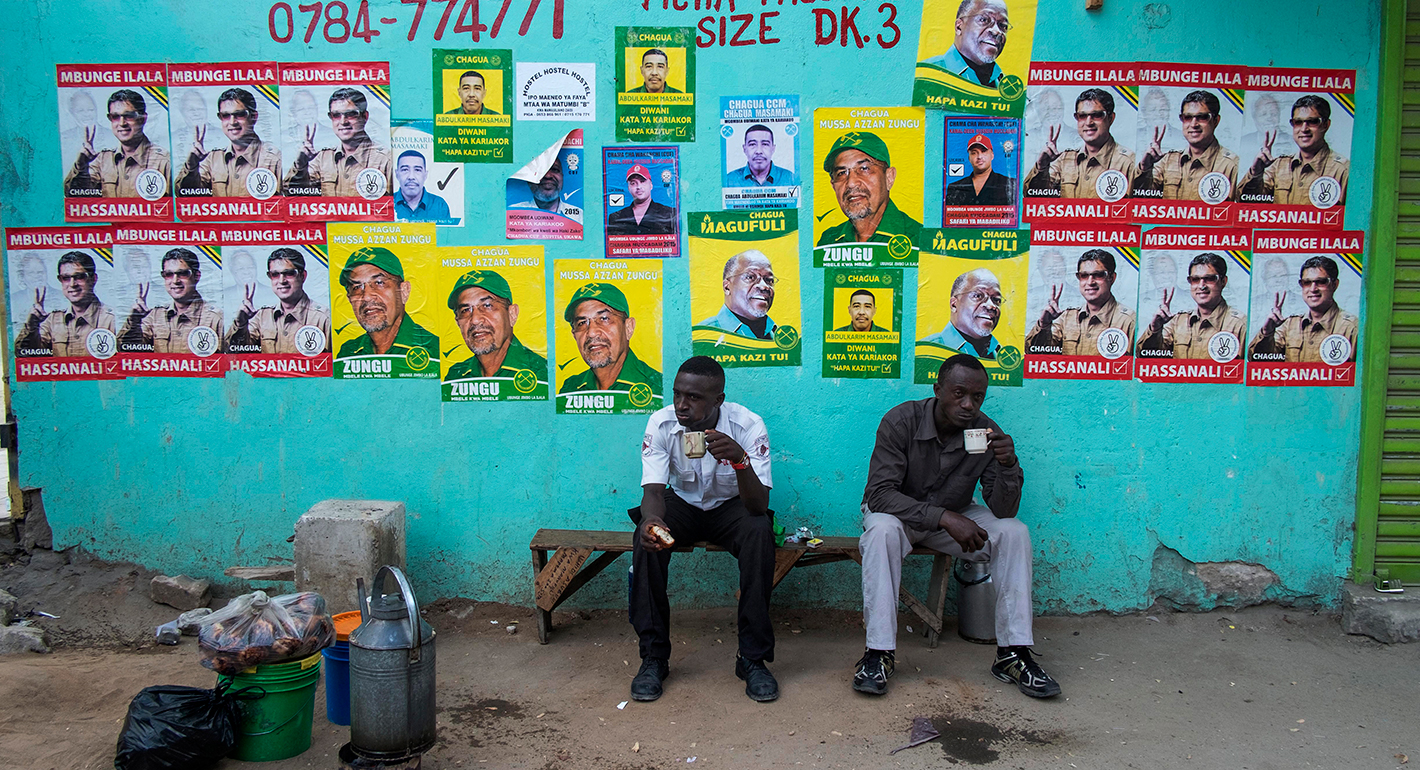
Today’s global democratic recession is partly rooted in a common perception that democracies have a delivery problem, with many citizens in both autocracies and democracies alike now believing that strongmen can achieve better governance outcomes. But a study of four countries in Africa reveals that democratic-leaning governments have demonstrated better governance performance than autocratic governments.


Sarah Yerkes, Natalie Triche, Amr Hamzawy