• Research
  • Emissary
  • About
  • Experts
Carnegie Global logoCarnegie lettermark logo
Democracy
  • Donate
Are Palestinians Building a State?

Source: Getty

Article

Are Palestinians Building a State?

The international community’s understandable admiration for Palestinian Prime Minister Salam Fayyad and his efforts to rebuild the West Bank obscures a dangerous regression in democracy and human rights.

Link Copied
By Nathan J. Brown
Published on Jul 1, 2010

Additional Links

Full Text
Program mobile hero image

Program

Middle East

The Middle East Program in Washington combines in-depth regional knowledge with incisive comparative analysis to provide deeply informed recommendations. With expertise in the Gulf, North Africa, Iran, and Israel/Palestine, we examine crosscutting themes of political, economic, and social change in both English and Arabic.

Learn More

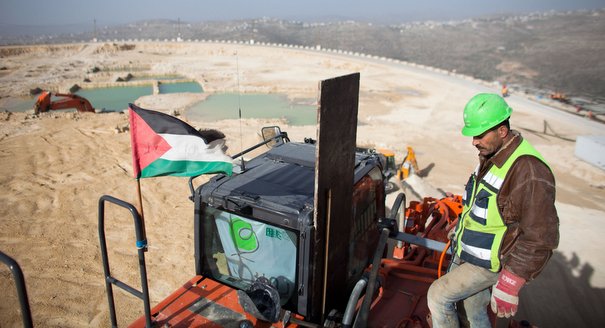
IMGXYZ5328IMGZYXThe international community’s understandable admiration for Palestinian Prime Minister Salam Fayyad and his efforts to rebuild the West Bank obscures a dangerous regression in democracy and human rights. Just back from the West Bank, Nathan J. Brown contends that the United States is once again confusing support for an admirable individual with that of a sound policy.

Key Conclusions

  • Government circumventing democracy. The unaccountable governing process that Fayyad has had to invent is not just postponing a democratic system—it is actively denying it.
     
  • Isolated successes do not create rule of law. The increasing number of cases seen and submitted to the courts indicates growing efficiency and confidence, but security services continue to act outside the law under the guise of cracking down on Hamas.
     
  • Lack of institution building. While Fayyad’s cabinet has managed to make a few existing institutions more effective and less corrupt, there has been regression in other governing bodies. Palestinian civil society is showing signs of decay as well.  Ironically, there was more institution building and civil society development under Yasser Arafat than there has been since the West Bank-Gaza split in 2007.
     
  • Disillusionment increasing among Palestinians. Popular support for Fayyad is growing but he still has no organized base. And Palestinians are increasingly cynical about the prospects for long-term development.
     
  • Fatah is in disarray. The party remains bitterly divided. Party leaders recently forced Fayyad’s cabinet to cancel local elections when Fatah could not organize itself on time.

“To the extent that Fayyadism is building institutions, it is unmistakably doing so in an authoritarian context,” writes Brown. “There is no reason to associate Fayyad personally with the most egregious aspects of this new authoritarianism, but there is no way his cabinet could have been created or sustained in a more democratic environment.”

“Palestinian authoritarianism in 2010 is different from Palestinian authoritarianism under Arafat—it is less venal and probably less capricious. But it is also more stultifying.”

 

Nathan J. Brown
Nonresident Senior Fellow, Middle East Program
Nathan J. Brown
Middle EastPalestineLevantPolitical ReformSecurityForeign Policy

Carnegie does not take institutional positions on public policy issues; the views represented herein are those of the author(s) and do not necessarily reflect the views of Carnegie, its staff, or its trustees.

More Work from Carnegie Endowment for International Peace

  • U.S. and Indian flags on display.
    Paper
    Indian Americans in a Time of Turbulence: 2026 Survey Results

    A new Carnegie survey of Indian Americans examines shifting vote preferences, growing political ambivalence, and rising concerns about discrimination amid U.S. policy changes and geopolitical uncertainty.

      • +1

      Milan Vaishnav, Sumitra Badrinathan, Devesh Kapur, …

  • Photo of an Israeli soldier walking behind young women in school uniforms, some wearing hijabs.
    Article
    For Younger Palestinians, Crisis Has Become a Way of Life

    Young people in Palestine are accused of being ignorant of their past. But the truth may be that they are more aware of their present than anyone else.

      Nathan J. Brown

  • BAGHDAD, IRAQ - OCTOBER 30: Turkish Trade Minister Omer Bolat (2nd L) and Iraqi Trade Minister Etir Davud Selman al-Greyri (3rd R) sign the JETCO 2nd Term Protocol and the Memorandum of Understanding on Cooperation in the Field of Exhibition Services during The 2nd Session Meeting of the Joint Economic and Trade Committee (JETCO), held to develop commercial and economic relations between Turkiye and Iraq in Iraq's Baghdad on October 30, 2025.
    Article
    The Evolving Middle Eastern Regional Order: Türkiye-Iraq Relations in Context

    In this moment of geopolitical fluidity, Türkiye and Iraq have been drawn to each other. Economic and security agreements can help solidify the relationship.

      • Meliha Altunışık

      Derya Göçer, Meliha Altunışık

  • Commentary
    Carnegie Politika
    Signs of an Imminent End to the Ukraine War Are Deceptive

    The main source of Russian aggression is a profound mistrust of the West and the firm belief that it intends to inflict a “strategic defeat” on Russia. As long as this fear persists, the war will not end.

      Tatiana Stanovaya

  • Source: North Atlantic Treaty Organization
    Paper
    Are Long-Term NATO–South Korea Defense Ties Possible? Transitioning From an Arms Exporter to a Trusted Defense Partner

    South Korea has emerged as a major weapon exporter. But its relationship with Europe will depend on more than that.

      Chung Min Lee

Get more news and analysis from
Carnegie Endowment for International Peace
Carnegie global logo, stacked
1779 Massachusetts Avenue NWWashington, DC, 20036-2103Phone: 202 483 7600Fax: 202 483 1840
  • Research
  • Emissary
  • About
  • Experts
  • Donate
  • Programs
  • Events
  • Blogs
  • Podcasts
  • Contact
  • Annual Reports
  • Careers
  • Privacy
  • For Media
  • Government Resources
Get more news and analysis from
Carnegie Endowment for International Peace
© 2026 Carnegie Endowment for International Peace. All rights reserved.