• Research
  • Emissary
  • About
  • Experts
Carnegie Global logoCarnegie lettermark logo
DemocracyIran
  • Donate
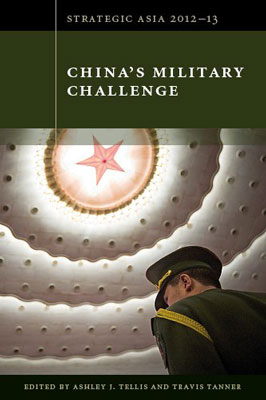
Strategic Asia 2012-13: China's Military Challenge
Book

Strategic Asia 2012-13: China's Military Challenge

This book examines what China's military rise means for the region and the world, looking at China’s strategic aims and the challenges and opportunities facing the United States.

Link Copied
By Ashley J. Tellis and Travis Tanner
Published on Oct 26, 2012

Additional Links

Overview by Ashley J. Tellis
Program mobile hero image

Program

South Asia

The South Asia Program informs policy debates relating to the region’s security, economy, and political development. From strategic competition in the Indo-Pacific to India’s internal dynamics and U.S. engagement with the region, the program offers in-depth, rigorous research and analysis on South Asia’s most critical challenges.

Learn More

Source: National Bureau of Asian Research

Co-edited and introduced by Ashley Tellis, this book, the twelfth volume in the Strategic Asia series, examines what China's military rise means for the region and the world. What are China’s strategic aims? What are the challenges and opportunities facing the United States? How is the region responding to China’s military power and to the U.S. policy of “strategic rebalancing”?


Order this book, or read the introduction by Ashley J. Tellis for free.

About the Editors:

Ashley J. Tellis is a Senior Associate at the Carnegie Endowment for International Peace and Research Director of the Strategic Asia Program at NBR, served in the U.S. Department of State as senior adviser to the Undersecretary of State of Public Affairs, and previously as senior adviser to the Ambassador at the U.S. Embassy in India. He also served on the National Security Council Staff as special assistant to the President and senior director for Strategic Planning and Southwest Asia. He is the author of India’s Emerging Nuclear Posture (2001) and co-author of Interpreting China’s Grand Strategy: Past, Present, and Future (2000), as well as the co-editor of the eight most recent volumes of Strategic Asia, published by NBR.

Travis Tanner is is the Senior Project Director and Director of the Pyle Center for Northeast Asian Studies at the National Bureau of Asian Research.

About the Authors

Ashley J. Tellis

Former Senior Fellow

Ashley J. Tellis was a senior fellow at the Carnegie Endowment for International Peace.

Travis Tanner

NBR

Authors

Ashley J. Tellis
Former Senior Fellow
Travis Tanner
NBR
South AsiaIndiaAfghanistanPakistanEast AsiaChinaSecurityMilitaryForeign PolicyArms Control

Carnegie does not take institutional positions on public policy issues; the views represented herein are those of the author(s) and do not necessarily reflect the views of Carnegie, its staff, or its trustees.

More Work from Carnegie Endowment for International Peace

  • Trump and Netanyahu speaking
    Commentary
    Emissary
    The Diverging U.S. and Israeli Goals in Iran Are Making the Endgame Even Murkier

    The cracks between Trump and Netanyahu have become more pronounced, particularly over energy and leadership targets.

      • Eric Lob

      Eric Lob

  • Seoul traffic at night
    Commentary
    Emissary
    How the Hormuz Closure Is Testing the Korean President’s Progressive Agenda

    The crisis is not just a story of energy vulnerability. It’s also a complex, high-stakes political challenge.

      Darcie Draudt-Véjares

  • Commentary
    Strategic Europe
    Russia’s Imperial Retreat Is Europe’s Strategic Opportunity

    The war in Ukraine is costing Russia its leverage overseas. Across the South Caucasus and Middle East, this presents an opportunity for Europe to pick up the pieces and claim its own sphere of influence.

      William Dixon, Maksym Beznosiuk

  • apan's Prime Minister Sanae Takaichi (L) reacts as US President Donald Trump delivers a speech in front of US Navy personnel on board the US Navy's USS George Washington aircraft carrier at the US naval base in Yokosuka on October 28, 2025.
    Article
    Takaichi’s Security Agenda After the Landslide Election

    Backed by a new LDP supermajority, Prime Minister Takaichi aspires to revise Japan’s long-standing security doctrine. Ahead of her visit to Washington, she faces fiscal hurdles for her proposed defense spending while needing to navigate President Trump’s request for naval assets to the Strait of Hormuz.

      • Harukata Takenaka

      Harukata Takenaka

  • Soldier looking at a drone on the ground
    Collection
    Conflict, Security, and Peacemaking

    Domestic and international conflicts present myriad challenges for leaders, militaries, and civilians, including the effects of new technological capabilities on the conduct of war, the effectiveness of security strategies, and the intricacies of post-conflict peacemaking. Carnegie scholars provide timely analyses to address these and other related questions.

Get more news and analysis from
Carnegie Endowment for International Peace
Carnegie global logo, stacked
1779 Massachusetts Avenue NWWashington, DC, 20036-2103Phone: 202 483 7600Fax: 202 483 1840
  • Research
  • Emissary
  • About
  • Experts
  • Donate
  • Programs
  • Events
  • Blogs
  • Podcasts
  • Contact
  • Annual Reports
  • Careers
  • Privacy
  • For Media
  • Government Resources
Get more news and analysis from
Carnegie Endowment for International Peace
© 2026 Carnegie Endowment for International Peace. All rights reserved.