

Q&A
- +1
Amr Hamzawy, Andrew Leber, Eric Lob, …
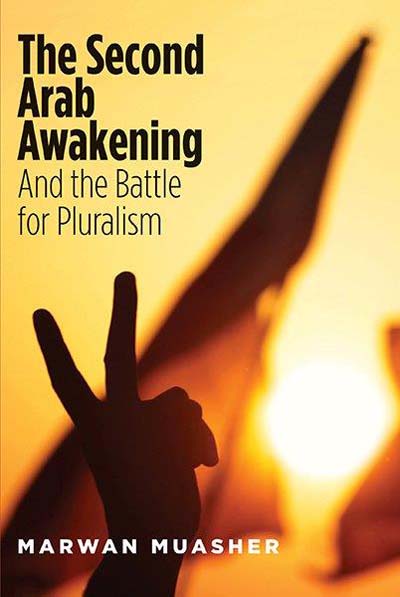
Only through the painstaking process of constructing an Arab world defined by pluralism and tolerance can the dream of freedom and opportunity for the region be realized.
Source: Yale University Press
This important book looks at the tumultuous recent events in the Arab region in the context of long-term historical pressure to build societies that will respond to Arab citizens’ longing for freedom and opportunity. Only through the painstaking process of constructing an Arab world defined by pluralism and tolerance can this dream be realized.
Marwan Muasher, former foreign minister of Jordan, asserts that all sides—the United States, Europe, Israel, and Arab governments alike—were deeply misguided in their thinking about Arab politics and society when the turmoil of the Arab Spring erupted. He explains the causes of the unrest, tracing them back to the first Arab Awakening, and warns of the forces today that threaten the success of the Second Arab Awakening. Hope rests with the new generation and its commitment to tolerance, diversity, the peaceful rotation of power, and inclusive economic growth, Muasher maintains. He calls on the West to rethink political Islam and the Arab Israeli conflict, and he underscores the importance of efforts to strengthen education and expand traditional definitions of Arab citizenship for the long-term process of democratic transition.
“This powerful book is a manifesto for political pluralism in the Arab world—a liberating concept that has unfortunately been missing in much of the thus far disappointing ‘Arab Spring.‘ Marwan Muasher shows how badly the Arabs need a political culture that accepts diversity, tolerates dissent, and embraces different sectarian strains. If Muasher’s ideas about a pluralistic 'third force' can take hold, we’ll see the second Arab awakening that this book describes—and Muasher will be one of its wisest chroniclers.”
—David Ignatius, Washington Post columnist
“In this timely book, a seasoned statesman and scholar of the Middle East provides an astute and historically informed analysis of the Arab Spring and its origins, meaning, and implications for the future of the Middle East. Muasher delves into history and draws on his own personal experiences to produce a smart, balanced, and engaging account of the intellectual debates and political reality that shape the landscape of change. Anyone interested in the future of the Arab world should read this book.”
—Vali Nasr, author of The Dispensable Nation: American Foreign Policy in Retreat

Vice President for Studies
Marwan Muasher is vice president for studies at Carnegie, where he oversees research in Washington and Beirut on the Middle East. Muasher served as foreign minister (2002–2004) and deputy prime minister (2004–2005) of Jordan, and his career has spanned the areas of diplomacy, development, civil society, and communications.
Recent Work



Amr Hamzawy, Andrew Leber, Eric Lob, …
Marwan Muasher
Carnegie does not take institutional positions on public policy issues; the views represented herein are those of the author(s) and do not necessarily reflect the views of Carnegie, its staff, or its trustees.

Russia’s ruling party would have benefited from Putin appearing as its distant patron, but as an active frontman imposing his views on the public, he has done nothing but harm both the party’s election campaign and the ruling system overall.

Andrey Pertsev

The Bureau of Industry and Security needs to adjust its focus and practices to maintain its position as the U.S. government’s primary champion of international technological competition.

Geoffrey Irving

Depleted financial reserves and a shrinking tax base mean it is no longer possible to simultaneously deliver high defense spending, price stability, and economic growth.

Alexandra Prokopenko
Understanding the climatic pain points is necessary for policymakers hoping to minimize the war’s negative environmental consequences.


Alejandro Martin Rodriguez, Joy Arkeh, Sarah Yerkes

Huawei pushed hard to enter the Egyptian data centers market, until the Americans made a better offer.

Angie Omar