

Paper
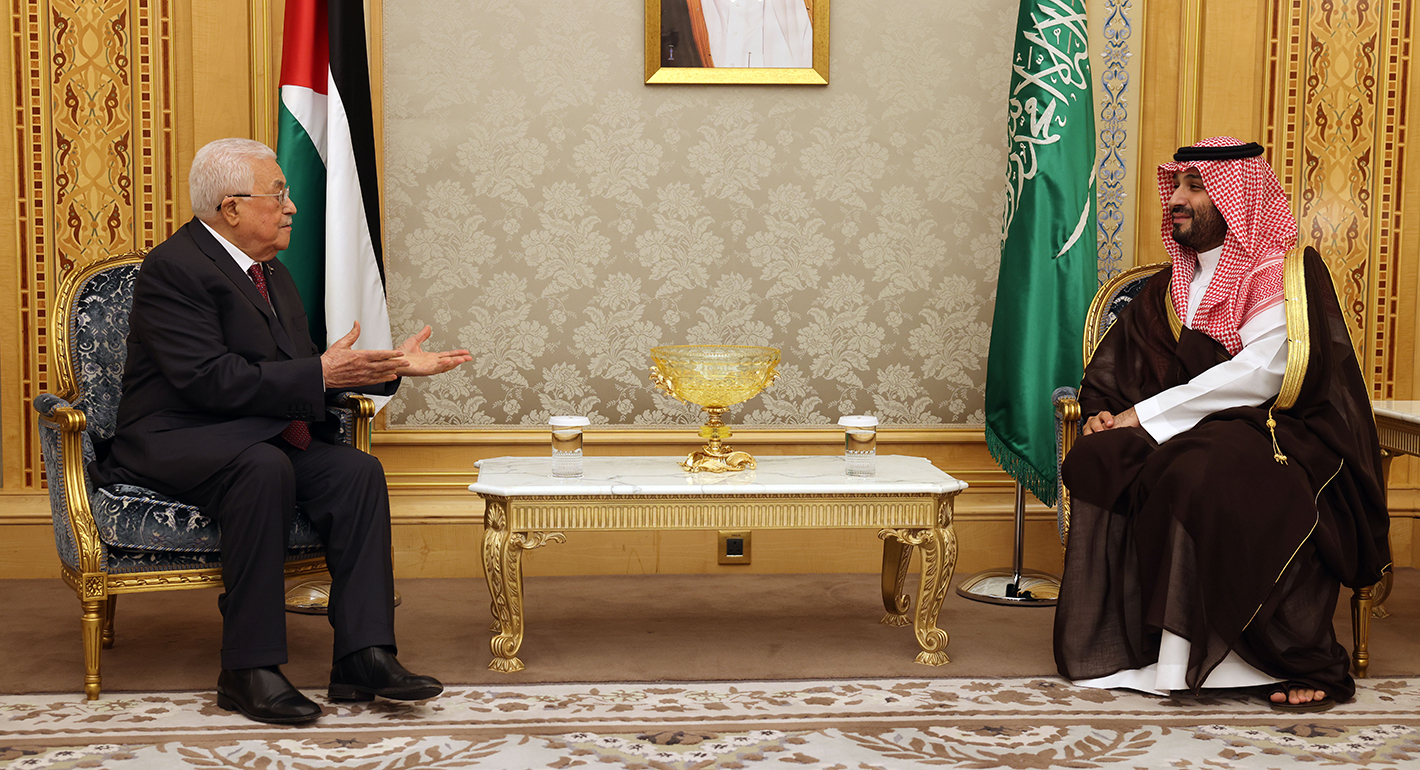
The U.S. midterm elections signal the opening of a narrow window for bold Saudi diplomacy on Palestine.
Andrew Leber, Zaha Hassan
Source: Getty
The Crimea operation may not be the last use of military force the world sees in the Ukraine crisis.
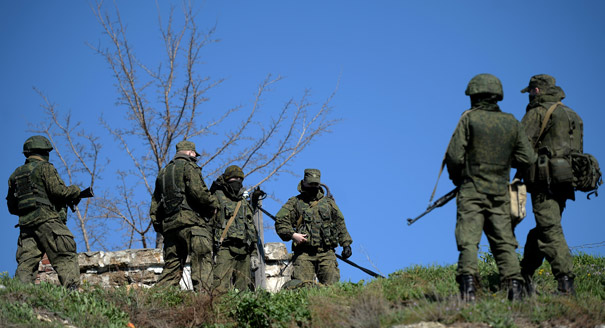
Russia’s military actions in Crimea have shown that it is prepared to use its armed forces to achieve political aims. When masked men with weapons moved into the autonomous region in southern Ukraine on February 27, the effort was not a spur-of-the-moment decision by Russia.
Indeed, it is clear that the Crimea operation, which seemed to have started immediately after the Sochi Winter Olympics ended and took place amid ongoing tensions between pro- and anti-Russian forces across Ukraine, was mapped out well in advance. It is likely to be part of a longer-term planning framework for Ukraine, as various military options were being weighed as the Ukrainian government under Viktor Yanukovych crumbled and other political events in the country unfolded.
Granted, the Russian military has yet to be truly tested in Crimea. Russian forces have met no organized resistance and seen virtually no fighting. So far, the military has been used primarily as a show of force. It has succeeded in creating facts on the ground, but in a largely benign environment.
Nonetheless, its impressive ability to seize the initiative, coordinate political and military actions, and use tactical maskirovka (diversions) has kept the West and presumably the new Ukrainian government on edge and guessing what will come next. Although information about the inner workings of the Russian military is scarce, it would appear that the use of military means in the unfolding events in Ukraine is by no means over.
Crimea has so far been the focus of Russia’s military operation, with Russian forces and political attention centered on the region. The Kremlin’s show of force began before the military took control of Crimea’s capital, Simferopol.
On February 26, Russia launched a major military exercise in its Western Military District (MD), which, along with the Southern MD, borders Ukraine. The exercise seemed designed to flex Russia’s military muscle from the Kola Peninsula to the Ukrainian border and demonstrate resolve on a political level to dissuade any other actor from intervening in Ukraine. It also distracted attention from Crimea.
The exercise reportedly involved, among other forces, three armies—two from the Western MD and one from the Central MD—just as tensions were rising in Crimea. Open-source reporting from Russia’s Southern MD surprisingly indicated that the district was going about “business as usual,” despite its proximity to Crimea and the fact that it is well placed to be a staging area for operations into Crimea and Eastern Ukraine. This district also has the highest readiness in the Russian Armed Forces.
The Russians appeared to want the world to focus on the scale of the exercise, pointing out that it included 150,000 troops, three armies, and hundreds of tanks and aircraft. These numbers made the exercise look very big, which drew attention and raised concerns about a possible large-scale Russian military move against Ukraine. But there was little detail about, for example, how many readiness-checked troops actually undertook field exercises. It certainly also served as a diversion from events in Crimea—clamor in the north to facilitate infiltration in the south.
Russia did indeed move into Ukrainian territory, but not on a large scale. In Crimea, the military secured Russian bases, access points, and key ground lines of communication.
But in the long run, the Crimea operation is likely to encounter sustainability problems, especially if the region is cut off from the rest of Ukraine, which could happen if the Kyiv government takes action to oppose the occupation of Crimea by overt or covert means.
Crimea depends to a large extent on the rest of Ukraine for water, gas, and electricity as well as for supplies transported by rail and roads. If the crisis in Crimea turns into a standoff without a political solution, the Ukrainians may decide to pressure Russian troops on the peninsula by cutting Crimea off from power grids and transportation infrastructure, thus denying Russian forces essential supplies and resources.
Although not easy to mount for the Ukrainian government and armed forces, such an operation would make it difficult for Russian forces to maintain their presence in Crimea. It would also put a strain on the peninsula’s 2 million residents. Supplies could be delivered by boat or air, but the effort would be expensive, cumbersome, and, if tensions increase, vulnerable, militarily speaking.
For Russia, either the Crimea operation has achieved its political aims or a larger operation will be needed in other parts of Ukraine. The size, types of military units, and branches of the armed forces involved in the exercise that began on February 26 certainly appeared to suggest Russia was gearing up for a large operation in Eastern Ukraine. And Russian President Vladimir Putin has received the mandate from Russia’s Federation Council to intervene in all of Ukraine. Information about the Russian military’s next steps is unlikely to be made public. However, there would be indicators that could signal that preparations for a large military operation in Eastern Ukraine are under way.
One indicator would be the type and number of forces exercising or being amassed near Eastern Ukraine. The forces needed for a large military operation in the region are line infantry units that would be likely to come from the Western, Central, and Southern MDs, thus forcing Ukraine to defend itself on at least two fronts. Indeed, forces currently appear to be continuing exercises in western Russia. The forces that appeared in Crimea seemed to be primarily from the elite units—reconnaissance units from the foreign military intelligence directorate (GRU), Spetznaz special forces, airborne forces—that are mainly contracted professional soldiers. They are high-quality forces by Russian standards, but they do not have the ability that line infantry and tank units possess to take and hold territory. Nevertheless, they could open yet another front if operations further into Ukraine begin. There are indications that they are now gradually being replaced (or reinforced) by infantry units from the Southern MD.
Another important sign would be reports of the redeployment of troops from other parts of Russia or the mobilization of reservists. Reservists have been called up regularly for exercises in the past few years, but on a small scale. These moves would indicate that forces in use today are not enough for a larger or longer operation such as the one that might be undertaken in Eastern Ukraine. Redirecting forces earmarked for other unstable areas such as the Caucasus and Central Asia is another indication.
The presence of military hospitals and field logistics bases near the border with Ukraine where the military exercises were conducted would also be a telltale sign that the Russians are expecting to return with units that would need supplies and are preparing for operations that may lead to casualties.
Russia has the capability to launch an operation into Ukraine. But then what? Despite having forces that in both size and scope are capable of acting in Eastern Ukraine, dividing the country in any meaningful way with military force is too big a task even for the Russian military. Even a limited operation in the most Russian-friendly areas of Eastern Ukraine would be very complex and demanding to sustain over time. Russia’s forces would likely be successful in armor operations in Ukraine’s countryside because of their superior situational awareness, mobility, firepower, and airpower, but they might well lose, for example, in the cities where small forces with high resolve can inflict losses on superior forces. Pushing into Ukraine may seem doable, achieving a sustainable outcome less so.
Without an effective long-term plan, including a political solution and an exit strategy, Russia could find itself in a situation either as relatively simple as Transnistria, a breakaway territory in Moldova in which little happens, or as bad as Chechnya, where Russian forces encountered fierce and persistent resistance. Russia could easily get bogged down, much like the Soviet Union did in Afghanistan in the 1980s.
When the Russian armed forces began a transformation five years ago, moving from the mass-mobilization Soviet army used for fighting large-scale wars to a high-readiness force for local and regional wars, they also started changing the logistics system. In the Soviet system, supplies were sent in bulk to the front. The Russian army has been working to adopt the Western practice of “just in time,” focused logistics—a huge change in terms of concepts, processes, and training needed for forces at all levels.
This transformation is still under way, and presently, prolonged high-pace operations, including combat, would be a very difficult option for Russia’s armed forces. Russian exercises in recent years have given ample opportunity to improve logistical support for the armed forces. But if the armed forces decide to engage in large-scale operations, logistics is likely to be a problem.
The Russian military has demonstrated in Crimea that it is capable of conducting a well-planned and well-executed operation. At the tactical level it has been quite impressive.
The Russians highlighted the importance of seizing the initiative, a legacy of their Soviet military tradition. Their operation in Crimea, which included diversions such as denying the identity of the armed groups of masked men, effectively planting the idea of a Crimean referendum on autonomy, and installing a puppet government in Crimea, underscored the importance of military-political coordination. And Russia has maintained the overall military initiative, though the Ukrainian forces have managed to display admirable restraint when faced with provocations (the Ukrainians do not want to provide a pretext for further intervention). But the Russian forces’ performance in combat operations has yet to be tested.
In a sense, maintaining control in Crimea would be sufficient to provide Russia decisive influence over Ukraine’s security policy in the future. An unsolved territorial dispute in Crimea would make it virtually impossible for Ukraine to join the EU or NATO. Russia’s operation in Crimea may already have achieved an important aim when looked at from this angle.
Still, it is unlikely to be the end of the story. On March 6, Russia announced the beginning of air defense drills with some reportedly 3,500 troops from the Western MD. This week has seen the beginning of airborne and ground force exercises, primarily in western Russia. The fact that they come on the heels of the Western MD’s exercises makes it difficult to disconnect these drills from events in Ukraine. Forces on exercise can fairly quickly be redirected into operations. Russia’s ongoing military exercises thus serve to keep the pressure on Ukraine. The Crimea operation may not be the last use of military force the world sees in the crisis in Ukraine.
Johan Norberg is a senior analyst at the Swedish Defense Research Agency. These views are his own.
Johan Norberg
Carnegie does not take institutional positions on public policy issues; the views represented herein are those of the author(s) and do not necessarily reflect the views of Carnegie, its staff, or its trustees.
The U.S. midterm elections signal the opening of a narrow window for bold Saudi diplomacy on Palestine.


Andrew Leber, Zaha Hassan
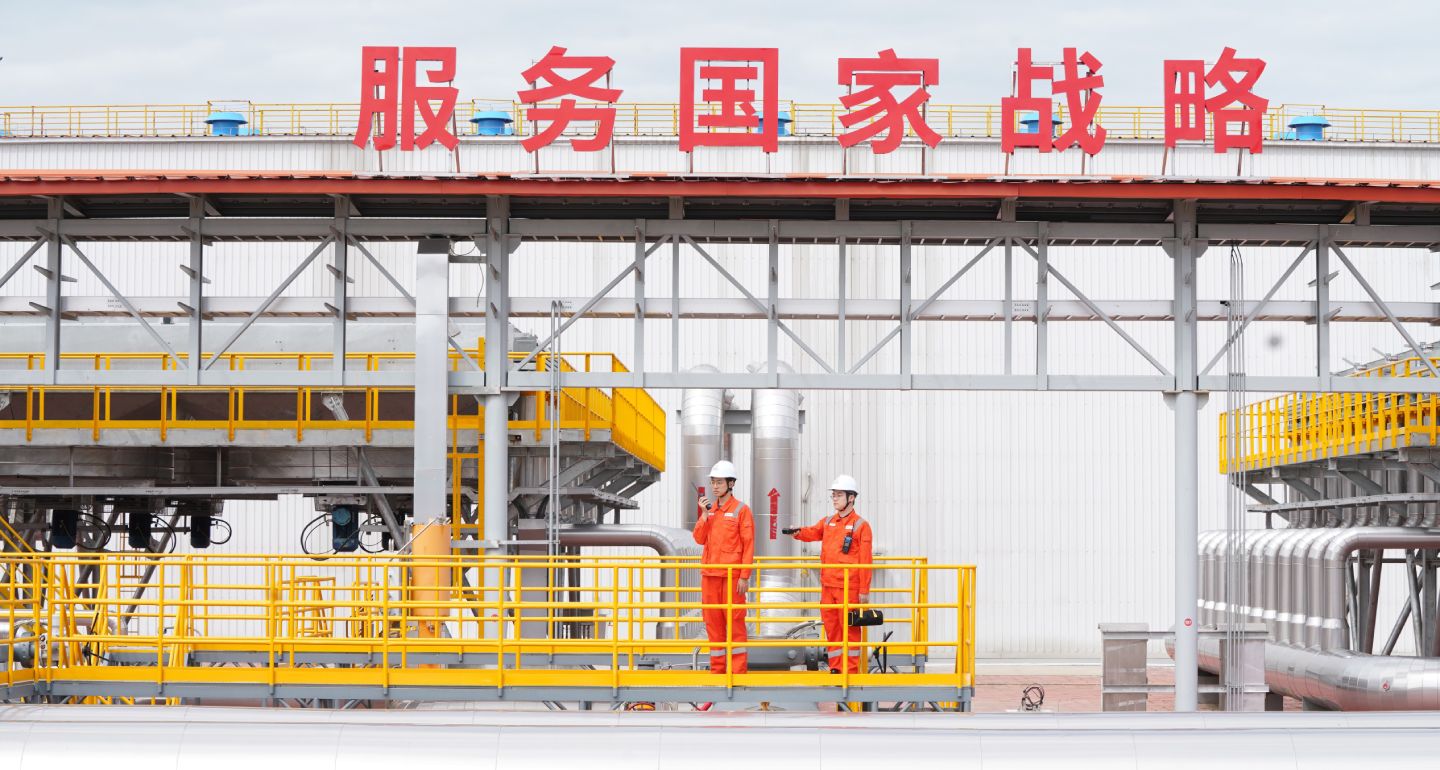
A leak of Russian gas price data helps establish that China is paying Russia far less than Central Asian countries and Gazprom’s former European customers.

Sergey Vakulenko

The EU can impose sanctions but struggles to enforce them without the United States. With Washington increasingly disinterested in backing European interests, the bloc must now fend for itself.


Nicu Popescu, Tiago Antunes

Global and rising powers will need to engage with Africa’s priorities and agency in order to secure the continent’s increasingly attractive partnerships.

Fonteh Akum

Rubio’s recent visit brought welcome attention, but more capital requires governance changes that may be a hard sell for regional governments.

Jennifer B. Murtazashvili