

Commentary
Funding Ukraine remains a priority for European leaders. As Russia’s war of aggression heads into another winter, two feasible options to mobilize support for Kyiv should be fast-tracked.
Vladyslav Rashkovan, Gregory P. Wilson
Source: Getty
Despite Côte d’Ivoire’s strong export potential, its utilization of AGOA preferences has been limited; even if AGOA is not re-authorized, its experience offers important lessons for stakeholders aiming to expand trade.
Since its inception, the African Growth and Opportunity Act (AGOA) has offered eligible “sub-Saharan” African countries duty-free access to the U.S. market for thousands of products. But despite Côte d’Ivoire’s eligibility and strong export potential, its utilization of AGOA preferences remains limited, particularly in nonagricultural and value-added sectors. This study evaluates Côte d’Ivoire’s use of AGOA, focusing on current U.S. exports, sectoral export potential, and barriers to maximizing benefits. In addition to an extensive desktop review, field research was conducted in collaboration with an Ivorian expert, Gérard Amangoua, who provided insights into national policy and stakeholder engagement and helped facilitate the circulation of questionnaires to private and public sector stakeholders.
Côte d’Ivoire’s exports to the United States are dominated by cocoa, cashew nuts, rubber, petroleum, and wood products—many of which already enter the U.S. duty-free under most-favored nation terms or the expired generalized system of preferences. From May 2002 to May 2025, only 3.7 percent of Ivorian exports to the United States were claimed under AGOA. This underutilization reflects missed opportunities, especially in sectors such as textiles, apparel, and processed agricultural goods that benefit from AGOA-specific provisions. Nevertheless, Côte d’Ivoire has made progress, and even if the U.S. Congress does not reauthorize AGOA for future years, this case study offers important lessons for governments, regional organizations, the private sector, and other development stakeholders. The country is Africa’s largest agricultural exporter to the United States, and its AGOA utilization rate has improved in recent years. Some key challenges include the absence of a current AGOA strategy, limited institutional capacity, and low awareness among exporting firms in Côte d’Ivoire. To overcome these issues, the country should aim to revitalize national strategies, improve coordination, and invest in trade infrastructure and capacity building. These measures could enhance Côte d’Ivoire’s use of programs like AGOA, diversify exports, and strengthen its trade relationship with the United States, while addressing structural gaps and supporting sustainable economic growth.
The African Growth and Opportunity Act (AGOA) was enacted on May 18, 2000.1 It is a unilateral trade preference program that provides eligible “sub-Saharan” African countries with duty-free access to the U.S. market for over 6,700 products. AGOA is an extension of the United States’ generalized system of preferences (GSP), and it seeks to drive economic growth, enhance trade and investment, foster economic and political reforms across Africa, and improve economic relations between the region and the United States.2 AGOA eligibility is outlined in Section 104 of the Act. Pursuant to this provision, African countries must demonstrate a commitment to establishing or advancing a market-based economy, upholding the rule of law, promoting political pluralism, and ensuring due process. Additionally, African beneficiaries must work to eliminate barriers to U.S. trade and investment, implement policies aimed at poverty reduction, actively combat corruption, and uphold human rights protections. Eligibility is reviewed annually by the United States Trade Representative (USTR), with the U.S. president having the discretion to grant or withdraw beneficiary status. In 2024, thirty-two African countries qualified for AGOA benefits.3
According to the 2024 Biennial Report on the Implementation of AGOA, U.S. imports under AGOA totaled $9.7 billion in 2023, down from $10.2 billion in 2022. All imports (crude oil, textiles, and non-oil products) experienced an almost similar decline in 2023. Nevertheless, crude oil imports from Angola, Ghana, Nigeria, and the Republic of Congo primarily drove the rise in 2022. Non-oil imports, which grew 10.6 percent to $5.5 billion in 2023 from $5 billion in 2021, included motor vehicles, apparel, ferroalloys, precious jewelry, cocoa products, citrus fruit, and copper.4 To benefit from AGOA, products must meet the rules of origin requirements. This means that a significant portion of the product’s value must be added within an AGOA-eligible country or a group of countries through manufacturing, assembly, or transformation. For apparel, AGOA includes a third-country fabric provision, allowing some countries to use fabric from outside the region while still qualifying for duty-free treatment.5
AGOA has enjoyed strong bipartisan support in the United States, with U.S. imports from AGOA countries nearly tripling in its first decade.
AGOA has enjoyed strong bipartisan support in the United States, with U.S. imports from AGOA countries nearly tripling in its first decade. However, trade gains declined after the early 2000s, with oil and gas dominating exports.6 The trade preference scheme has undergone revisions and was extended once in 2015 to last until September 2025.7 Multiple bills to reauthorize AGOA failed to reach a vote under the previous U.S. Congress.8 At the time of publishing, although a small window remains for Congress to include provisions to renew AGOA in other legislation packages, the lack of political momentum to lower trade barriers makes this prospect increasingly unlikely.
This study examines Côte d’Ivoire’s utilization of AGOA by examining the country’s U.S. exports and use of the Act, its export potential across key sectors, and the main challenges hindering the country’s maximization of benefits under the preference scheme. Despite Côte d’Ivoire’s eligibility and strong export potential, its utilization of AGOA preferences remains limited, particularly in nonagricultural and value-added sectors.
The study’s methodology involved close collaboration with Ivorian expert Gérard Amangoua.9 He provided important insights into Côte d’Ivoire’s national strategies and initiatives aimed at securing and maintaining its AGOA beneficiary status, as well as offered valuable guidance on the country’s AGOA-related activities, challenges, and principal stakeholders. Amangoua also facilitated the dissemination of questionnaires to relevant public and private sector institutions, and nongovernmental stakeholders and partners, to assess perceptions of Cote d’Ivoire’s AGOA usage.10 The questionnaire responses were supplemented by the authors’ extensive desk research on the country’s domestic initiatives, key instruments and policies, institutions, and key actors associated with AGOA.
Recommendations based on the study findings include policy measures to (1) support Côte d’Ivoire’s exporters in either an AGOA-related or post-AGOA ecosystem, (2) expand its export base, and (3) maximize the benefits of preference programs.11 Even if AGOA is not extended, these recommendations should help guide Côte d’Ivoire in engaging relevant domestic actors, the U.S. government, and other stakeholders and development partners to fill various capacity gaps and needs and enhance its export sectors. The study findings could also be applicable to other African countries seeking to maximize their use of preference programs.
Côte d’Ivoire was first designated the thirty-sixth eligible AGOA beneficiary on May 16, 2002.12 At the time of AGOA’s inception in 2000, Côte d’Ivoire’s political landscape was marked by turmoil. Following a military coup in 1999, a military rebellion in 2002, and several years of armed conflict, Côte d’Ivoire’s AGOA eligibility was withdrawn on January 1, 2005.13 A March 2007 peace agreement between Ivorian president Laurent Gbagbo, Burkinabe president Blaise Compaore, and New Forces commander Guillaume Soro brought an end to the first civil war.14 Following the inauguration of Alassane Ouattara as the President of Côte d’Ivoire in May 2011, his administration implemented a series of reforms that ushered in a period of sustained political stability.15 As such, in October 2011, U.S. president Barack Obama restored the country’s AGOA eligibility, along with that of Guinea and Niger.16
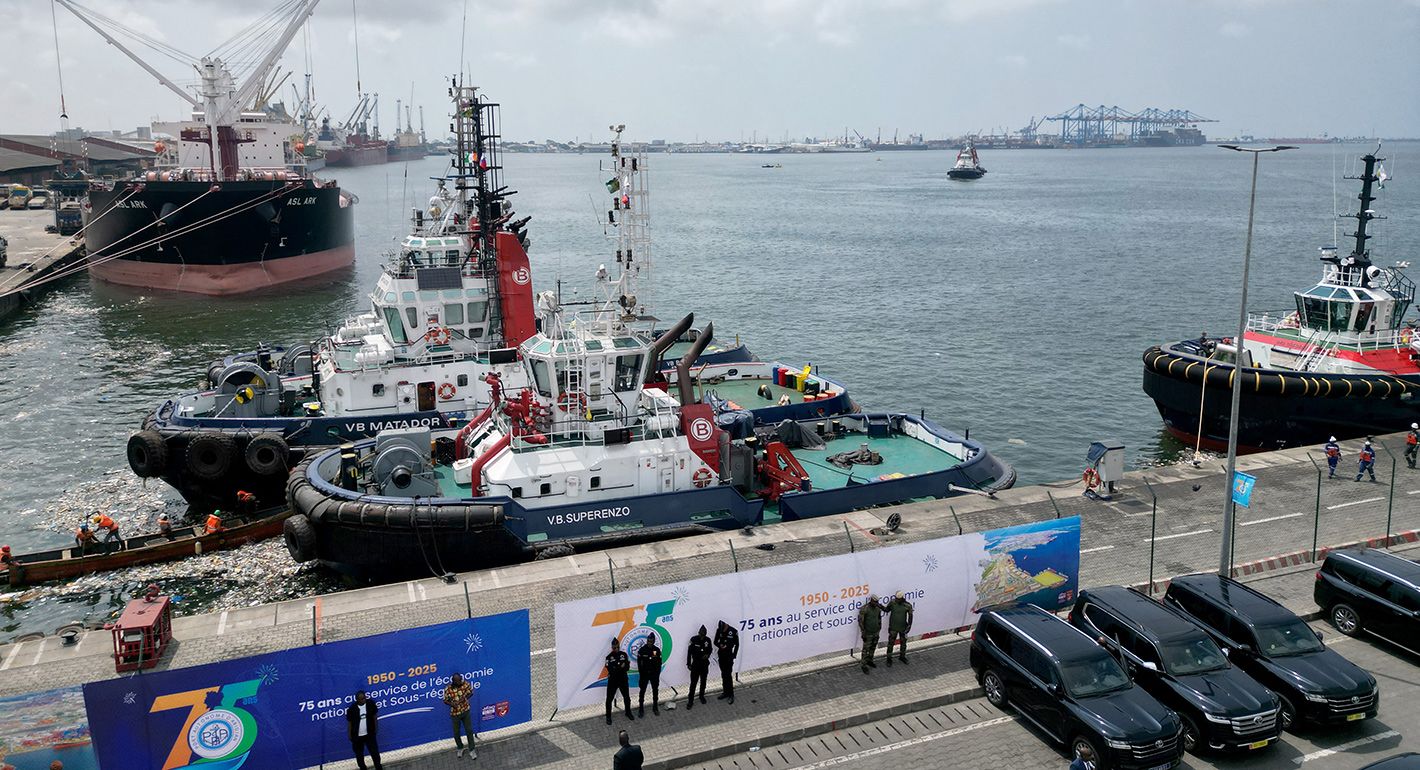
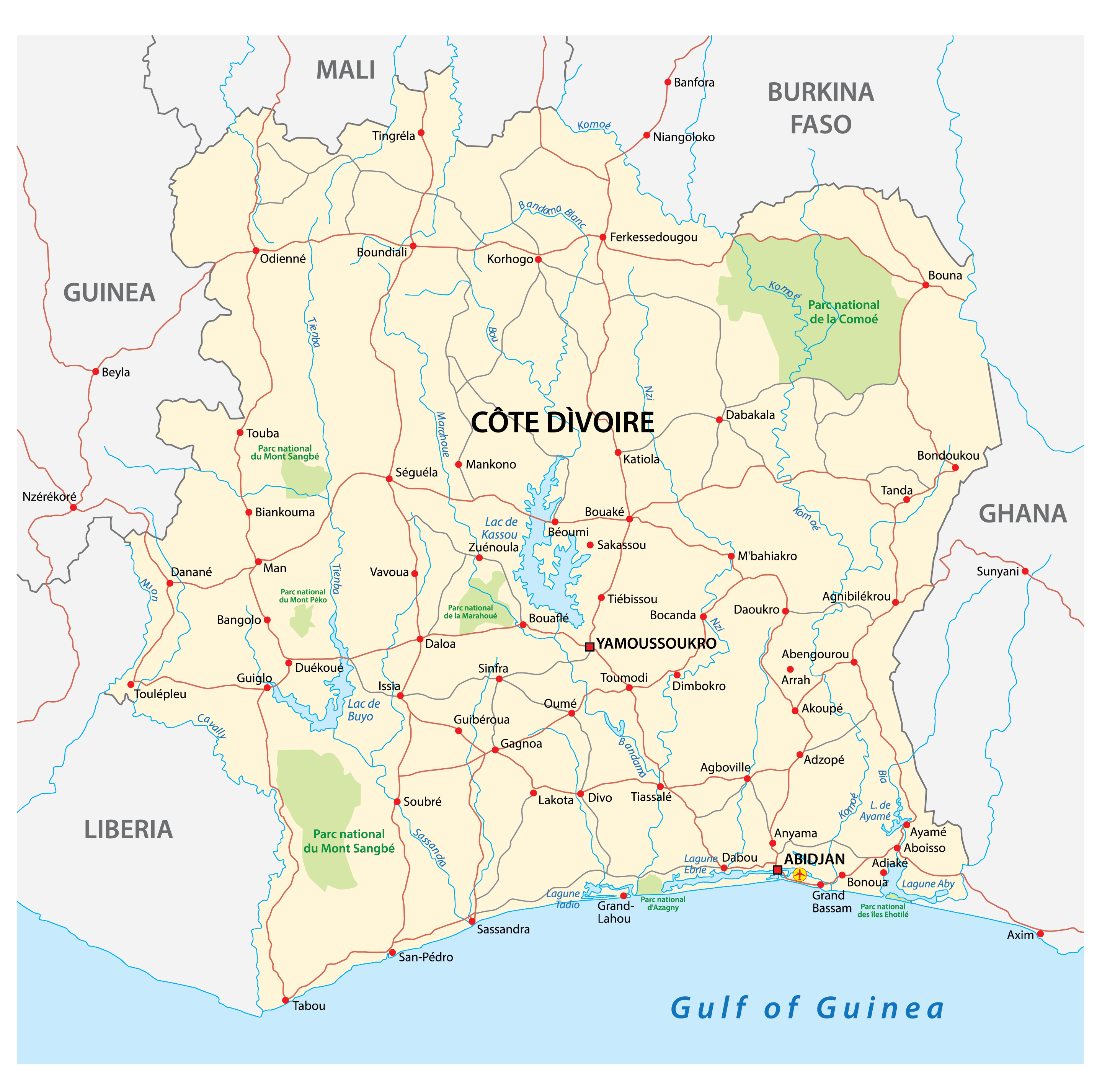
Côte d’Ivoire is located in West Africa. It shares borders with Liberia and Guinea to the west, Mali and Burkina Faso to the north, Ghana to the east, and the Atlantic Ocean to the south. It has a land area of 322,240 square kilometers. In 2024, it had 31.9 million inhabitants.i Its capital city is Yamoussoukro, although its economic capital and largest city is the port city of Abidjan.ii
As of 2025, Côte d’Ivoire’s gross domestic product (GDP) is $94.5 billion, and the economy is expected to grow by 6.3 percent.iii Agriculture accounts for approximately 25 percent of its GDP and 60 percent of its export earnings. Côte d’Ivoire is a member of the African Union, the West African Economic and Monetary Union (WAEMU), and the Economic Community of West African States (ECOWAS). The country ratified the African Continental Free Trade Area agreement in November 2018.iv
i “Population, Total, Côte d’Ivoire,” World Bank, accessed on September 8, 2025, https://data.worldbank.org/indicator/SP.POP.TOTL?locations=CI.
ii “Données sur la Côte d’Ivoire,” Government of the Republic of Côte d’Ivoire, accessed on September 8, 2025, https://www.presidence.ci/presentation-ci/.
iii “Côte d’Ivoire: Datasets,” International Monetary Fund (IMF), accessed on September 8, 2025, https://www.imf.org/external/datamapper/profile/CIV.
iv “Status of AfCFTA Ratification,” Tralac, August 13, 2024, https://www.tralac.org/resources/infographic/13795-status-of-afcfta-ratification.html.
For most of its postindependence era, Côte d’Ivoire was considered a low-income country by the World Bank’s income classification. By 2021, the country had risen to the lower-middle income classification category.17 Today, Côte d’Ivoire’s economy boasts one of the fastest sustained economic growth rates in Africa.18 In 2023, the country’s GDP growth of 6.3 percent was among the highest in the world and more than twice the continental average.19 Currently, Côte d’Ivoire is the largest economy in WAEMU, accounting for one-third of the bloc’s GDP.20
Agriculture, in the form of small and large-scale cash crop farming, remains the backbone of the Ivorian economy. The country is the world’s top exporter of cocoa and raw cashew nuts. It is also a net exporter of oil, with a significant manufacturing sector. Data from 2023 show that Côte d’Ivoire’s exports are led by gold ($4.28 billion), cocoa beans ($3.68 billion), rubber ($2.43 billion), refined petroleum ($2.34 billion), and coconuts, Brazil nuts, and cashews ($1.33 billion). Its main export destinations were Switzerland ($3.88 billion), the Netherlands ($1.99 billion), Mali ($1.59 billion), the United States ($1.1 billion), and Malaysia ($951 million).21 Ivorian exports to the United States account for 4.75 percent of Côte d’Ivoire’s total exports.
As an AGOA-eligible member, Côte d’Ivoire could have boosted its vast economic profile by optimizing AGOA preferences. Côte d’Ivoire’s top five exports to the United States from May 2002 to July 2025 generally remained limited to five products: cocoa, cashew nuts, wood products, rubber, and petroleum (see Table 1). Other products Côte d’Ivoire has exported to the United States over this period, albeit in much smaller volumes, were artwork, coffee, tea, spices, and beauty products. All these products represented 99.5 percent of Côte d’Ivoire’s exports to the United States during this period. In the first year of its AGOA eligibility (May 2002–April 2003), the country’s top exports to the United States included cocoa products (around $383 million), petroleum and petroleum products (around $56 million), wood products (around $10 million), and cashews and other nuts (around $5 million). When the country regained AGOA eligibility in 2011, its export basket remained unchanged, except for the addition of rubber. That year, Côte d’Ivoire exported more than $870 million in cocoa products to the United States.22
The most recent full-year data (2024) indicate that U.S. total goods trade with Côte d’Ivoire was $1.6 billion. Goods exports to Côte d’Ivoire were $596.6 million, an increase of 15.6 percent ($80.4 million) from 2023. On the other hand, U.S. goods imports from Côte d’Ivoire were $1 billion, up 7 percent ($66.7 million) from 2023.23
Côte d’Ivoire is Africa’s largest exporter of agricultural products to the United States. However, most of these exports do not occur under AGOA. In 2024, the country exported $816.2 million in agricultural exports, of which $758.5 million (92.9 percent) were raw cocoa and cocoa products.24 However, only $178.2 million was declared under AGOA. This represents less than a quarter (21.8 percent) of Côte d’Ivoire’s largest export category being declared under the special preference program (see Figure 1).25 Côte d’Ivoire’s cocoa-heavy exports impact its AGOA utilization, as cocoa and its derivatives are generally imported duty-free in the United States. Cashew nuts, another key agricultural export, also enter duty-free.26 Hence, no preferences need to be claimed. The remaining agricultural products, which were dutiable and not eligible for any preference scheme, were valued at $5.1 million.
Key nonagricultural Ivorian exports to the United States, including natural rubber, crude petroleum, processed petroleum distillates, and wood products, also follow similar trends. In 2024, Côte d’Ivoire exported $181.8 million in wood and natural rubber but claimed AGOA preference for $41,676 worth of wood products and did not claim any for rubber products. From May 2002 to July 2025, Côte d’Ivoire exported $3.3 billion in petroleum (and related products) to the United States. While 34.9 per cent of those products were imported duty-free, the remainder were AGOA eligible. However, imports valued at $1.5 billion (45.5 per cent of total petroleum and related products) were left unclaimed. On the other hand, while 47.3 percent of the natural rubber and the wood products exported by Côte d’Ivoire to the United States were not AGOA eligible, they were not subject to tariffs (hence, duty-free) in the United States.27
While not always claiming AGOA preferences, Ivorian products still benefit from some tariff reductions when entering the United States. In fact, from May 2002 to July 2025, imports valued at $1.1 billion (4.7 percent of all imports) were claimed under the United States ordinary GSP as compared to $870.0 million (3.7 percent) under AGOA (see Figure 2). These products could have been claimed under AGOA. This is significant because GSP expired on December 31, 2020, and is still pending congressional renewal. Importers are encouraged to flag GSP preferences in case it is renewed, but still pay the ordinary most-favored nation duty rate.28 This means that even though Ivorian imports of $1.3 billion have been flagged under GSP since January 2021, duties have been paid for products that are not duty-free. Had those products been claimed under AGOA, it is likely that no import duties would have been paid. It is also uncertain whether the duties paid would be reimbursed.
Nevertheless, the data imply that 91.9 percent ($21.7 billion) of Côte d’Ivoire’s products enter the United States under no program at all. Of that amount, $18.2 billion (77.1 percent) is imported duty-free.29
Indeed, a major concern about AGOA is its low utilization by African beneficiaries.30 The AGOA utilization rate of a country is the percentage of U.S. imports under AGOA as a share of total U.S. imports from that country. According to a study by the United Nations Conference on Trade and Development, Africa’s use of the preference scheme peaked in 2008, when the $55.9 billion in imports under AGOA accounted for 68.3 percent of U.S. imports from the beneficiary countries.31 Nevertheless, the study’s analysis of the tariff treatment of AGOA beneficiaries’ imports in the United States indicates an improvement in Ivorian products from 1998 to 2000 and 2019 to 2021 (see Table 2). In addition, a study by the U.S. International Trade Commission indicates that between 2014 and 2021, Côte d’Ivoire’s AGOA utilization rate increased by 86 percent, which was driven by increased preference utilization on cocoa paste and bulk chocolate. The country featured among the top five African beneficiaries with the most significant improvements in AGOA utilization.32
Nonetheless, Côte d’Ivoire can improve its AGOA usage vis-à-vis its GSP usage because the former has better product coverage. The vast majority of the roughly 5,100 products covered by GSP are also eligible for duty-free access under AGOA. In fact, AGOA extends duty-free treatment to about 1,700 additional dutiable products—including textiles and apparel—that are not covered by GSP. In contrast, only around fifty products are exclusively eligible for duty-free access under GSP. AGOA further expands market access by granting all its beneficiaries duty-free entry for products designated under the GSP’s least-developed beneficiary developing country (LDBDC) category. As a result, several AGOA beneficiaries—such as Côte d’Ivoire, which are not classified as GSP LDBDCs—can access a broader range of products duty-free. Additionally, AGOA removes the quantitative limits that otherwise apply to certain GSP benefits, offering even greater U.S. market access.33
As previously mentioned, Côte d’Ivoire’s agricultural sector, especially cocoa, is a major beneficiary of U.S. market access. Questionnaire respondents further identified tropical fruit, cassava and its derivatives, honey, and shea butter as products with strong export potential and demand in the United States.34 However, Ivorian main agricultural products are, for the most part, currently exported unprocessed. Nevertheless, the government aims to attract investment in agro-processing to domestically process cashew nuts, cocoa, and palm oil. There is also impetus to process rubber seeds as a source for biofuel, refined industrial oil, and derivative products such as soap.35 As previously mentioned, many raw or unprocessed agricultural and fisheries products enter the U.S. market duty-free. However, other products, especially processed foods, attract duties. Hence, the duty-free treatment accorded to processed agricultural products under AGOA presents a missed opportunity for Côte d’Ivoire to export value-added products to the United States, attracting higher prices and generating higher revenues for local companies.36
Survey respondents emphasized the great potential and need to prioritize Côte d’Ivoire’s textiles and apparel sector.37 The country was granted an AGOA Apparel Visa in December 2003, which permits the country to claim AGOA-only duty-free preferences.38 However, the textile sector has largely failed to take advantage of this apparel visa to access the large and lucrative U.S. clothing market. In 2024, Côte d’Ivoire’s exports of textiles and apparel amounted to only $56,961. Further, from May 2002 to July 2025, the United States imported a total of $1.8 million in textiles and apparel from Côte d’Ivoire, representing only 0.01 percent of total imports from that country.
Notwithstanding the domestic challenges that Côte d’Ivoire has faced, it has emerged as a regional economic powerhouse and a leading exporter of agricultural products to the United States.
Notwithstanding the domestic challenges that Côte d’Ivoire has faced, it has emerged as a regional economic powerhouse and a leading exporter of agricultural products to the United States. Even though its principal exports, particularly cocoa beans, are not subject to duties when imported into the United States, Côte d’Ivoire still does not claim benefits on some key exports, such as petroleum. The country could also orient away from claiming GSP preferences in favor of AGOA’s because of the expanded market access and the expiration of GSP in 2020. Nevertheless, the country can consider optimizing its U.S. market access by investing in agro-processing and prioritizing its textiles and apparel sector to benefit from AGOA preferences.
From the inception of AGOA, Ivorian public institutions, led by the government, have actively sought to access and enhance export opportunities from Côte d’Ivoire to the United States under AGOA (see Figure 3).39 Over the years, private sector actors, development partners, regional institutions, and U.S. entities have also become involved in implementing national initiatives to enhance Côte d’Ivoire’s success in utilizing AGOA benefits.
The legal basis for Côte d’Ivoire’s participation in AGOA is codified in various laws. This includes Decree No. 2012-448 of May 16, 2012 (Establishing a Customs Visa System for the Export of Clothing and Textile Products to the United States of America Within the Framework of AGOA), and the Interministerial Order No. 090 of June 11, 2012, implementing the provisions of the latter decree. The principal public body coordinating Côte d’Ivoire’s AGOA mandate is the Directorate General for Foreign Trade (DGCE) under the Ministry of Commerce and Industry.
Regarding AGOA, the DGCE’s main role is to support the promotion of Ivorian products in the U.S. market, conduct and coordinate capacity building and training for the public and private sectors, and raise private sector awareness about the use of the trade preference scheme. To fulfill its mandate, the directorate organizes and coordinates various AGOA-related activities, including government-to-government consultations (including with the U.S. government), public awareness campaigns, private sector awareness-raising workshops, capacity-building sessions for exporters, training for customs or regulatory agencies, collaboration with donor or development partners, and various monitoring and evaluation (M&E) surveys.40 Moreover, the DGCE maintains commercial relations with the United States, with an important liaison being the Embassy of Côte d’Ivoire in Washington, DC.
The directorate is also Côte d’Ivoire’s AGOA focal point and coordinates the Permanent Commission on AGOA of Côte d’Ivoire (AGOA Commission). The AGOA Commission was established by the country’s Council of Ministers on May 16, 2012, after Côte d’Ivoire’s AGOA readmission in October 2011. The commission is headed by the country’s prime minister and supported by a technical committee (chaired by Côte d’Ivoire’s Export Promotion Agency, APEX-CI) and a secretariat (comprising the Ministry of Commerce and Industry and APEX-CI). The AGOA Commission’s budget was announced to be borne 20 percent by the private sector and 80 percent by the State of Côte d’Ivoire.41 The commission’s official activities commenced in January 2013.42
The AGOA Commission is the main vehicle for public-private consultations and engagement with other stakeholders (including civil society, development partners, and multilateral and regional finance institutions) in the form of meetings, workshops, and seminars. The commission’s primary activities include proposing to the Ivorian government appropriate AGOA-related measures, promoting sectoral development, supporting Ivorian enterprises, mobilizing U.S. financial and technical assistance, organizing missions and events, identifying and mobilizing expertise and information resources, conducting advocacy and monitoring eligibility, and monitoring AGOA utilization.43
In March 2012, APEX-CI launched the AGOA Resource Center to provide a one-stop shop for Ivorian enterprises to learn how to take full advantage of the opportunities offered by AGOA.44 This center was established with the support of the United States Agency for International Development (USAID), in partnership with the West Africa Trade and Investment Hub program and APEX-CI.45 It is currently inactive, as are most other AGOA activities in Côte d’Ivoire.
The design of Côte d’Ivoire’s national AGOA strategy began with its bid for AGOA eligibility. In 1998, the Ivorian government secured a $12 million loan from the World Bank for a capacity-building project on private sector development, set to be completed in May 2002. In the years following, AGOA was established, and in order to meet the benchmarks established in Section 104 of AGOA, the government underwent a series of consultations with the U.S. private sector, the USTR, and APEX-CI advisers. Simultaneously, the World Bank’s project with Côte d’Ivoire received a two-year extension to shift its focus toward AGOA-related capacity building.46 The Ivorian government gained eligibility in May 2002.
The original goal of the World Bank project was to promote exports and increase foreign direct investments into Côte d’Ivoire. However, when AGOA opened new market opportunities, the focus shifted to developing exporters’ use of AGOA. The World Bank loan was reoriented toward three key structural areas: (1) helping small and medium-sized enterprises (SMEs) attract foreign direct investment; (2) supporting the State–Private Sector Consultation Committee, and (3) capacity building for enterprises in road maintenance to facilitate trade-oriented infrastructure.47 When Côte d’Ivoire lost its AGOA eligibility in 2004 due to domestic instability, the World Bank was unable to complete its program in the country.48
Côte d’Ivoire’s challenges with AGOA eligibility and its failed investment project with the World Bank laid the groundwork for its AGOA National Strategy (AGOA Strategy), adopted in 2017.49 The AGOA Strategy was prepared by representatives of Côte d’Ivoire’s Ministry of Commerce and Industry, APEX-CI, and the National Export Council,50 with technical and financial support from the African Development Bank, USAID, and West Africa Trade and Investment Hub.51 The strategy outlines the framework for leveraging Côte d’Ivoire’s AGOA eligibility from 2018 to 2022. The five-year vision aimed to position the country as a leading exporter under AGOA by diversifying and improving the competitiveness of its exports, particularly in textiles, dried mangoes, cassava products, cashew nuts, honey, and shea butter. The strategy’s main objective was to increase Côte d’Ivoire’s exports to the United States from about $1.2 billion in 2017 to $3.5 billion by 2025.52
While its exports of $1.6 billion in 2024 are a slight improvement on its 2017 performance, the country has not yet achieved its strategic goal. This is probably because of insufficient implementation of the AGOA Strategy due to financial constraints. Moreover, the strategy expired in 2022 and has not been extended or replaced.
Due to gaps in data collection and availability, this study was unable to comprehensively enumerate the Ivorian companies currently exporting to the United States, including under AGOA. However, some of the principal Ivorian exports to the United States require an export license and there is a list of licensed companies.53 DGCE grants the licenses annually and maintains the list. The licenses must be presented to the Ivorian Customs Directorate before each consignment is exported.54 But, unfortunately, the data do not indicate which companies are claiming AGOA preferences.
The latest list available for the study was from 2023.55 It records 2,450 transactions of 116 companies exporting to the United States via maritime transport.56 As Table 3 shows, the ten largest exporters from Côte d’Ivoire are locally incorporated entities of foreign companies. The principal foreign investors typically come from Switzerland, Singapore, the United States, and France. There are also foreign companies involved in the Ivorian U.S. export sector as suppliers and financiers. These include entities from the West African region, specifically, Senegal and Nigeria, as well as Belgium, the United Kingdom, and the United Arab Emirates.
It is unsurprising that in 2023 the most significant exports by value to the United States were raw cocoa beans, as well as cocoa paste and cocoa powder. Other main exports were cashew nuts and natural rubber.
Ivorian exports to the United States are primarily driven by foreign multinational enterprises, particularly in the cocoa and rubber sectors. However, there are local SMEs and companies, including the Ivorian Cashew Nut Processing Company, Inc. (SITA S.A.) that have made inroads into the U.S. market. They have done so by relying on AGOA benefits, favorable market access conditions, and even foreign direct investment in the United States.
SITA S.A. is a woman-owned, Ivorian company that specializes in cashew nuts. It was founded in 1980 by its chief executive officer, Massogbè Touré, and the group now comprises eight entities. The company is the leading Ivorian private investor in the Ivorian cashew industry and has created 800 jobs in Côte d’Ivoire. In 2018, the company won the National Prize of Entrepreneurial Excellence in the female category and, in 2019, the prize for the Best Ivorian Exporting Company.i SITA S.A. has a production facility in Odienné, a town located in northwestern Côte d’Ivoire close to Mali and Guinea, and it has a production capacity of 15,000 tons of cashews per year.ii The company initially targeted the Southeast Asian market, including Vietnam and Thailand. However, it began exporting to the United States to expand its export markets. In 2024, SITA S.A. established SITA Kernel LLC as a nut roasting facility in the United States. In partnership with Bluestar Direct LLC, one of its major customers, SITA Kernel LLC roasts, sells, and distributes different types of nuts in the United States.iii
i “Notre Histoire,” SITA S.A., accessed on September 8, 2025, https://sita-sa.com/le-groupe-sita-sa/.
ii “Usine: Immersion a SITA SA Odienne,” SITA S.A., accessed on September 8, 2025, https://sita-sa.com/usine/.
iii “Leader de la Transformation de la Noix de Cajou,” SITA Kernel S.A., accessed on September 8, 2025, https://sita-sa.com/sita-kernels-llc/.
Over the years, Côte d’Ivoire has engaged with and received considerable support from various U.S. government agencies and concluded deals with U.S. companies to enhance U.S.–Côte d’Ivoire trade and investment relations.57 In addition to specific activities (see Table 4), survey respondents mentioned additional initiatives such as the holding of forums under the U.S.–Côte d’Ivoire cooperation framework. Côte d’Ivoire has also concluded memoranda of understanding with the U.S. Chamber of Commerce to strengthen U.S.–Côte d’Ivoire business relations and encourage U.S. investment in Côte d’Ivoire.58
Notwithstanding the efforts of the government of Côte d’Ivoire and various stakeholders to take advantage of the country’s market access to the United States, including through AGOA utilization, several challenges remain.
Côte d’Ivoire faces economic transformation challenges like those of many African countries. However, there are no one-size-fits-all solutions, as each country has its own idiosyncrasies. As such, to address Côte d’Ivoire’s low AGOA usage, challenges specific to the Ivorian economic and political landscape must first be understood. Insights from the interviews with and survey responses from Ivorian public and private sector actors and other stakeholders revealed significant structural challenges.59
Côte d’Ivoire faces economic transformation challenges like those of many African countries. However, there are no one-size-fits-all solutions.
The Ivorian government and AGOA-related public institutions face several critical challenges that hinder effective engagement with AGOA. Chief among these is the absence of a current national AGOA strategy. As previously mentioned, Côte d’Ivoire’s only AGOA National Strategy was finalized in 2017 but expired in 2022. While respondents from the Ivorian public sector mention talks about rolling out and launching an updated strategy through APEX-CI, neither ever occurred. As a result, respondents from the Ivorian private sector reported no knowledge of an updated AGOA National Strategy. Subsequently, since 2022, Cote d’Ivoire has seen exports to the United States drop by about $40 million.60 While it is difficult to pin this decline entirely on the lack of an official strategy, respondents repeatedly cited the lapse as a primary reason for the country’s inadequate use of the preference scheme.
Public institutions also suffer from inadequate financial, human, and technological resources, limiting their capacity to effectively support both public agencies and the private sector on AGOA-related matters. According to the completion report, the unsuccessful World Bank loan in 2002 aimed to increase foreign direct investment in Ivorian SMEs, as well as train business owners to effectively utilize AGOA to take advantage of the U.S. market.61 Today, these problems persist and are compounded by inadequate digital infrastructure, especially in the public sector. Trade promotion efforts also remain ineffective due to persistent budget constraints and insufficient channels of communication with key stakeholders.
The private sector also faces a range of informational and structural challenges that limit its ability to fully benefit from AGOA opportunities. A major issue is the inadequate communication channels used by the public sector to relay AGOA-related developments to the public and relevant SMEs. This deficiency contributes to limited awareness of existing public consultation mechanisms. The disconnect also hampers the private sector’s ability to engage effectively with the AGOA processes. Even when exporters proactively seek information, they are limited by a lack of publicly available, reliable information on AGOA activities and requirements and a lack of data for AGOA M&E purposes. Poor access to information is compounded by the absence of a centralized, one-stop AGOA information hub similar to the now inactive AGOA Resource Center that was run by APEX-CI. Compounding this situation are low production capacities among SMEs and persistent difficulties in accessing investment and financing, which are key ingredients for scaling and meeting export demands.
Moreover, many Ivorian firms still lack the technical knowledge required to navigate the U.S. market. This includes limited familiarity with U.S. customs regulations and procedures, such as AGOA-specific documentation, as well as insufficient understanding of export protocols like proper tariff classification and preparation of shipment documents. Compliance with U.S. regulations, particularly sanitary and phytosanitary measures, rules of origin, and traceability requirements, also remains a significant barrier for exporters. Further, uncertainty around the AGOA eligibility process has a chilling effect among both local and foreign investors, further complicating long-term planning and market engagement.
To fully harness the opportunities presented by preference programs like AGOA, Côte d’Ivoire must adopt a strategic and coordinated approach that bridges policy ambition with market realities. Strengthening institutional frameworks, investing in trade infrastructure, and expanding private sector support are essential. There should be a renewed focus on targeting high-potential sectors, such as textiles; scaling agro-processing; and increasing robust technical assistance and access to finance mechanisms.
Furthermore, regardless of whether AGOA is extended, the country should enhance access to U.S. markets by deepening business partnerships with U.S. customers, leveraging diaspora networks, and complying with U.S. product standards and regulations. Continuous public-private dialogue, targeted capacity building, and active participation in trade forums can sustain momentum and improve competitiveness. With the right mix of political will, stakeholder coordination, and resource mobilization, Côte d’Ivoire will be well-positioned to significantly scale its exports and unlock sustainable economic benefits.
To this end, the following specific actions are recommended:
1. Develop a new AGOA National Strategy and improve AGOA utilization
2. Focus on achievable export product goals
3. Adopt a more targeted trade promotion and marketing strategy
4. Improve resource mobilization and increase support for local SMEs
5. Revive stakeholder meetings and consultations
6. Increase AGOA awareness and capacity building
7. Expand trade data collection and management
8. Improve regulatory compliance
1. If Congress re-authorizes AGOA, clearly communicate its future direction
2. Continue and enhance technical assistance for targeted AGOA utilization
1. Actively engage in policy dialogue and compliance initiatives
2. Revive private sector collaboration
1. Support regional AGOA export competitiveness
1. Provide support for preference program implementation and utilization
The AGOA Commission is an interagency group comprising thirty members (twenty from the public sector and ten from the private sector). It includes, among other entities, the following:
The Africa Program at the Carnegie Endowment for International Peace would like to extend our gratitude to Gérard Amoi Amangoua, whose expertise and guidance were instrumental throughout this study. His insights into Côte d’Ivoire’s national policy landscape, his stakeholder engagement strategies, and his facilitation of sectoral surveys provided a strong foundation for the Africa Program’s analysis and recommendations. We are especially grateful for his commitment, time, and knowledge.
We also wish to thank His Excellency Souleymane Diarrassouba, Minister of Commerce and Industry of the Republic of Côte d’Ivoire, for his leadership and support. The latitude and resources provided by the Department of Trade within Côte d’Ivoire’s Ministry of Commerce and Industry, including through Siaka Traouré and other staff at Côte d’Ivoire’s Embassy in Washington, DC, enabled us to conduct this study with rigor and depth. Their openness and collaboration were vital to our efforts to strengthen commercial ties between Côte d’Ivoire and the United States.
Our sincere appreciation goes to the Ivorian National Export Council, the Côte d’Ivoire Export Promotion Agency, the African Development Bank, the African Coalition for Trade, and AfricaGlobal Schaffer for their valuable contributions and timely responses to our survey questions. Their input enriched our understanding of the country’s export dynamics and institutional priorities. Each of these institutions played a key role in shaping the study’s findings and ensuring its relevance to both national and international stakeholders.
This study would not have been possible without the collaboration and commitment of all these individuals and organizations. We are truly grateful for their partnership.

Nonresident Scholar, Africa Program
Kholofelo Kugler is a nonresident scholar in the Carnegie Africa Program.

Tani Washington
Former James C. Gaither Junior Fellow, Africa Program
Tani Washington was a James C. Gaither Junior Fellow in the Africa Program.
Carnegie does not take institutional positions on public policy issues; the views represented herein are those of the author(s) and do not necessarily reflect the views of Carnegie, its staff, or its trustees.

Funding Ukraine remains a priority for European leaders. As Russia’s war of aggression heads into another winter, two feasible options to mobilize support for Kyiv should be fast-tracked.


Vladyslav Rashkovan, Gregory P. Wilson

In an interview, Rozina Ali discusses her new book on the rise and manifestations of Islamophobia in the United States.

Michael Young

While the EU and European governments are embracing the much-lauded middle-power moment, this entails three difficult conundrums.

Richard Youngs
The middle power moment will not be defined by sovereign states alone, and California stands out for its potential contributions to international cooperation.


Ian Klaus, Stewart Patrick

Europe is facing rising populism internally as well as external pressures from Russia, China, Turkey, and the United States.

Dimitar Bechev