

Commentary
Syria’s worsening drought is no longer a seasonal crisis. This report explains what climate change is doing to rainfall, groundwater, and food security, and what solutions experts say are still possible.
Milia Esper
{
  "authors": [
    "Alvaro Vasconcelos"
  ],
  "type": "commentary",
  "blog": "Sada",
  "centerAffiliationAll": "",
  "centers": [
    "Carnegie Endowment for International Peace"
  ],
  "collections": [],
  "englishNewsletterAll": "",
  "nonEnglishNewsletterAll": "",
  "primaryCenter": "Carnegie Endowment for International Peace",
  "programAffiliation": "",
  "programs": [],
  "projects": [],
  "regions": [
    "Middle East",
    "North Africa"
  ],
  "topics": [
    "Political Reform",
    "Economy"
  ]
}

REQUIRED IMAGE
Ten years after the 1995 signature of the Barcelona Declaration (which established a European-Mediterranean partnership for peace, stability, prosperity, human development, and cultural exchange), Mediterranean issues are at the heart of the international agenda. Despite the continued relevance of the Barcelona process, its effectiveness has been rather harshly assessed.
Ten years after the 1995 signature of the Barcelona Declaration (which established a European-Mediterranean partnership for peace, stability, prosperity, human development, and cultural exchange), Mediterranean issues are at the heart of the international agenda. Despite the continued relevance of the Barcelona process, its effectiveness has been rather harshly assessed. The “Barcelona Plus” report (click here for the full text) released in March shows that the causal and sequential links between economic and political liberalization have failed to materialize, except in a few countries such as Morocco. Progress so far in human development has been neither uniform nor sufficient to respond to the grave social problems of the region. In addition there have been anxieties about the true nature of European attitudes toward political change in a number of countries.
Despite disappointments with results so far, the Euro-Mediterranean Partnership (EMP) methodology—political, economic and social inclusion—remains the best way to support wide ranging reform processes in the region. For the Barcelona process to remain relevant, however, it must recognize that political reform and economic development are mutually sustaining and must be pursued in tandem, as one without the other loses momentum. In short, economic liberalization is not a substitute for policies designed to encourage democratic development. It is, rather, a necessary component of a holistic approach to change.
Paradoxically, the Barcelona process is indispensable now because of, rather than despite, new U.S. initiatives towards the region. On the one hand, U.S. initiatives have placed political reform squarely on the international agenda, and Southern states and civil societies are debating and engaging with reform agendas on an unprecedented scale. On the other, the war in Iraq generated great hostility towards what is viewed as democratic interventionism. This duality—the desire for reform accompanied by resistance to external imposition—means that the EMP is in a unique position to promote reform, given its case-by-case approach and conviction that the desire for reform and reform initiatives themselves must arise from the societies in question.
The EMP must now consider seriously the commitment of Barcelona signatories to “develop the rule of law and democracy in their political systems.” The ultimate goal must be the creation of a Euro-Mediterranean Community of Democratic States. If such a Community is to emerge, the EU and its southern partners must first accept that non-violent political Islam is an actor that cannot be sidelined. In fact, it is impossible to undertake a successful transition away from authoritarian rule, and even less to promote successful democratization, if political forces that represent roughly 20 to 30 percent of the popular vote in some countries are sidelined. It is becoming much easier to argue this point, given that countries like Morocco or Jordan have successfully allowed Islamic parties to participate in political reform. It is also essential to ensure that governments, as well as civil society organizations, are involved and that any steps towards reform are supported; this is precisely one of the areas of EMP best practices that must be deepened so as to create the foundations for Barcelona Plus.
Equally important for the future success of the Barcelona Process is a change in attitude towards immigrants from North Africa and their descendants. They cannot be viewed as a problem, but rather as a golden opportunity to forge strong reform ties between Europe and the southern Mediterranean. Immigrant communities and their organizations can play a central role in boosting and legitimating political and economic reform processes in their countries of origin.
The EU's new Neighborhood Policy for the countries of the southern Mediterranean and Eastern Europe offers these countries a stake in the European Single Market and its four freedoms (in movement of goods, persons, capital, and services). The Neighborhood Policy points in the right direction in that it emphasizes differentiation among countries and promotes country-specific action plans that include mechanisms to assess progress. The risk, however, is that this bilateral approach will weaken the regional focus of the Barcelona process. The two can be reconciled by integrating the aims of the Neighborhood Policy into the Euro-Mediterranean Partnership, and setting different targets for Mediterranean and non-Mediterranean neighbors. For the former, the end-goal is the Euro-Mediterranean Community of Democratic States, whereas for the latter it is European integration.
Announcing the creation of a Euro-Mediterranean Community of Democratic States would help make sense of the different initiatives that different actors, including the United States, have adopted to deal with the challenge of political reform in the region. But for this to be the case the U.S. administration must accept the central place of the Barcelona process, its methodology of engagement with and inclusion of the South, and of the Barcelona institutions, as the ideal framework to support the process of political and economic reform in the southern Mediterranean.
Álvaro Vasconcelos is Director of the Instituto de Estudos Estrategicos e Internacionais in Lisbon and Coordinator of the Euro-Mediterranean Study Commission Secretariat.
Alvaro Vasconcelos
Carnegie does not take institutional positions on public policy issues; the views represented herein are those of the author(s) and do not necessarily reflect the views of Carnegie, its staff, or its trustees.
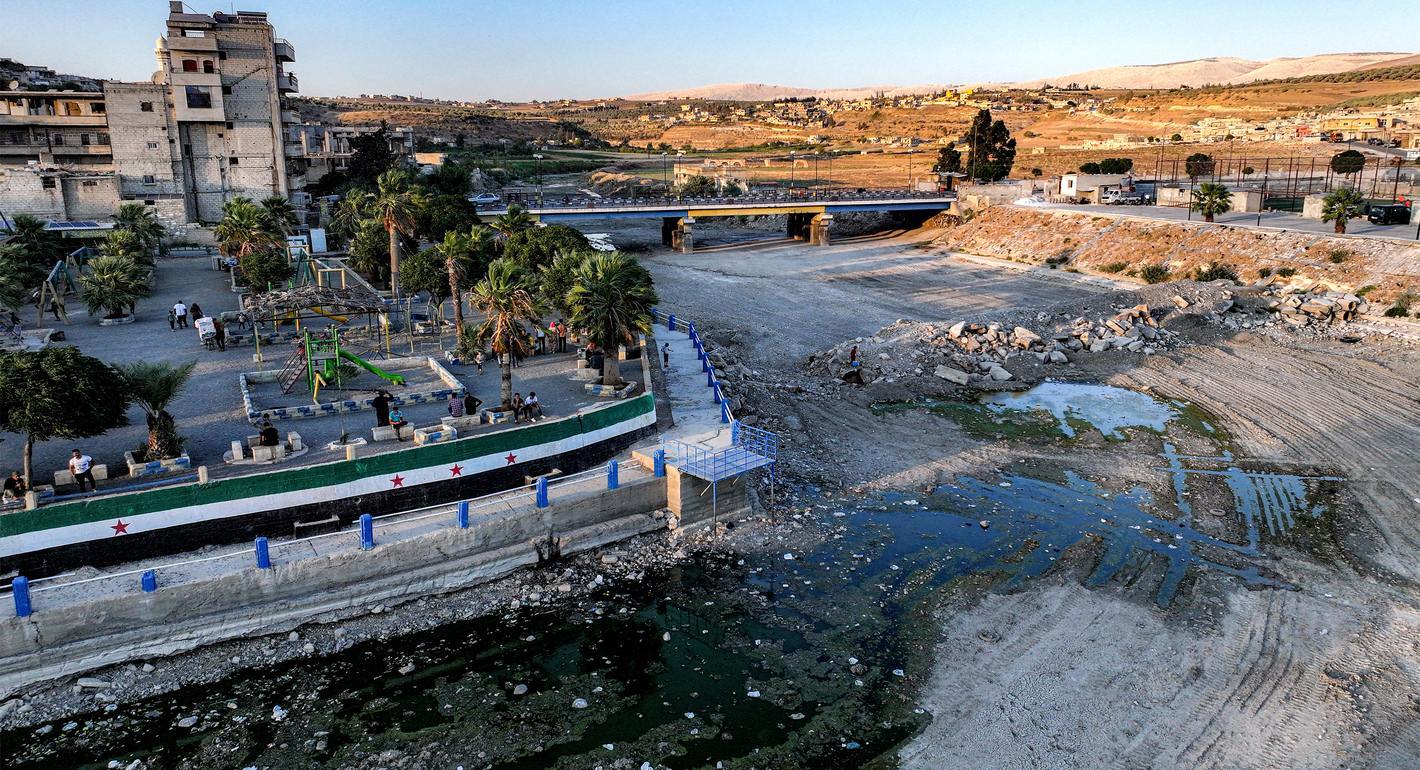
Syria’s worsening drought is no longer a seasonal crisis. This report explains what climate change is doing to rainfall, groundwater, and food security, and what solutions experts say are still possible.
Milia Esper
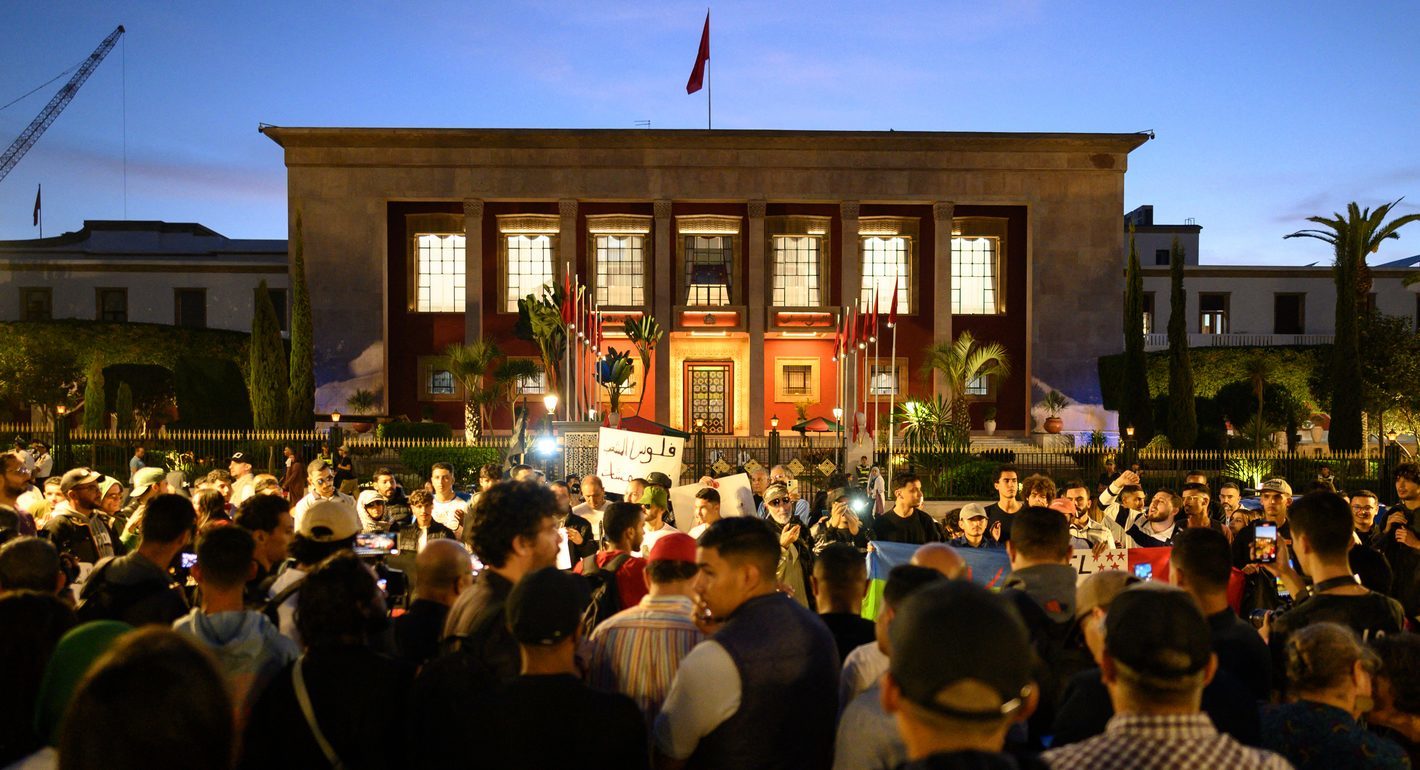
From anime heroes to online gaming communities, Morocco’s Gen Z is building a new protest culture. What does this digital imagination reveal about youth politics, and how should institutions respond?
Abdelilah Farah
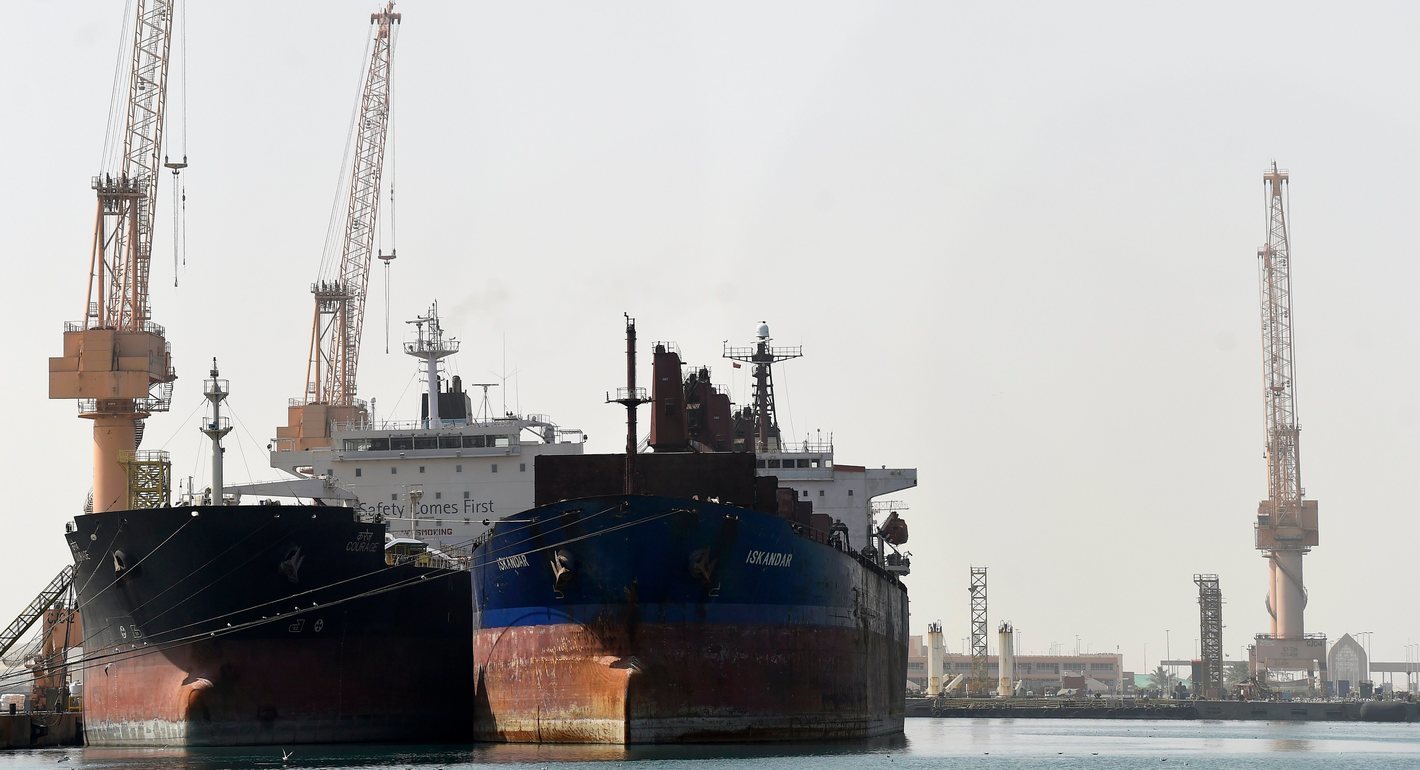
In a volatile Middle East, the Omani port of Duqm offers stability, neutrality, and opportunity. Could this hidden port become the ultimate safe harbor for global trade?
Giorgio Cafiero, Samuel Ramani
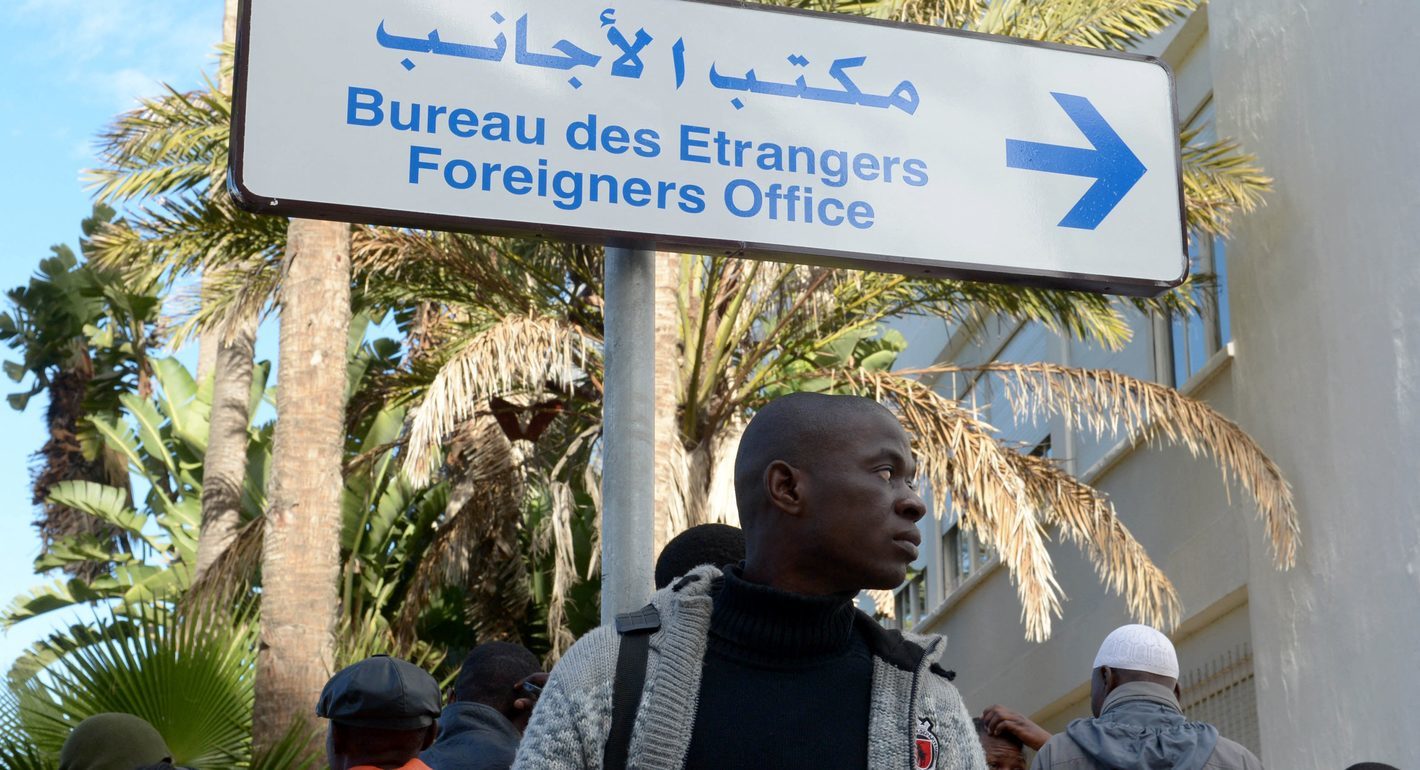
Is Morocco’s migration policy protecting Sub-Saharan African migrants or managing them for political and security ends? This article unpacks the gaps, the risks, and the paths toward real rights-based integration.
Soufiane Elgoumri
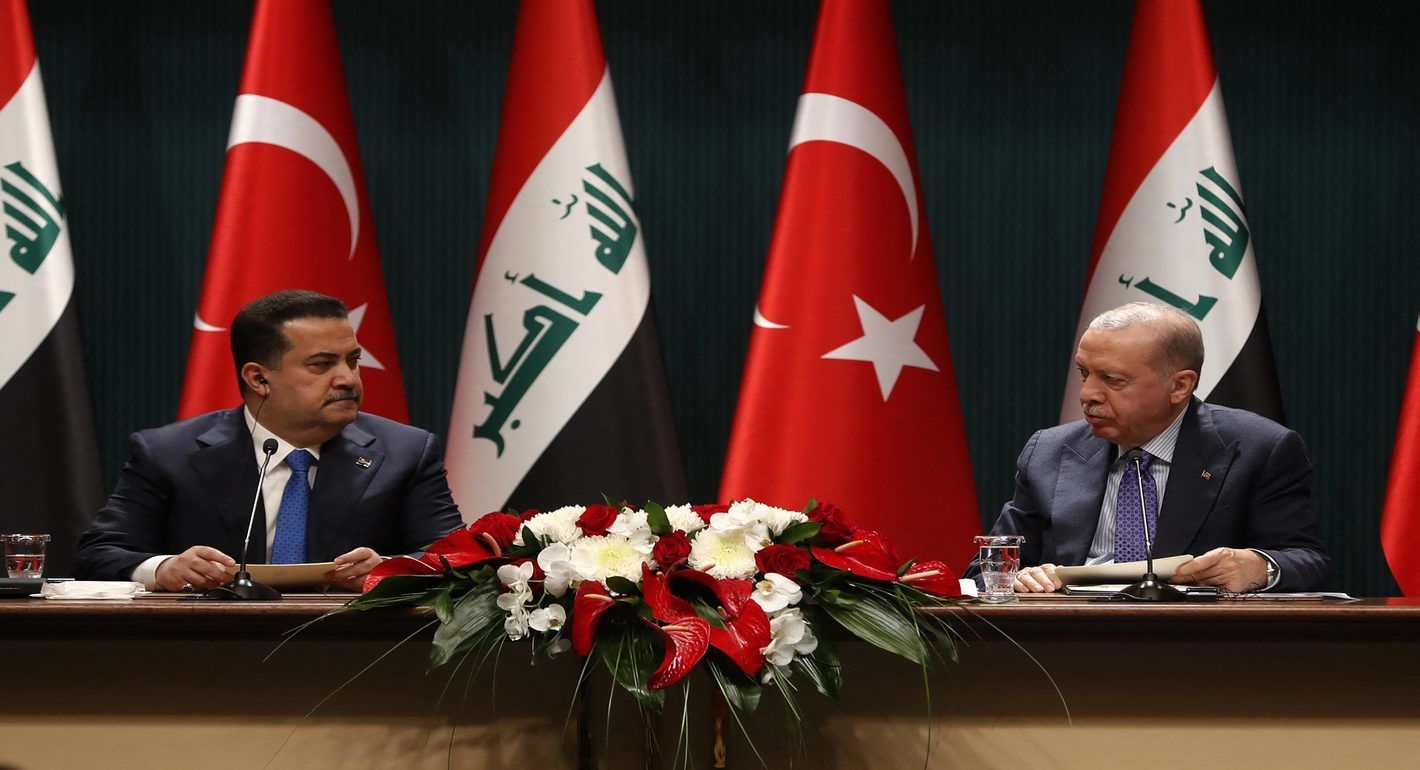
Iraq’s foreign policy is being shaped by its own internal battles—fractured elites, competing militias, and a state struggling to speak with one voice. The article asks: How do these divisions affect Iraq’s ability to balance between the U.S. and Iran? Can Baghdad use its “good neighbor” approach to reduce regional tensions? And what will it take for Iraq to turn regional investments into real stability at home? It explores potential solutions, including strengthening state institutions, curbing rogue militias, improving governance, and using regional partnerships to address core economic and security weaknesses so Iraq can finally build a unified and sustainable foreign policy.
Mike Fleet