On February 26, speaking at a rally with university students in his hometown of Menufiya, Egyptian President Hosni Mubarak announced that he would ask Parliament to amend the constitution to allow for direct election of the president with multiple candidates. ''I took the reins of this initiative in order to start a new era on the path of reform," Mubarak said. Since he became president in 1981 after the assassination of Anwar Al Sadat, Mubarak has been reelected four times through the referendum system laid out in Article 76 of the Egyptian constitution. Under this system, Parliament endorses with a two-thirds majority a single candidate, who then must be approved by a majority in a yes/no popular referendum. Mubarak has always won with at least 95 percent of votes.
The announcement was certainly a public relations coup. Local television channels carried live coverage of the event throughout the day, showing footage of jubilant pundits and members of parliament. For several days, the local and international press buzzed about the psychological barrier that Egypt’s president had broken. Observers such as the eminent political scientist Osama Al Ghazali Harb, a member of the reformist coterie around presidential scion Gamal Mubarak, even spoke of the beginnings of a “second Egyptian Republic.”
Mubarak’s announcement was a surprise to all—even high-level officials seem to have had no forewarning—for several reasons. For the past month, the ruling National Democratic Party (NDP) had been conducting a “National Dialogue” with Egypt’s main opposition parties. Although opposition parties such as the Nasserists, Tagammu, and Wafd had raised the issue of constitutional reform, NDP officials had repeatedly and publicly rejected the idea of amending the Constitution until after the presidential referendum and parliamentary elections in fall 2005. Mubarak himself had told journalists in late January that any attempt to amend the Constitution was “futile.”
So why the change of heart? A rare conjunction of foreign and domestic pressures played an important role. The immediate context of Mubarak’s announcement was U.S. Secretary of State Condoleezza Rice’s public condemnation of the arrest of Ayman Nour, the leader of the recently created Al Ghad (Tomorrow) party. Furthermore, on February 21 President Bush reiterated his call (made on several occasions since November 2003) for reforms saying, “The great and proud nation of Egypt, which showed the way toward peace in the Middle East, can now show the way toward democracy in the Middle East.”
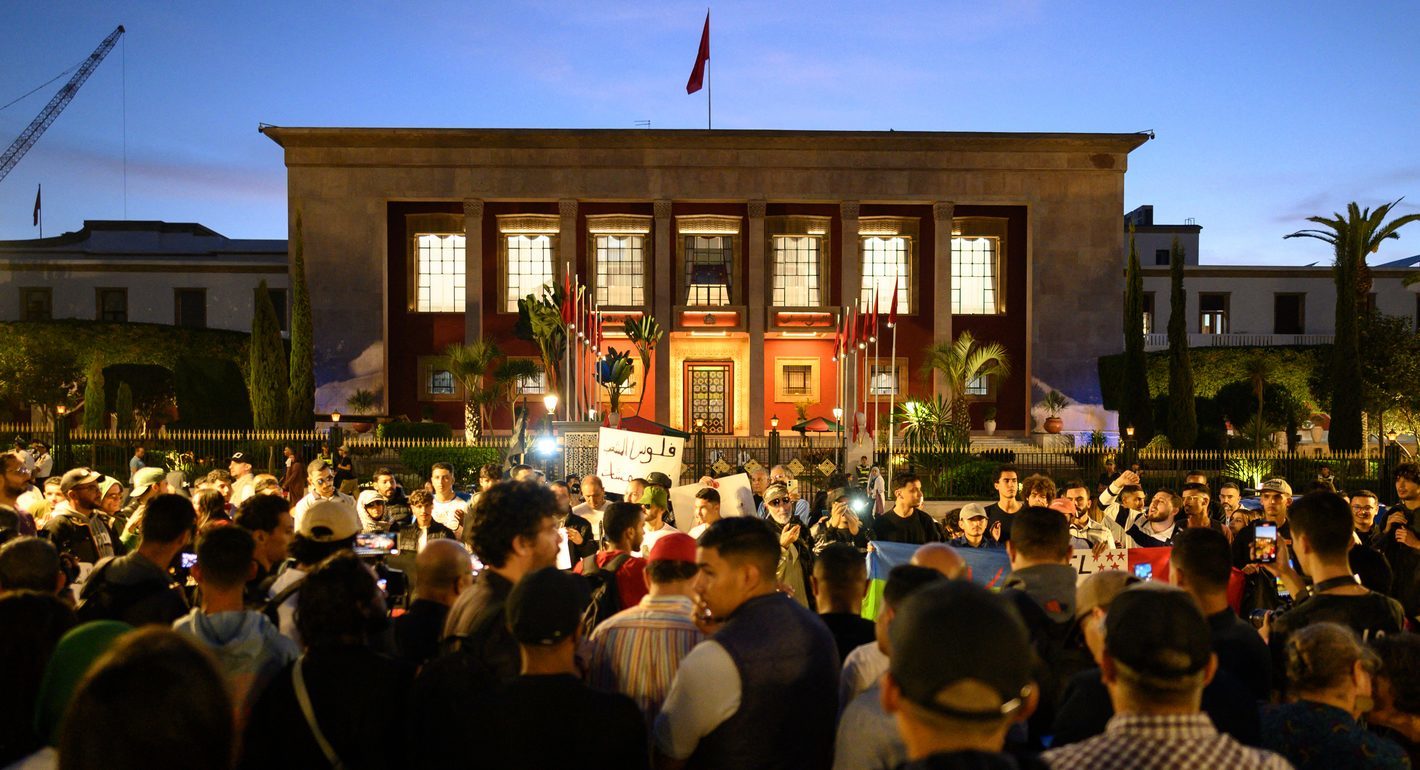
On the domestic scene, Mubarak had been facing the most vocal protests against his rule ever. Beginning with a small demonstration near Cairo’s High Court on December 11, 2004, two groups led by opposition and civil society activists—Kefaya (Enough) and the Popular Committee for Change—have called for constitutional reform and campaigned against Mubarak’s reelection or the inheritance of power by his son Gamal. Though small, these unprecedented protests had drawn increased participants since the Nour arrest. They also opened the way for a wider debate in the media and mainstream political circles, including inside the NDP, about the prospect of a Gamal Mubarak presidency and the issue of constitutional reform.
Mubarak’s announcement has allowed his regime to seize the initiative on reform, albeit temporarily. As Galal Duweidar, editor of state-owned leading daily Al Akhbar wrote on the day after the announcement, “the ball is now in the Egyptian people’s court.”
Egyptians appear to be rising to the challenge eagerly. There are already calls for constitutional amendments and other changes well beyond allowing direct election of the president. For instance, while Mubarak’s proposal requires any candidate to have the support of a certain (still undecided) number of members of parliament and local councils, the Wafd has proposed that a candidate should only need to garner signatures from 70,000 citizens, or about 1 percent of the country’s population. There are also increasing calls to restore the two-term limit for presidents (removed by Sadat in 1980) as well as to redistribute certain powers from the executive to the legislative and judicial branches. Above all, the lifting of the state of emergency in place since 1981—which significantly limits civil and political liberties—still tops the demands of liberals, leftists, and Islamists alike.
Despite attempts by the pro-regime press to spin Mubarak’s proposal as a revolutionary step for which Egyptians should be grateful, political groups of all shades are seizing the moment to push for more meaningful reforms. The limited constitutional amendment envisioned so far—already under discussion in parliamentary committees, and scheduled for legislative action in May—would not change the result of September’s presidential elections. Assuming that the 76-year old president’s health holds out, he will be returned to office. But Mubarak’s move is putting wind behind the sails of a wide-ranging public debate on constitutional reform and the role of the presidency, subjects considered taboo only a short time ago.
Issandr El Amrani is a freelance journalist based in Cairo and a former editor of the Cairo Times.