

Research
- +6
Yasmine Farouk, Nathan J. Brown, Maysaa Shuja Al-Deen, …
{
  "authors": [
    "Michele Dunne"
  ],
  "type": "commentary",
  "blog": "Sada",
  "centerAffiliationAll": "",
  "centers": [
    "Carnegie Endowment for International Peace",
    "Malcolm H. Kerr Carnegie Middle East Center"
  ],
  "collections": [],
  "englishNewsletterAll": "",
  "nonEnglishNewsletterAll": "",
  "primaryCenter": "Malcolm H. Kerr Carnegie Middle East Center",
  "programAffiliation": "",
  "programs": [],
  "projects": [],
  "regions": [
    "North Africa",
    "Egypt",
    "Middle East",
    "Iraq",
    "Palestine"
  ],
  "topics": [
    "Political Reform"
  ]
}

REQUIRED IMAGE
In reporting on Egyptian President Hosni Mubarak's April 12 visit to George Bush's Texas ranch, the press focused on Bush's endorsement of Ariel Sharon's plan to withdraw from the Gaza Strip. Nearly all commentators overlooked the more notable aspect of Mubarak's visit: the fact that a U.S. president had for the first time raised the subject of democracy with his Egyptian counterpart.
In reporting on Egyptian President Hosni Mubarak's April 12 visit to George Bush's Texas ranch, the press focused on Bush's endorsement of Ariel Sharon's plan to withdraw from the Gaza Strip. Nearly all commentators overlooked the more notable aspect of Mubarak's visit: the fact that a U.S. president had for the first time raised the subject of democracy with his Egyptian counterpart.
While Mubarak was surely unhappy with the position Bush took on Palestinian issues last month, that turn of events also served his interests by diverting attention from Bush's comments during the bilateral meeting and in the press conference afterward. "President Mubarak and I spoke about the future of the region and of Egypt," Bush said, adding that "just as Egypt has shown the way toward peace in the Middle East, it will set the standard in the region for democracy by strengthening democratic institutions and political participation." These remarks excited virtually no media comment, even though prior to the visit prominent members of Congress, along with the editorial page of the Washington Post, had urged Bush to raise the issue of democracy with Mubarak. Observers may have misinterpreted the significance of Bush's public remarks because of the positive way in which they were phrased, though anyone familiar with presidential meetings knows that any criticism of a friendly leader during a visit would be phrased gently.
For the past twenty years, economic reform in Egypt has been a leading subject on the U.S.-Egyptian agenda, and human rights and political reform have crept onto the working-level agenda during the past five years. But the most important bilateral contacts—U.S. president to Egypt president—have focused on regional issues such as Arab-Israeli peacemaking, counter terrorism, and Iraq. Thus until now, the Egyptians understandably have believed that regional issues were all that mattered to the United States. This is why Bush's August 2002 letter to Mubarak expressing concern over the case of civil rights activist Saad Eddin Ibrahim came as such a shock to the Egyptians, despite the fact that the U.S. ambassador in Cairo and even the secretary of state had been raising the issue with the Egyptian government since Ibrahim's 2000 arrest. It is clear that if the U.S. president does not mention an issue, it does not really count with Mubarak, or probably with any foreign leader.
Now President Bush has broken the pattern. Bush's remarks and the painstakingly-negotiated joint statement (which notes the ongoing debate on reform in Egyptian society and the March 2004 Alexandria Statement on Arab Reform as providing "a constructive foundation for further efforts toward democracy and development") contain a clear call for, and expectation of, meaningful steps toward political reform. Mubarak's endorsement of the Alexandria declaration, while clearly not a commitment to implement any specific measures, provides the Bush administration with a locally-generated agenda for reform on which to engage with Mubarak.
Now the question is what effect Bush's statements will have in Egypt. As a proud country with a record of regional leadership in ancient and modern history, Egypt is loathe to accept dictates from abroad regarding its domestic policies. But the current international discourse of democracy and reform is a powerful one, and Mubarak and his ruling National Democratic Party are demonstrating that they feel the need to respond. The most promising indication of change is that a public debate is now underway about lifting the Emergency Law, in place continuously since 1981. The government-appointed National Commission for Human Rights has prepared a report on the subject for the Ministers of Interior and Justice. Lifting the Emergency Law would still leave in place a system of regular laws and constitutional provisions that effectively deny Egyptians the ability to change their government. Yet, it would be an important step symbolically and would have a positive impact on respect for human rights. The abrogation of the law would also present the Egyptian government with a number of difficult practical problems, such as what to do about the more than 15,000 administrative detainees now in prison (most of them Islamists) and the need to retrain a whole generation of police and security officers to do their jobs with more limited powers.
As for the United States, consistency and follow-through in promoting reform will be essential, as Egyptian policy makers typically outlast their American counterparts on long-term issues. Other American actions such as support for Sharon's positions and the abuse of detainees in Iraq undeniably will dog every step of the administration's efforts on democracy and reform. Nonetheless, with the April 12 meeting the United States turned a new page in its bilateral relationship with Egypt—one on which the issue of political reform is clearly inscribed. This step should be noted for the record and commended.
Michele Dunne is a professor of Arabic at Georgetown University. From 2002 to 2003, she served as director for Middle East Regional and North African Affairs on the staff of the National Security Council.

Former Nonresident Scholar, Middle East Program
Michele Dunne was a nonresident scholar in Carnegie’s Middle East Program, where her research focuses on political and economic change in Arab countries, particularly Egypt, as well as U.S. policy in the Middle East.
Recent Work


Yasmine Farouk, Nathan J. Brown, Maysaa Shuja Al-Deen, …
Robert Springborg, Emile Hokayem, Becca Wasser, …
Carnegie does not take institutional positions on public policy issues; the views represented herein are those of the author(s) and do not necessarily reflect the views of Carnegie, its staff, or its trustees.
Can economic ties help contain conflict between Egypt and Israel, or do they simply postpone confrontation? Drawing on the German-Russian experience, the article examines how the gas deal creates mutual dependence, keeps channels of cooperation open, and raises the cost of conflict, without necessarily delivering lasting peace.

Nourhan Hefzy
Is the Gulf moving beyond the dollar? This article examines how China is expanding the renminbi's role across Gulf markets, what that means for regional finance, and why the future of global currencies is more complex than the de-dollarization debate suggests.

Andrew Bonney
Syria's transition promised a fresh start. But are old habits of power making a comeback? This analysis looks at the warning signs and what it will take to build a more accountable state.
Sima Beitinjaneh
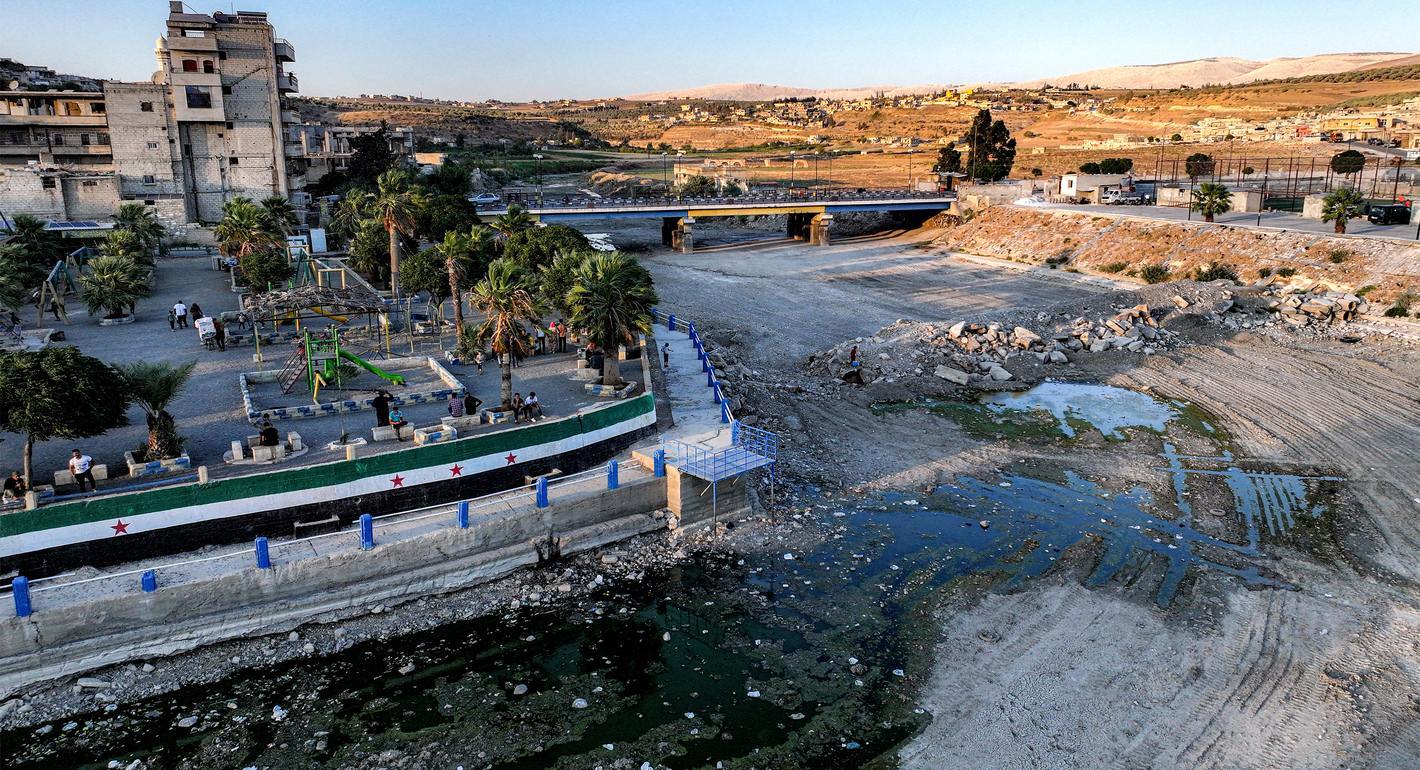
Syria’s worsening drought is no longer a seasonal crisis. This report explains what climate change is doing to rainfall, groundwater, and food security, and what solutions experts say are still possible.
Milia Esper
From anime heroes to online gaming communities, Morocco’s Gen Z is building a new protest culture. What does this digital imagination reveal about youth politics, and how should institutions respond?
Abdelilah Farah