

Commentary
From anime heroes to online gaming communities, Morocco’s Gen Z is building a new protest culture. What does this digital imagination reveal about youth politics, and how should institutions respond?
Abdelilah Farah
{
  "authors": [
    "Joel Beinin"
  ],
  "type": "commentary",
  "blog": "Sada",
  "centerAffiliationAll": "",
  "centers": [
    "Carnegie Endowment for International Peace"
  ],
  "collections": [],
  "englishNewsletterAll": "",
  "nonEnglishNewsletterAll": "",
  "primaryCenter": "Carnegie Endowment for International Peace",
  "programAffiliation": "",
  "programs": [],
  "projects": [],
  "regions": [
    "North Africa",
    "Egypt"
  ],
  "topics": [
    "Economy",
    "Civil Society"
  ]
}
Source: Getty
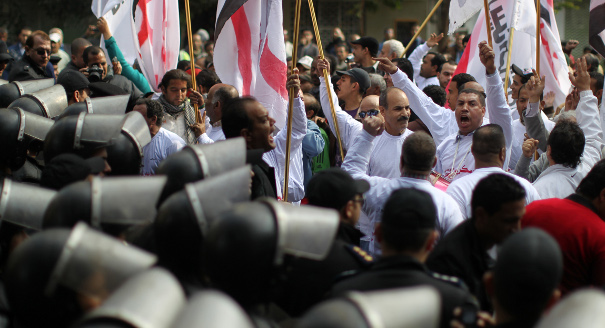
The future of the Egyptian workers’ movement under the new constitution is uncertain.
Decree 97 of November 25, 2012 went virtually unnoticed in the political upheaval following President Morsi’s November 22 constitutional declaration which granted him almost dictatorial powers. Decree 97 amended the law regulating trade unions and removed all office holders of the state-sponsored Egyptian Federation of Trade Unions (ETUF) over 60 years old. They are to be replaced by candidates who received the second-largest vote tally in the 2006 national union elections—widely considered exceptionally corrupt. In August 2011, the Ministry of Manpower and Immigration certified their invalidation and dissolved the ETUF’s executive board.
The decree also authorizes Minister of Manpower and Immigration Khalid al-Azhari of the Muslim Brotherhood’s Freedom and Justice Party to appoint replacements to vacant trade union offices if no second-place candidate exists. State security officials banned thousands of opposition trade unionists from running in 2006, so hundreds of candidates ran unopposed. Thus, as many as 150 Muslim Brothers could be appointed to posts in ETUF’s twenty-four national sector unions, while fourteen of twenty-four executive board members will be sacked.
Additionally, Mubarak regime stalwart ETUF President Ahmad ‘Abd al-Zahir was replaced by al-Gibali al-Maraghi—a younger member of the old guard—and Muslim Brother Yusri Bayyumi became ETUF treasurer. Only three advocates of independent trade unionism remain on the executive board. On December 24, President Morsi appointed al-Maraghi to the Shura Council, the upper house of parliament, which many suspect was a reward for working with the Brotherhood.
Decree 97 also extends the terms of incumbent union office-holders for six months or until the next ETUF elections (whichever comes first). Muslim Brothers and ETUF old guard figures will supervise those elections and likely confirm their joint control over the organization. This is characteristic of the Muslim Brotherhood’s recent political practice. Rather than reform institutions and power centers of the Mubarak regime, it has sought to extend its control over them. But as in other spheres, they do not have a concrete program or enough trained personnel to manage ETUF. Therefore, they are dividing control of the organization with Mubarak era figures. Their common interest is first and foremost bureaucratic—to maintain their positions. The Brothers also seek to limit the extent of independent trade unionism, as it constitutes a potential opposition to their free market ideology.
Almost a thousand new unions independent of ETUF have been established since the January 25, 2011 uprising against the Mubarak regime. Many of them have joined one of the two new union federations—the Egyptian Federation of Independent Trade Unions or the Egyptian Democratic Labor Congress. The federations and many of their constituent unions are weak in resources and organizational capacity—in part because Egypt had no experience with democratic trade unionism between the early 1950s and 2011. However, the existence of these federations and the high-profile struggles of many of their affiliated unions—municipal real estate tax assessors; Cairo bus and Metro workers; teachers; iron, steel, and ceramics workers; Ain Sokhna port workers—have put the demands for democratic trade unionism, workers freedom of association, and the right to bargain collectively on the political agenda. The International Labor Organization and the International Trade Union Confederation have supported these goals. Yet Egypt routinely flouts ILO conventions affirming these principles that it ratified long ago.
Independent trade unionists strongly oppose Decree 97. On November 28 the Center for Trade Union and Workers Services (CTUWS) held a conference under the slogan, “No to the “Brotherhoodization of the Unions.” Its General Coordinator Kamal Abbas addressed the gathering and said, “We reject Morsi’s law, not because we defend those over sixty, but because the organizational rules do not permit anyone but corrupt people to take their place.”
During the week between the two rounds of the referendum on Egypt’s newly adopted constitution (December 15-22) three large, strategic groups of industrial workers went on strike. Two of them quickly won their main demands. The Eastern Tobacco Company, a public sector firm headquartered in Giza, holds the monopoly on local cigarette production. Its thirteen thousand workers secured restoration of their production incentives, which had been cut because the company reduced its output anticipating new cigarette taxes. Similarly, eight thousand workers at the public-sector Egyptian Aluminum Company in Nag Hammadi secured restoration of profit-sharing bonuses which had been cut from 12 months to 45 days’ basic pay.
Belying the common distinction between “political” and “economic” demands, the Eastern Tobacco workers also demanded that the company’s CEO (a Mubarak-era appointee) be removed for corruption. An interim CEO was appointed and their charges will be investigated. Moreover, Minister of Investment Usama Salih, a technocrat who occupied high positions in the Mubarak era, personally intervened in both strikes and directed that the workers’ demands be met. It will cost the state treasury EGP70 million to meet the aluminum workers’ demands, and millions more for the tobacco workers.
Despite these victories, though, the future of independent trade unions and the workers’ movement under the new constitution is uncertain. Article 52 states: “The freedom to form syndicates, unions, and cooperatives is a right guaranteed by law.” But the only existing law is Law 35 of 1976, which gives ETUF a monopoly on the organization of trade unions. The article also permits the dissolution of entire unions and their executive boards by judicial order. Articles 63 and 70 appear to permit certain forms of forced and child labor that would violate ILO conventions (Nos. 29, 105, 138, and 182) that Egypt has ratified.
Former Minister of Manpower and Immigration Dr. Ahmad Burai resigned in protest in November 2011 over the Supreme Council of the Armed Forces’ refusal to allow the cabinet to enact the “Trade Union Freedoms” law his ministry had drafted with input from independent unions. On December 22 al-Burai told the daily al-Shorouk that the constitution violates ILO conventions (Nos. 87 and 98) that Egypt has ratified which guarantee workers freedom of association and the right to bargain collectively. The ILO might once again place Egypt on the “black list”—as the ILO’s list of “special cases” is dubbed by Egyptian advocates of democratic trade unionism.
There were nearly 1,400 strikes and other labor protests in 2011. According to the Egyptian Center for Economic and Social Rights, there were 3,150 collective workers’ actions in the eight months of 2012 for which they compiled statistics. This continuing social movement has the potential to block the plan to revive Egypt’s stalling economy adopted in principle by Egyptian and International Monetary Fund technocrats in November 2011. Implementation of the agreement would bring Egypt a $4.8 billion IMF loan and potentially up to $5 billion in aid from the European Union—as well as $1.4 billion in foreign aid and financial guarantees from the United States (in addition to the annual $1.3 billion in military aid). However, it will result in higher prices, lower government subsidies for consumer and producer goods, new sales taxes, and cuts to the number of state employees. This austerity program would further exacerbate unemployment (now officially at 12 percent) and inflation (currently about 10 percent per annum).
Consequently, implementation was suspended after the unexpected massive opposition to Morsi’s November 22 constitutional declaration. The Egyptian president had promised that there was “no conditionality” attached to the IMF loan, despite the well-known history of such conditions in Egypt and elsewhere. He does not have a mandate to implement an austerity program that will be both unpopular and very likely to increase the number of strikes and worker protests.
In the arena of trade unionism and labor relations—as in the broader political and economic arena—Egypt’s future is uncertain. Industrial workers comprise one of the sectors that solidly, but certainly not unanimously, opposed the new constitution. In addition, large numbers of previously unpoliticized “couch potatoes” participated in militant demonstrations against Morsi’s November 22 decree and the proposed constitution.
Workers have not been a strong factor in the post-Mubarak national political arena. Some components of the National Salvation Front (NSF) formed to oppose the constitution claim to represent workers’ interests. But its leading figures have done little to build grassroots support among workers. Many NSF supporters hope the front will contest the upcoming parliamentary elections as a unified bloc. This could create a different balance of forces than in the overwhelmingly Islamist first post-Mubarak parliament. In that case, the contest over Egypt’s future would take place in the parliament as well as in streets and workplaces. If not, streets and workplaces will continue as they have for the past two years.
Joel Beinin is the Donald J. McLachlan Professor of History and a professor of Middle East history at Stanford University. This article is based on the press and interviews conducted in Cairo in December 2012. Thanks to Dina Bishara and Ahmad Shokr for their insightful conversation and comments.
Joel Beinin
Carnegie does not take institutional positions on public policy issues; the views represented herein are those of the author(s) and do not necessarily reflect the views of Carnegie, its staff, or its trustees.
From anime heroes to online gaming communities, Morocco’s Gen Z is building a new protest culture. What does this digital imagination reveal about youth politics, and how should institutions respond?
Abdelilah Farah
In a volatile Middle East, the Omani port of Duqm offers stability, neutrality, and opportunity. Could this hidden port become the ultimate safe harbor for global trade?
Giorgio Cafiero, Samuel Ramani
How can Saudi Arabia turn its booming e-commerce sector into a real engine of economic empowerment for women amid persistent gaps in capital access, digital training, and workplace inclusion? This piece explores the policy fixes, from data-center integration to gender-responsive regulation, that could unlock women’s full potential in the kingdom’s digital economy.
Hannan Hussain
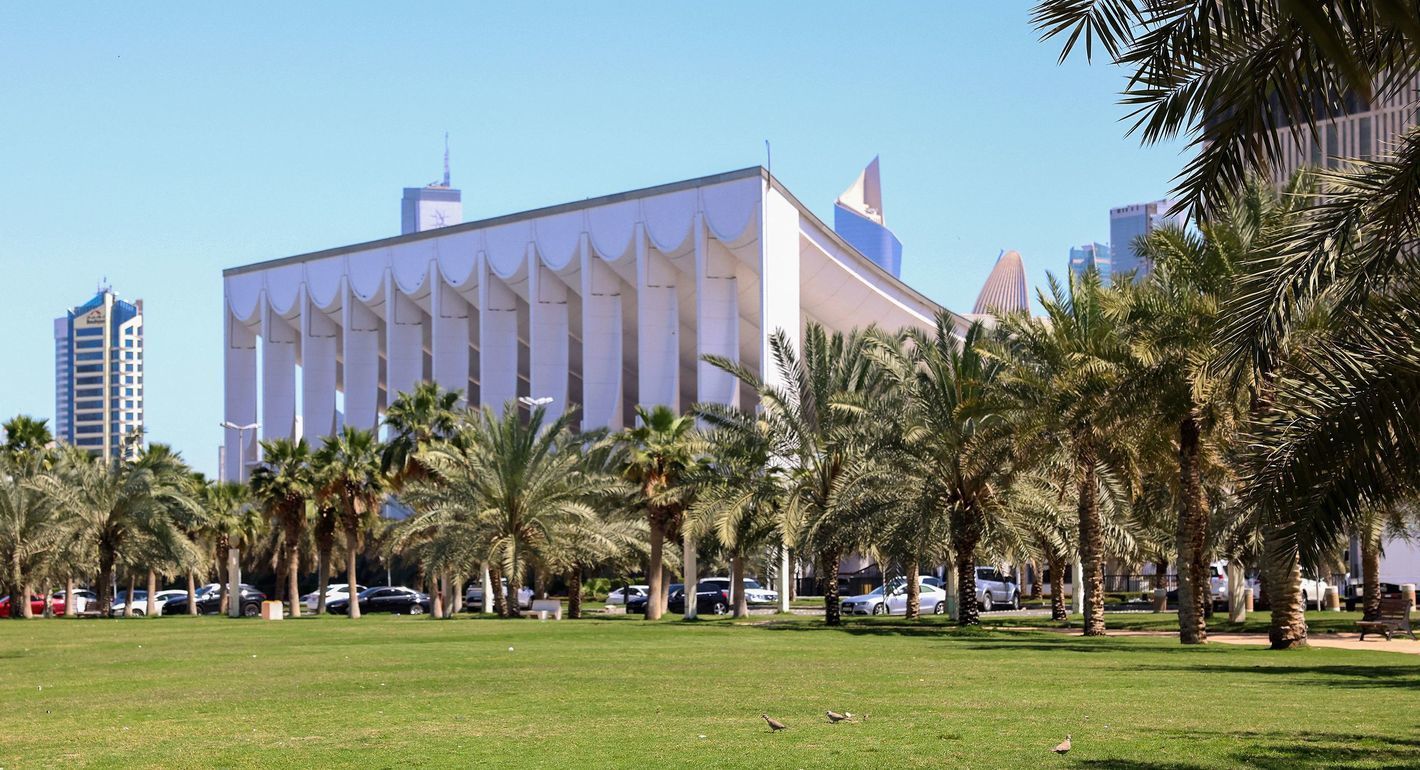
Kuwait’s government has repeatedly launched ambitious reforms under Kuwait Vision 2035, yet bureaucratic inefficiency, siloed institutions, and weak feedback mechanisms continue to stall progress. Adopting government analytics—real-time monitoring and evidence-based decision-making—can transform reform from repetitive announcements into measurable outcomes.
Dalal A. Marafie
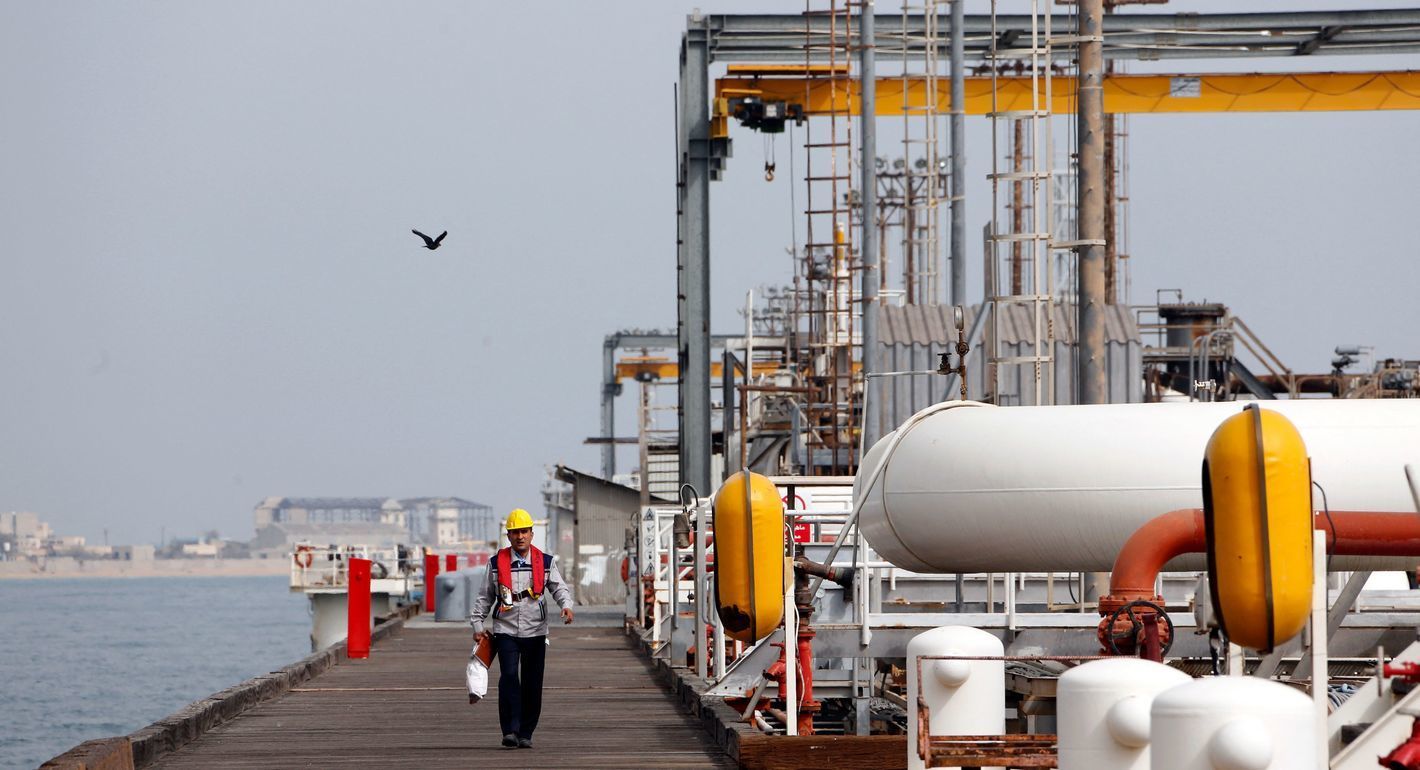
Despite vast oil and gas reserves, Iran faces a severe energy crisis due to decades of mismanagement, excessive subsidies, corruption, and international sanctions, which have crippled its infrastructure and distorted energy markets. Without structural reforms and international engagement, the country risks deeper economic instability, environmental degradation, and political unrest.
Umud Shokri