

Commentary
Raed El-Hamed
{
  "authors": [
    "Raed El-Hamed"
  ],
  "type": "commentary",
  "blog": "Sada",
  "centerAffiliationAll": "",
  "centers": [
    "Carnegie Endowment for International Peace"
  ],
  "collections": [],
  "englishNewsletterAll": "",
  "nonEnglishNewsletterAll": "",
  "primaryCenter": "Carnegie Endowment for International Peace",
  "programAffiliation": "",
  "programs": [],
  "projects": [],
  "regions": [
    "Middle East",
    "Iraq",
    "Levant",
    "Syria"
  ],
  "topics": [
    "Security",
    "Military"
  ]
}
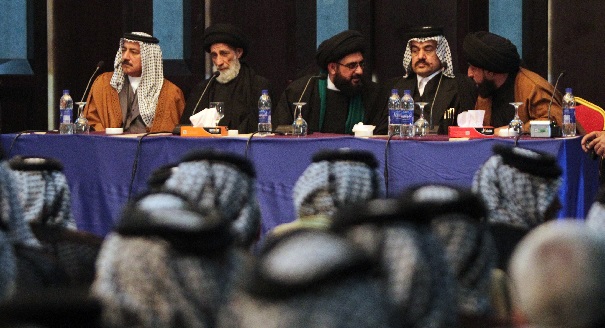
Source: Getty
Plans to build a national guard force risk widening sectarian divisions in Iraq and pushing more Sunnis toward the Islamic State.
In the wake of the rise of the Islamic State, Iraqis expect the sectarian nature of the central government to remain and the weakness of the Iraqi army to persist. It is within this context that the U.S.-backed proposal for the creation of a “national guard” is likely to end up reinforcing sectarianism and validate calls for a geographic division of Iraq along sectarian lines.
Popular mobilization at a local level—the backbone of the Iraqi army, as Prime Minister Haider al-Abadi has said—failed to defeat the Islamic State partly because the Sunni population and the Shia-controlled security forces mistrust each other. As such, there are preparations, after parliamentary approval, to form a new Sunni force made up of between 120,000 to 200,000 members to fight the Islamic State. This force, to be called the national guard, would rely on locally organized units of Sunni tribesmen under the central leadership of officers from the former Iraqi army. Under the international coalition’s plan, this Sunni force would carry out ground operations against the Islamic State in Anbar, while the alliance would provide them with air support. But because this plan focuses on the Islamic State while ignoring Shia militias, which Sunnis see as two identical threats, it will increase Sunni resentment against the international coalition and the forthcoming national guard.
Furthermore, a Sunni national guard—less armed than the Iraqi army yet more so than the local police, and under the command of Sunni provincial councils—may worsen internal conflict in Iraq if its leaders refuse to obey the orders of the Shia-dominated government in Baghdad. In the event that the conflict evolves to the point where peaceful coexistence proves unattainable, the national guard could become a basis for building a military force for a future autonomous or even independent Sunni state—similar to the way the military support provided to the Kurdish peshmerga forces is strengthening the prospects of an independent Kurdistan. Ultimately, this means this process could facilitate the division of Iraq on the basis of sectarian and ethnic affiliation.
Sunni political and social leaders who might favor the national guard are convinced that Shia militias control the Iraqi army and its decision-making, and they know the federal government might not allow the Sunnis to form their own forces similar to the Kurdish peshmerga. It is likely that the Shia bloc will only agree to the formation of the national guard on the condition that their own popular mobilization militias are integrated into it—which would be in contradiction to the draft law, which currently explicitly excludes these militias from the national guard. The experience of the Sahwa (Awakening) forces is still fresh in the minds of local Sunni leaders, who viewed the Sahwa as an armed Sunni force capable of confronting both the threat of the Islamic State and that of Shia militias. And although the federal government’s policies led to the deliberate dismantling of the Sahwa, the Sunnis seek to take advantage of the military gains the Islamic State achieved and the threat they pose—not just to the Sunni provinces, but to the capital and the rest of Iraq—to achieve the formation of their own forces. Such forces would derive legitimacy from the National Forces Law that might be issued by Parliament.
While strikes will weaken the Islamic State and reduce some of its capabilities in the foreseeable future, the group will certainly adapt. They can transform into sleeper cells living among the local population, making it difficult to distinguish between militants and Iraqi civilians. As U.S. General Martin Dempsey, the chairman of the Joint Chiefs of Staff, stressed on October 12, “An enemy adapts and [the Islamic State] will be harder to target. They know how to maneuver and how to use populations and concealment.” The social environment is willing to welcome these cells and nurture them so long as the true reasons for the Islamic State’s emergence, evolution, and growth remain unaddressed. In addition to a decade of Sunni marginalization, these reasons include continued sectarian abuses carried out by Shia militias in Sunni cities—as is happening in Samarra, where over 170 young men have been abducted since June—and fears of Shia reprisal against Sunni residents, as occurred in Jurf al-Sakhr, where a mass grave was found in October of 41 people allegedly killed by Shia militias. These violations forced many Sunnis to choose between remaining under the Islamic State or having the Shia security forces return to their cities. Inevitably, those who are not directly threatened or targeted by the Islamic State will still be reluctant to join the national guard.
This Sunni discontent has benefited the Islamic State, which has used Sunni suffering in its media rhetoric to condemn the systematic targeting of Sunnis, the destruction of their cities, and other practices carried out by the government forces. The group hopes that leveraging the lack of trust between the population and the Shia-controlled security forces, especially in Nineveh and Anbar, will attract Sunnis who want to be part of its envisioned caliphate that transcends geographic borders.
Yet the Islamic State also recognizes that the national guard poses a threat to its own recruitment, given their mutual reliance on residents of Sunni provinces for fighters. The group is working hard to thwart the formation of the national guard using a variety of methods to intimidate and deter volunteers from joining the force. Its efforts have focused on executing and threatening army and police officers in Sunni provinces, including officers from the Baath-era army who were allowed to retake their posts under the 2008 Accountability and Justice Law and are given preference for positions in the draft law for the establishment of the national guard forces. The Islamic State’s measures affected a number of army and police officers who had joined training centers as new volunteers or to restructure collapsed units. These actions were based on information that these national guard recruits had ties to the federal government and coordinated with it.
After weeks of airstrikes targeting the Islamic State’s resources, military positions, and supply routes, the alliance has been relatively successful in reducing the number of attacks on Syrian and Iraqi cities. However, the Islamic State was able to inflict repeated defeats on government forces in several cities. Yet in other cities where tribal or regional forces headed the defense, it has not been able to advance as easily. But, for all the reasons above, it is it is doubtful whether a national guard as it is currently envisioned can eliminate the Islamic State. As long as sectarian considerations override national security considerations, chances of the national guard successfully confronting the Islamic State without worsening sectarian strife will remain limited at best.
Raed El-Hamed is an Iraqi journalist and member of the Iraqi Journalists’ Syndicate. He is a regular contributor to Sada.
This article was translated from Arabic.
Raed El-Hamed is an Iraqi journalist and member of the Iraqi Journalists Union.
Recent Work
Raed El-Hamed
Raed El-Hamed
Can economic ties help contain conflict between Egypt and Israel, or do they simply postpone confrontation? Drawing on the German-Russian experience, the article examines how the gas deal creates mutual dependence, keeps channels of cooperation open, and raises the cost of conflict, without necessarily delivering lasting peace.

Nourhan Hefzy
Is the Gulf moving beyond the dollar? This article examines how China is expanding the renminbi's role across Gulf markets, what that means for regional finance, and why the future of global currencies is more complex than the de-dollarization debate suggests.

Andrew Bonney
Syria's transition promised a fresh start. But are old habits of power making a comeback? This analysis looks at the warning signs and what it will take to build a more accountable state.

Sima Beitinjaneh
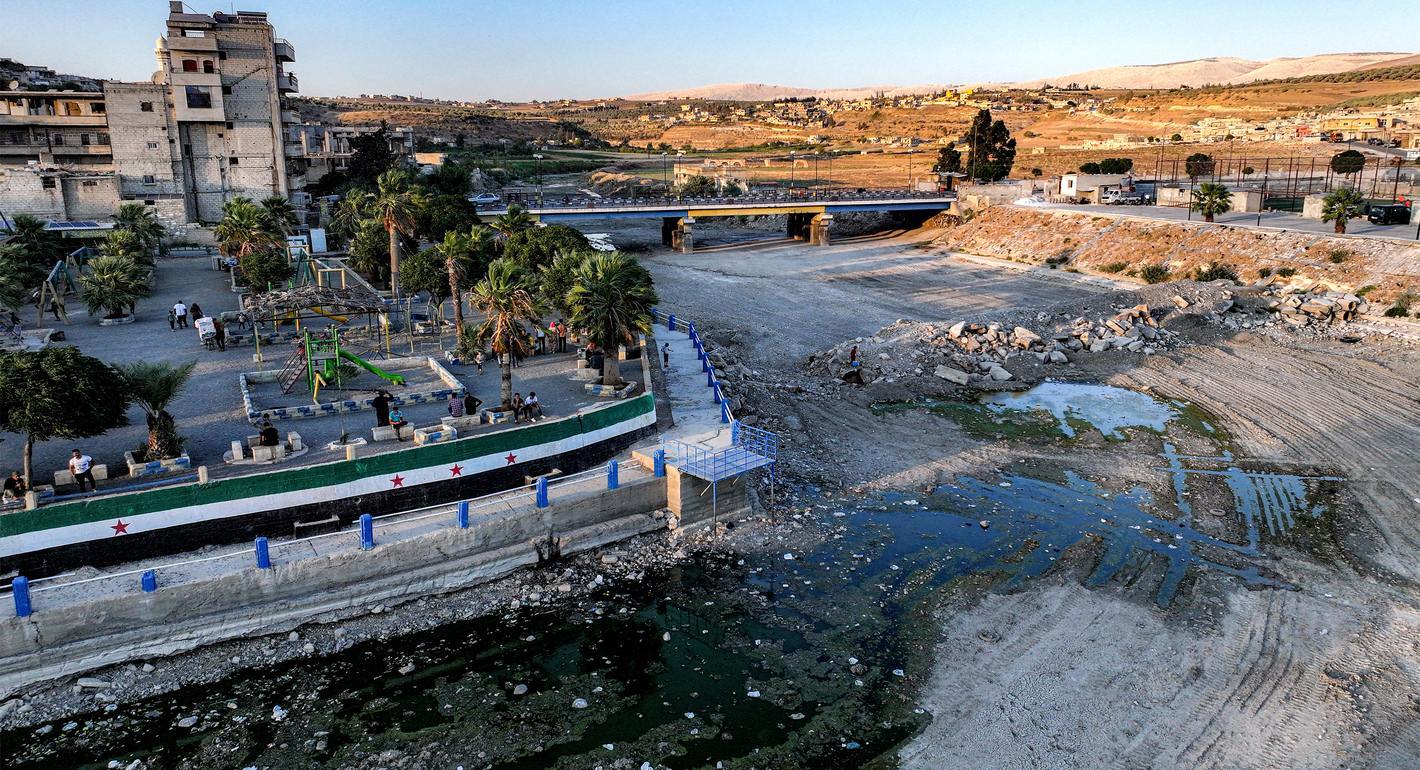
Syria’s worsening drought is no longer a seasonal crisis. This report explains what climate change is doing to rainfall, groundwater, and food security, and what solutions experts say are still possible.
Milia Esper
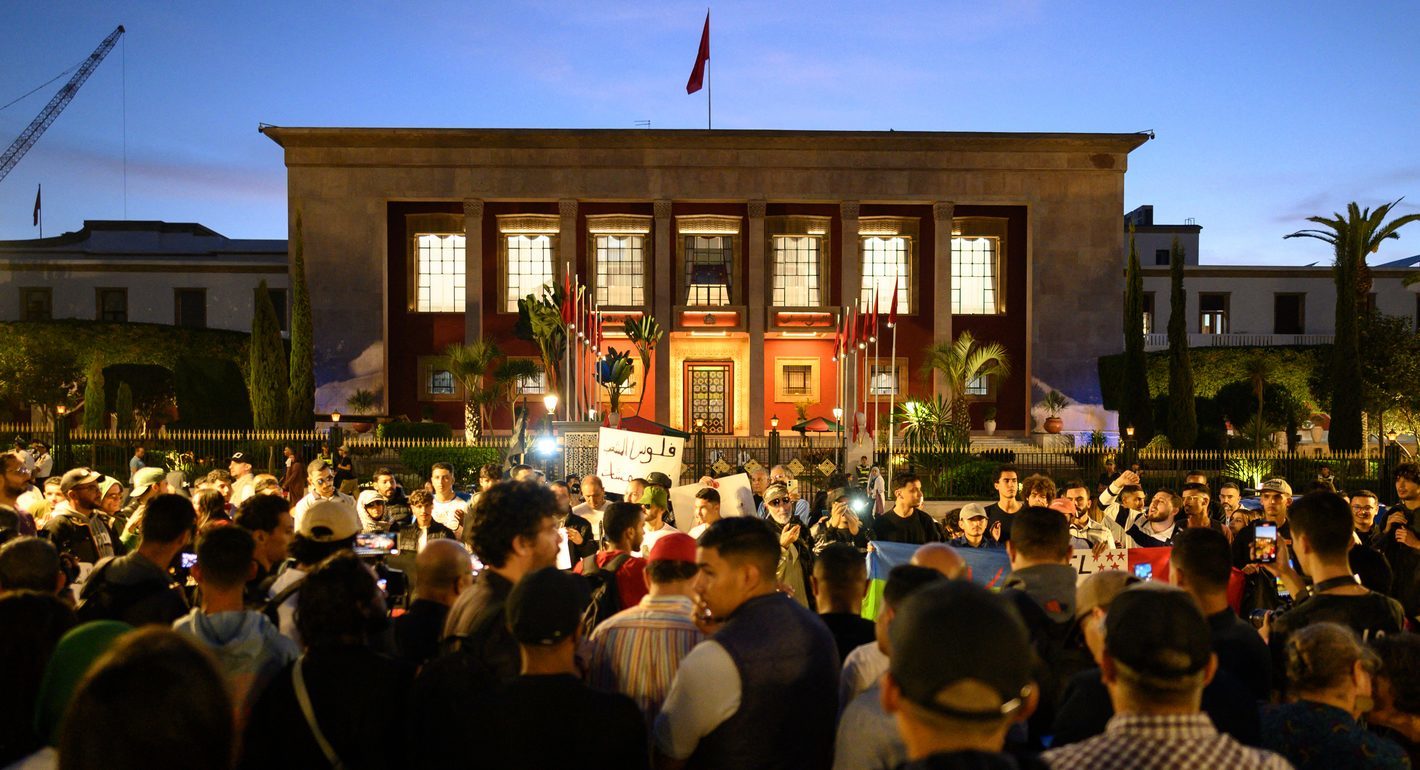
From anime heroes to online gaming communities, Morocco’s Gen Z is building a new protest culture. What does this digital imagination reveal about youth politics, and how should institutions respond?
Abdelilah Farah