Despite Baghdad’s expansionary spending, citizens in the country’s oil-rich south continue to protest. Government reforms need to recognize the interconnectedness of the country’s economic, climatic, and security conundrums.
Link Copied
By Tamer Badawi
Published on Aug 13, 2024
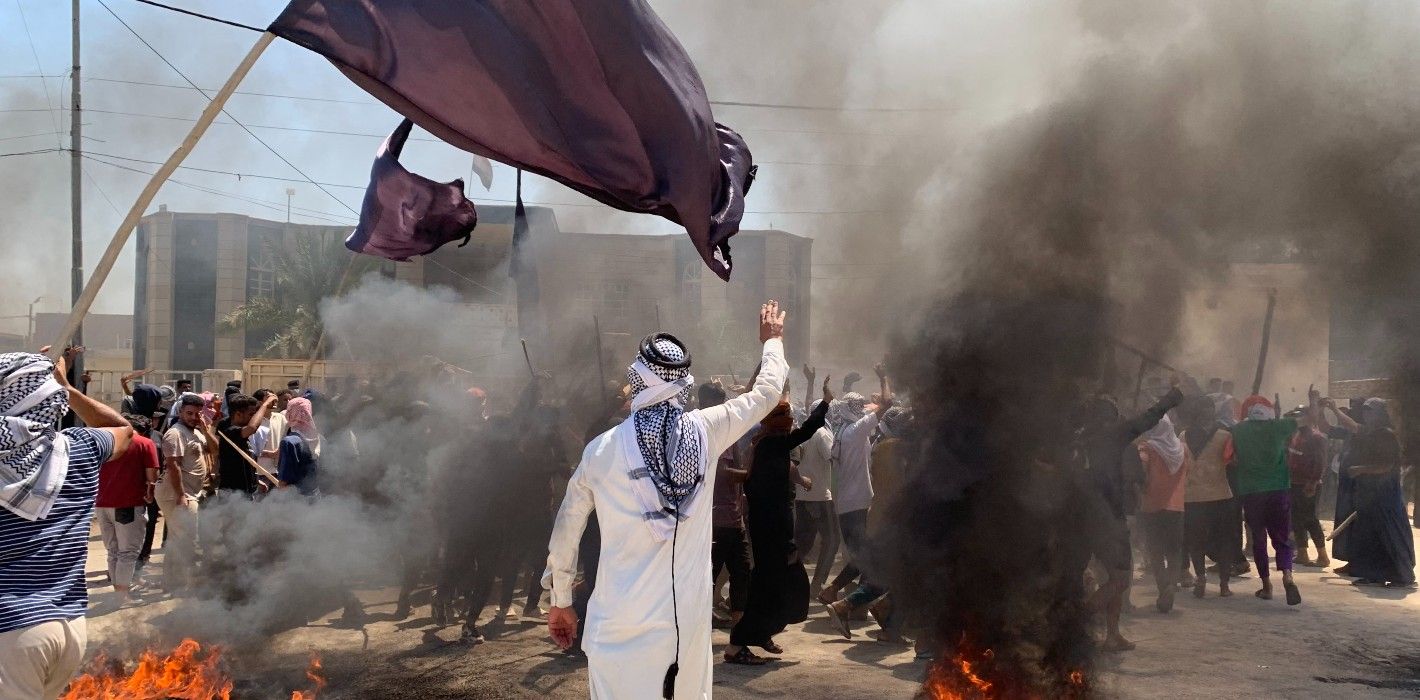
Since the summer of 2015, oil-rich southern Iraq has been seeing demonstrations protesting poor services. In early June 2024, protesters in Samawah, the capital of the southern province of Muthanna bordering Saudi Arabia, mobilized against corruption.
Protests in Samawah began in 2011 over poor services. Provincial protests continued in 2015 and 2018. In the latter, protests developed into a 20-day sit-in after anti-corruption protests commenced and faced a violent crackdown in neighbouring Basra.[1] In parallel to the Tishreen demonstrations in Baghdad, Samawah’s protesters held local protests from 2019 to 2021.
A key figure in recent protests is Hamid al-Yasiri, the commander of the 44th brigade of the Popular Mobilization Forces (PMF), a government-sanctioned coalition of brigades consisting of Shia armed groups. Al-Yasiri led protests against the newly elected local government following the December 2023 provincial elections and called on Baghdad to appoint a “military governor” to govern the province instead. Before joining the PMF to combat the ‘Islamic State’ group (ISIS), al-Yasiri was the representative of Grand Ayatollah Ali al-Sistani—Iraq’s most senior Shia cleric—in Muthanna, making him an influential figure.
The protests swiftly led to a meeting between a provincial delegation he led and Iraqi Prime Minister Mohammed Shia al-Sudani. The PM publicly expressed eagerness to address the delegation’s grievances. Al-Yasiri vowed to continue protests unless the six demands are met. Al-Yasiri’s demands essentially seek to unseat the provincial governor and transfer control of provincial affairs to the protest movement’s leaders.
The most politically-sensitive demand is the closure of all “economic bureaus” in the province. For example, political parties with armed wings reportedly imposed royalties across provinces, seeking to benefit from the post-conflict reconstruction spending spree. The Iraqi government officially banned these bureaus in 2019.
A political activist in Samawah’s protests explained that when public funds were allocated from the central government to Muthanna, following the passage of the 2024 budget, al-Yasiri learned of a joint corrupt scheme between the local government and bureaus linked to political parties.[2] Muthanna’s financial allocations in the 2024 budget remain the lowest among the provinces, with a 2.8 percent share, a small increase from 2.4 percent the previous year.
The International Monetary Fund in its 2024 Article IV Consultation report assesses in its that economic growth will increase in 2024, driven by an expansionary three-year budget. Yet, the high spending is mismatched with an anticipated decline in oil price, leading to risks to the country’s economic stability.
Intra-PMF divisions back in the spotlight
Apart from corruption, Hamid al-Yasiri’s mobilization of protesters in June is also indirectly linked to a schism among some of the four PMF brigades associated with the holy shrines in Najaf and Karbala—of which al-Yasiri is part—and some of the PMF brigades run by Iran-allied ‘resistance’ armed groups and the governing Coordination Framework.
Following years of simmering tensions among the four brigades and the pro-resistance segment of the PMF brigades over PMF leadership, the shrine-linked PMF brigades were operationally separated in April 2020 from the PMF Commission and linked directly to the Iraqi General Commander. However, the Shrine-linked brigades in the PMF remain financially connected to the resistance-dominated PMF Commission.
Nevertheless, the separation of the Atabat brigades did not defuse tensions between the two camps. In August 2021, without naming them directly, al-Yasiri accused Iran-allied resistance armed groups, which have significant influence in the PMF, of being “loyalists to foreign powers” and accused them of “treason.” In January 2022, unknown assailants fired on Al-Yasiri’s house.
Multiple crises and mobilization potential
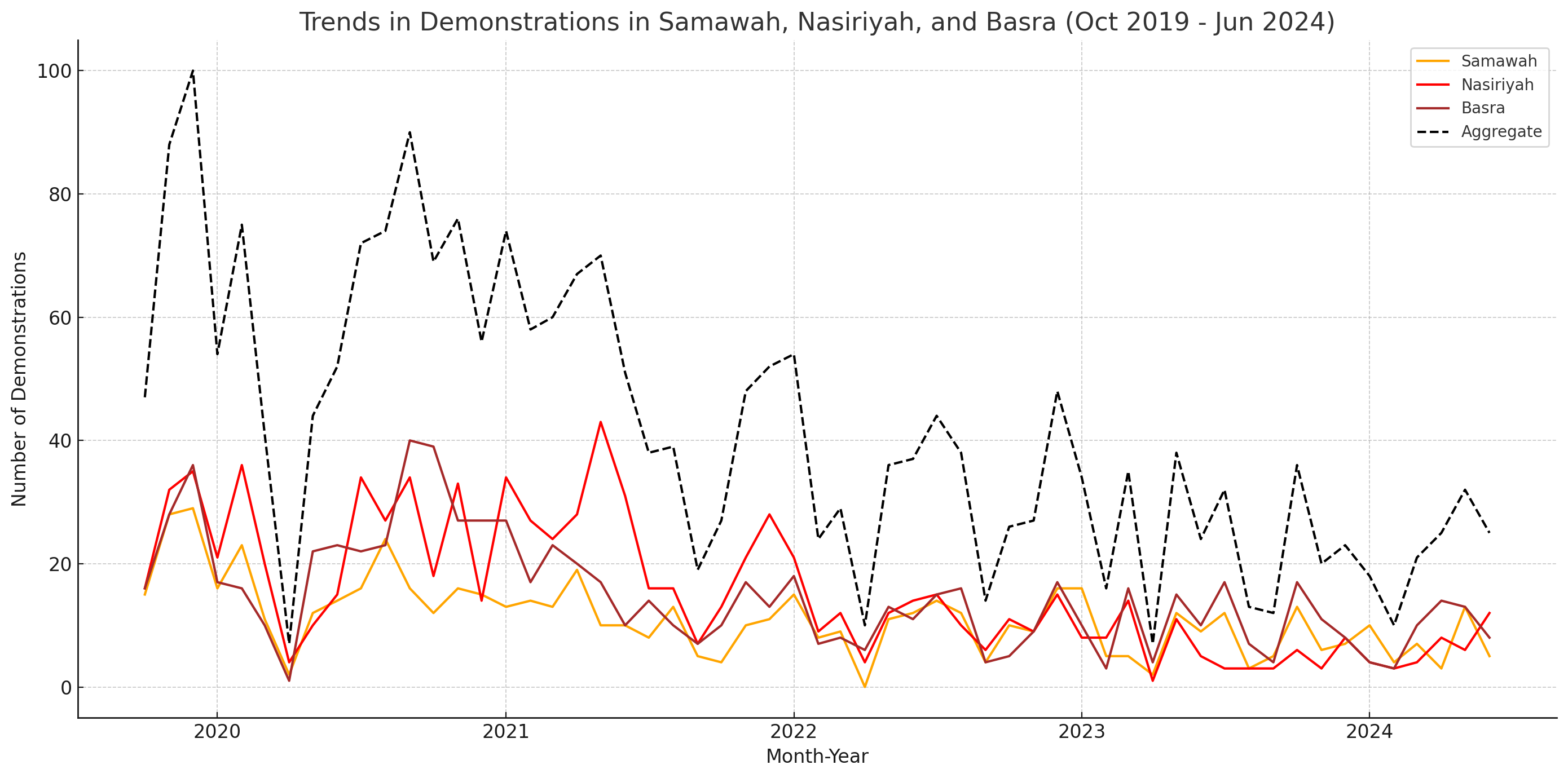
Figure 1: Graphic based on data collated by the author from the Armed Conflict Location and Event Data Project (ACLED)
The endurance of intra-PMF cleavages and corruption triggered Samawah’s recent protests, but the drivers are structural and characteristic of several provinces in Iraq: poverty, poor services, climate change, water scarcity, internal displacement, weak rule of law, and tribal violence.
While demonstrations in southern Iraq have significantly decreased compared to 2019 levels, they are roughly similar to 2023 (see figure 1). The success of Samawah protests in pressuring the central government to consider its demands has temporarily stabilized the situation and prevented cross-provincial escalation.
In conclusion, unrest in Muthanna is a stark reminder of Iraq’s unresolved challenges and the cyclical nature of protests. The temporary calm that followed recent protests is unlikely to last long unless the government takes bold and comprehensive actions to tackle corruption, climate change induced problems, and remedy security sector divisions. PM Mohammed Shia’ al-Sudani needs to offer clear pathways for reform and change that recognize the interconnectedness of the country’s conundrums.
Notes:
[1] An interview with a political activist from Muthanna conducted through a messaging app. June 2024.
Carnegie does not take institutional positions on public policy issues; the views represented herein are those of the author(s) and do not necessarily reflect the views of Carnegie, its staff, or its trustees.
Can economic ties help contain conflict between Egypt and Israel, or do they simply postpone confrontation? Drawing on the German-Russian experience, the article examines how the gas deal creates mutual dependence, keeps channels of cooperation open, and raises the cost of conflict, without necessarily delivering lasting peace.
Is the Gulf moving beyond the dollar? This article examines how China is expanding the renminbi's role across Gulf markets, what that means for regional finance, and why the future of global currencies is more complex than the de-dollarization debate suggests.
Syria's transition promised a fresh start. But are old habits of power making a comeback? This analysis looks at the warning signs and what it will take to build a more accountable state.
Syria’s worsening drought is no longer a seasonal crisis. This report explains what climate change is doing to rainfall, groundwater, and food security, and what solutions experts say are still possible.
From anime heroes to online gaming communities, Morocco’s Gen Z is building a new protest culture. What does this digital imagination reveal about youth politics, and how should institutions respond?