• Research
  • Emissary
  • About
  • Experts
Carnegie Global logoCarnegie lettermark logo
Democracy
  • Donate
{
  "authors": [
    "Muhammed Ali Thamer"
  ],
  "type": "commentary",
  "blog": "Sada",
  "centerAffiliationAll": "",
  "centers": [
    "Carnegie Endowment for International Peace"
  ],
  "englishNewsletterAll": "",
  "nonEnglishNewsletterAll": "",
  "primaryCenter": "Carnegie Endowment for International Peace",
  "programAffiliation": "",
  "programs": [],
  "projects": [],
  "regions": [
    "Yemen",
    "Middle East"
  ],
  "topics": [
    "Domestic Politics",
    "Security",
    "Political Reform",
    "Economy"
  ]
}
Attribution logo
Commentary
Sada

Starlink in Yemen: Security Threat or an opportunity?

The unexpected announcement that Starlink will launch its first satellite connectivity services in Yemen has sparked divisions over the perceived threat to Yemeni sovereignty, and potential to deepen ongoing political and economic crises.

Link Copied
By Muhammed Ali Thamer
Published on Jan 16, 2025
Sada

Blog

Sada

Sada is an online journal rooted in Carnegie’s Middle East Program that seeks to foster and enrich debate about key political, economic, and social issues in the Arab world and provides a venue for new and established voices to deliver reflective analysis on these issues.

Learn More

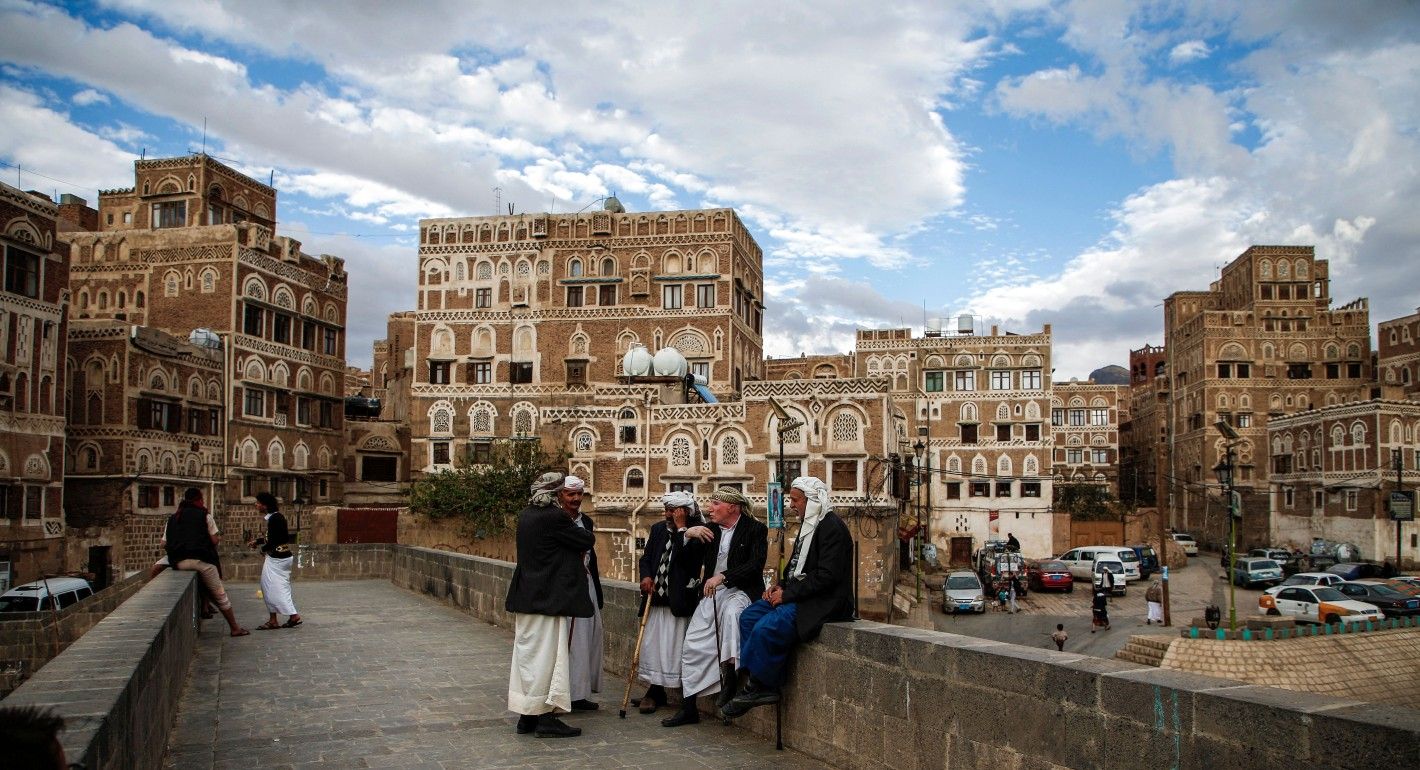
Yemen was the first country in West Asia to gain full access to Starlink, the satellite-based infrastructure owned by billionaire Elon Musk. The announcement surprised many, particularly given the swift praise from the U.S. embassy in Yemen, which characterized it as an achievement with the potential to unlock new opportunities. However, the timing of the announcement coincided with an increase in attacks on Red Sea shipping traffic. Critics worry the project could compromise Yemen’s national security, especially since countries like Russia, South Africa, Iran, China, and India have refused to allow Starlink to operate within their borders.  

A Divisive Opportunity

The internationally recognized government (IRG) in Aden welcomed Starlink’s announcement, highlighting its potential to end the Houthis’ exploitation of communication and internet services for spying on military movements and monitoring social media activities. Previously, the IRG replaced Yemen Net—a Houthi-controlled internet provider based in Sana’a—with Aden Net, a new internet service provider headquartered in Aden. However, Aden Net was unable to meet public demand, prompting the government to seek an alternative in Starlink. The IRG believes that Starlink’s services will curtail Houthi espionage on citizens, international organizations, and political leaders. International cybersecurity reports suggest that Starlink’s entry into the Yemeni market could significantly weaken the Houthis by breaking their monopoly on internet services and improving the security of the legitimate government’s military communications, drawing comparisons to its pivotal role in Ukraine. 

Meanwhile, the Houthi government in Sana’a condemned the Starlink deal as “dangerous” and a blatant violation of Yemeni sovereignty. They argue that the new service poses a significant threat to Yemen’s national security, jeopardizing the societal fabric and undermining the government’s ability to safeguard citizens’ privacy and data. The Sana’a authorities warned residents in areas under their control against using Starlink’s services, vowing to take necessary measures to protect the country’s sovereignty and security—a veiled threat to anyone who dares to use the service. The Houthis further escalated their rhetoric, characterizing Starlink as a tool for espionage, capable of monitoring Yemeni forces and identifying rocket launch platforms used for attacks in the Red Sea. 

Concerns and Speculations

In addition to statements from the Houthi-controlled Ministry of Communications in Sana’a regarding the new satellite internet service in Yemen, experts and technicians have raised their own concerns, including the following: first; Politicization of telecommunications and its use as a weapon. Some argue that Starlink’s entry into Yemen is intended to exploit the telecommunications sector as a tool in conflict zones. This concern stems from the fact that all parties involved in the conflict already treat telecommunications as a strategic asset, using it as a weapon and a bargaining chip in their power struggles. 

Second; the use of the internet to enhance American influence. Many Yemenis view Starlink as a tool for U.S. intelligence operations, citing reports from Reuters and the Financial Times about how the United States and Britain are struggling to gather the intelligence necessary to secure their interests in the Red Sea. Some believe that Starlink’s entry into Yemen could serve as a means to bolster American influence and presence in the region, especially amid ongoing conflicts. This raises fears of escalating tensions, similar to how Starlink played a logistical role in the Ukraine war. 

Third; control over information flow. Experts have also expressed concern that Starlink could dominate the flow of information, a critical factor in Yemen’s ten-year conflict. Information collected through the satellite internet could potentially be used for intelligence gathering or economic exploitation, leading to the gradual militarization of Starlink’s services. 

As it stands, Yemen appears to be on the verge of a new showdown over Starlink's entry to provide satellite internet services. This controversy adds another layer to Yemen's ongoing political and economic crises. It unfolds against the backdrop of a fragile state of neither war nor peace, skyrocketing inflation, a collapsing currency, and the unrelenting suffering of Yemenis—a plight that has persisted since the start of the war in 2014 and shows no signs of abating due to unresolved political, economic, and military challenges.

Muhammed Ali Thamer

Muhammad Ali Thamer is a Yemeni writer, researcher, and journalist who contributes to Yemeni, Arab, and international outlets.

Domestic PoliticsSecurityPolitical ReformEconomyYemenMiddle East

Carnegie does not take institutional positions on public policy issues; the views represented herein are those of the author(s) and do not necessarily reflect the views of Carnegie, its staff, or its trustees.

More Work from Sada

  • Commentary
    Sada
    A House Divided: How Internal Power Struggles Shape Iraq’s Foreign Policy

    Iraq’s foreign policy is being shaped by its own internal battles—fractured elites, competing militias, and a state struggling to speak with one voice. The article asks: How do these divisions affect Iraq’s ability to balance between the U.S. and Iran? Can Baghdad use its “good neighbor” approach to reduce regional tensions? And what will it take for Iraq to turn regional investments into real stability at home? It explores potential solutions, including strengthening state institutions, curbing rogue militias, improving governance, and using regional partnerships to address core economic and security weaknesses so Iraq can finally build a unified and sustainable foreign policy.

      Mike Fleet

  • Commentary
    Sada
    The Role of E-commerce in Empowering Women in Saudi Arabia: Assessing the Policy Potential

    How can Saudi Arabia turn its booming e-commerce sector into a real engine of economic empowerment for women amid persistent gaps in capital access, digital training, and workplace inclusion? This piece explores the policy fixes, from data-center integration to gender-responsive regulation, that could unlock women’s full potential in the kingdom’s digital economy.

      Hannan Hussain

  • Commentary
    Sada
    A War Fueled by Hate Speech: Sudan’s Fall into Fragmentation

    Hate speech has spread across Sudan and become a key factor in worsening the war between the army and the Rapid Support Forces. The article provides expert analysis and historical background to show how hateful rhetoric has fueled violence, justified atrocities, and weakened national unity, while also suggesting ways to counter it through justice, education, and promoting a culture of peace.

      Samar Sulaiman

  • Commentary
    Sada
    Disarming Palestinian Factions in Lebanon: Can a Security Experiment Evolve into Sovereign Policy?

    The August 2025 government decision to restrict weapons to the Lebanese state, starting with Palestinian arms in the camps, marked a major test of Lebanon’s ability to turn a long-standing slogan into practical policy. Yet the experiment quickly exposed political hesitation, social gaps, and factional divisions, raising the question of whether it can become a model for addressing more sensitive files such as Hezbollah’s weapons.

      Souhayb Jawhar

  • Commentary
    Sada
    Kuwait’s Bureaucracy at a Crossroads: Why Government Innovation Stalls and How Analytics Can Reignite Reform

    Kuwait’s government has repeatedly launched ambitious reforms under Kuwait Vision 2035, yet bureaucratic inefficiency, siloed institutions, and weak feedback mechanisms continue to stall progress. Adopting government analytics—real-time monitoring and evidence-based decision-making—can transform reform from repetitive announcements into measurable outcomes.

      Dalal A. Marafie

Get more news and analysis from
Carnegie Endowment for International Peace
Carnegie global logo, stacked
1779 Massachusetts Avenue NWWashington, DC, 20036-2103Phone: 202 483 7600Fax: 202 483 1840
  • Research
  • Emissary
  • About
  • Experts
  • Donate
  • Programs
  • Events
  • Blogs
  • Podcasts
  • Contact
  • Annual Reports
  • Careers
  • Privacy
  • For Media
  • Government Resources
Get more news and analysis from
Carnegie Endowment for International Peace
© 2026 Carnegie Endowment for International Peace. All rights reserved.