

Paper
Adam Baczko, Gilles Dorronsoro, Arthur Quesnay
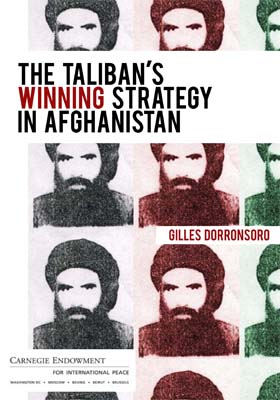
To prevent losing control of Afghanistan, the International Coalition must shift resources to reverse the Taliban’s progress in the North, while reinforcing the Kabul region.
The Taliban’s clear strategy and increasingly coherent organization have put the International Coalition on the defensive, marginalized the local Afghan government, and given the Taliban control of southern and eastern Afghanistan. Rather than concentrating limited troops in the South and East where the Taliban are firmly entrenched, the International Coalition should prioritize regions where the Taliban are still weak but making alarming progress: in the North and around Kabul.
Far from a loose assortment of local groups, the Taliban are nationally organized, with coherent leadership and a sophisticated propaganda operation. The Coalition, on the other hand, lacks clear direction, largely due to its underestimation of the Taliban. Following a month-long trip through Afghanistan, Gilles Dorronsoro assesses the insurgency and proposes a strategy for the coalition based on a comprehensive understanding of the Taliban’s capabilities and goals.
Key points:
Dorronsoro concludes:
“The Taliban have a strategy and a coherent organization to implement it, and they have been successful so far. They have achieved most of their objectives in the South and East and are making inroads in the North. They are unlikely to change their strategy in the face of the U.S. troop surge. Rather than concentrating forces to challenge the International Coalition, the Taliban could decide to exert more pressure on Kabul, Ghazni, and Kandahar, which they have infiltrated. The insurgency does have weaknesses, though. If the Coalition reinforced the Afghan police and military in the North, the insurgents could be stopped relatively easily.”
Former Nonresident Scholar, South Asia Program
Dorronsoro’s research focuses on security and political development in Afghanistan. He was a professor of political science at the Sorbonne in Paris and the Institute of Political Studies of Rennes.
Recent Work
Adam Baczko, Gilles Dorronsoro, Arthur Quesnay
Gilles Dorronsoro
Carnegie does not take institutional positions on public policy issues; the views represented herein are those of the author(s) and do not necessarily reflect the views of Carnegie, its staff, or its trustees.

Russia’s AI-driven propaganda campaigns operate in a fragmented, chaotic, and often illogical manner. That’s not necessarily a problem for the Kremlin, though: It’s much easier to mimic genuine public debate that way.

Ilya Klishin

Ahead of a tough winter for Ukraine, Donald Trump’s swing back toward Russia bodes ill. But instead of panicking, Kyiv’s European allies are focusing on action.

Rym Momtaz

Without a ceasefire with Ukraine on attacking each other’s energy infrastructure—to which the Kremlin is unlikely to agree—the diesel agreement between Putin and Trump is largely for show, rather than representing a genuine increase in the volumes of Russian diesel on the global market.

Sergey Vakulenko

Despite its flop at the box office, the film raises important questions for the climate community to answer.

Leonardo Martinez-Diaz

Funding Ukraine remains a priority for European leaders. As Russia’s war of aggression heads into another winter, two feasible options to mobilize support for Kyiv should be fast-tracked.


Vladyslav Rashkovan, Gregory P. Wilson