Commentary
Yukon Huang, Isaac B. Kardon, Matt Sheehan
{
  "authors": [
    "Yukon Huang"
  ],
  "type": "legacyinthemedia",
  "centerAffiliationAll": "dc",
  "centers": [
    "Carnegie Endowment for International Peace",
    "Carnegie China"
  ],
  "collections": [],
  "englishNewsletterAll": "asia",
  "nonEnglishNewsletterAll": "",
  "primaryCenter": "Carnegie China",
  "programAffiliation": "AP",
  "programs": [
    "Asia"
  ],
  "projects": [],
  "regions": [
    "East Asia",
    "China"
  ],
  "topics": [
    "Political Reform",
    "Economy"
  ]
}
Source: Getty
China’s debt acceleration is concerning but will likely not lead to a crisis. Policymakers should focus on reforming the fiscal system, rationalizing land policy, and easing migration restrictions.
Source: Global Times
China is one of the fastest growing economies in the world. However, given its debt problem and soaring property prices, many observers abroad have become more negative about China's economy. Global Times reporter Liu Jianxi (GT) talked with Yukon Huang (Huang), a senior associate in the Carnegie Asia Program, a leading economist in Asia and former World Bank country director for China, about these issues.
Huang: Over the last 10 years, China's debt to GDP ratio has increased from about 150 percent to 250 percent. The debt ratio is not unusual given China's stage of development. The level is not a worry. The worry is that if you compare China with other countries whose debt ratios have increased by the same amount in a short period, almost all have experienced a financial crisis. So why not China?
First, in China, borrowers are often State-owned enterprises or local governments, and lenders are State-owned banks. In other countries, lenders and borrowers are usually private. If the borrower and lender are both State-owned, any financial problem eventually becomes a budget issue, and the outcome depends on the financial strength of the government.
Second, land prices have increased on average from 400 percent to 800 percent over the last decade which is unusual. So a lot of debt in China is actually financing the costs of land and the transfer of property, although many observers haven't realized it.
Property prices went from essentially zero when State-owned to something which is quite high and comparable to global market values. I don't think China has a debt problem, because property is valuable and the increase in debt is the result of financial markets recognizing its value. I do not see a crisis coming but there will be increased volatility that needs to be managed.
Huang: For China's local governments, the budget system is weak, households don't pay much income tax and there is no property tax. In the US, local government budgets are large and dependent on property taxes. When localities want to build a road, they don't borrow from banks. In China, local governments often borrow for infrastructure and other activities. China needs to move to a financial system which is less bank-dependent, and this means improving the budget system.
Another aspect is that localities in China own land. They sell land to developers and get money to finance schools or roads. But sometimes they go too far. They build too many malls and houses which then become vacant. Sometimes they drive up prices because they want to develop more to generate more revenues but this can lead to overbuilding and excess unsold properties. With a stronger fiscal system, there is less incentive to overbuild. To me, China's debt problem is not a banking issue, it is a budget problem.
Huang: First of all, people are concerned about whether their salaries are going up and whether they can find a good job. So why do we need to worry about whether growth is unbalanced?
Second, few analysts realize that unbalanced growth is a consequence of urbanization When these workers move, consumption per person increases and so does savings per person. Everyone is better-off, but since the workers are moving from rural, labor intensive jobs to more capital intensive jobs in the cities, the growth process becomes more unbalanced. Thus the imbalance is a consequence of a successful growth process and not something bad.
Huang: First, prices have increased in Shenzhen, Beijing and Shanghai much more than in second- and third-tier cities. This is because of the excess supply of unsold housing in the smaller cities relative to the largest cities. The government is telling everyone: please move to smaller cities. Thus local authorities have been building more in the small- and medium-sized cities. But people are not coming. Even though property prices are lower, people are more focused on getting a better job, and the higher paying jobs are usually in the bigger cities.
Government policies are also distorting the housing market. A property bubble usually occurs when government policies attempt to promote more sales and construction than market conditions warrant. Zoning and building regulations distort prices and often make prices too high in major cities. Restrictions on migration distort demand. People should be allowed to move to where they can find good jobs. In addition, China's major cities are not as densely developed in its core as cities in other countries and thus development is pushed out to the suburbs. This make centrally located property too expensive. The tendency to tighten and then ease guidelines for buying homes also encourages bubbles.
Huang: Many economists are too negative about China's debt problem especially in the major financial centers around the world. There are risks and challenges, and there have been some inappropriate policies. But there is not going to be a major crisis or collapse. There are, however, issues that if not properly addressed would perpetuate the current growth slow down.
There is some doubt now about whether enough attention has been given to these economic issues, and part of reason is that there's more focus today in China on foreign policy and political issues. Former Chinese president Deng Xiaopeng reminded everybody that the top priority is on China's development, and this is still good advice. Today China is more market-oriented and globalized. The government cannot deal with all the economic issues as easily as it did in the past because it doesn't control everything and there are more risks in the world economy today.
Huang: Some people will say: don't let foreigners in, they'll take over the market. My response is: Is this actually going to happen? There are now so many competent Chinese firms that realistically foreign companies cannot monopolize the situation.
With experience, Chinese companies are now quick to adjust to changing market conditions. China should encourage a local presence, but China would also benefit from more competition that would drive local enterprises to develop even further.
This interview was originally published in the Global Times.

Senior Fellow, Asia Program
Huang is a senior fellow in the Carnegie Asia Program where his research focuses on China’s economy and its regional and global impact.
Recent Work


Yukon Huang, Isaac B. Kardon, Matt Sheehan
Yukon Huang, Genevieve Slosberg
Carnegie does not take institutional positions on public policy issues; the views represented herein are those of the author(s) and do not necessarily reflect the views of Carnegie, its staff, or its trustees.
Five problems—and solutions—to make it actually work as a tool of great power competition.

Afreen Akhter

It’s true that many Armenians would vote for anyone just to be rid of Pashinyan, whom they blame for the loss of Nagorno-Karabakh, but the pro-Russia opposition is unlikely to be able to channel that frustration into an electoral victory.

Mikayel Zolyan

Montenegro and Albania are frontrunners for EU enlargement in the Western Balkans, but they can’t just sit back and wait. To meet their 2030 accession ambitions, they must make a strong positive case.


Dimitar Bechev, Iliriana Gjoni
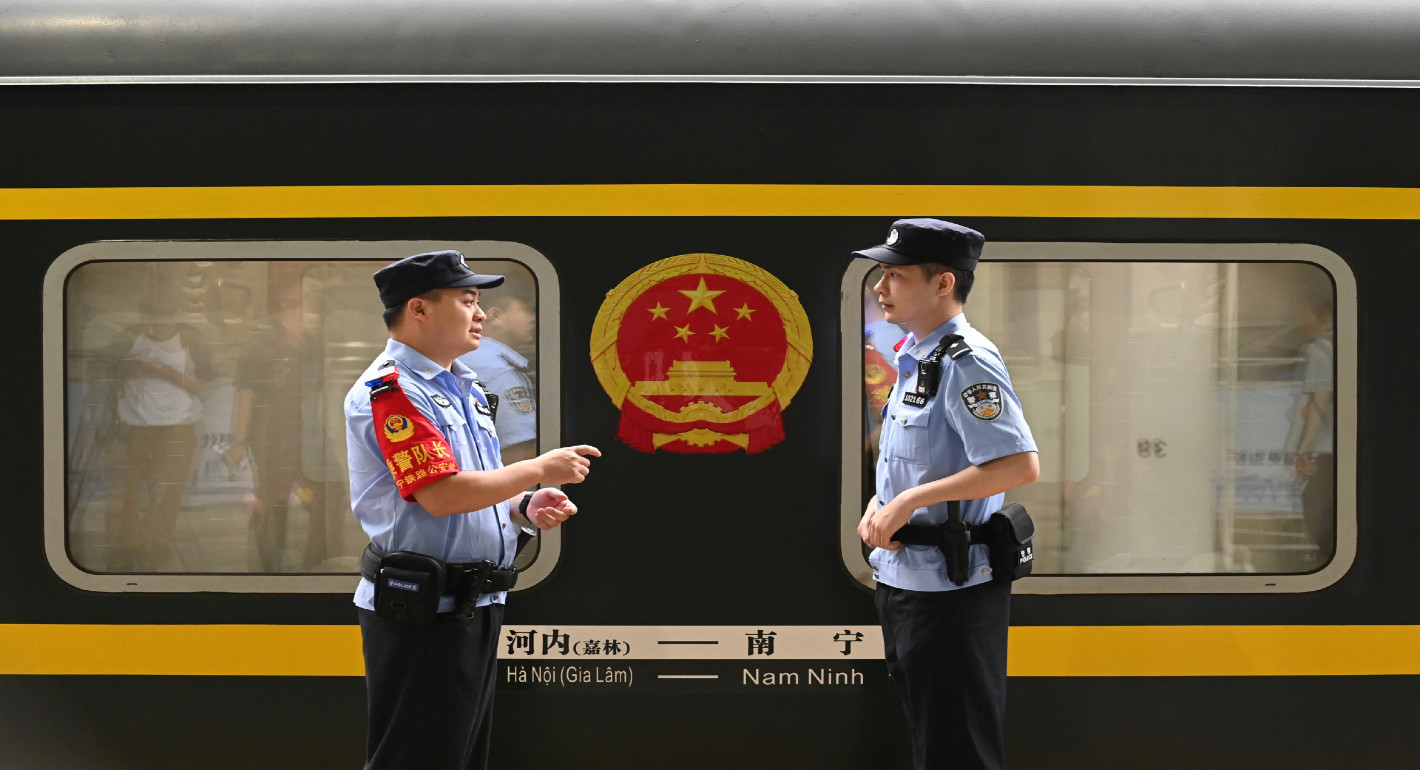
Despite long-standing differences, China and Vietnam are reinforcing common ground for collaboration, especially in public security. This internal security–centered diplomacy offers a strengthened road map for how China moves forward with Southeast Asia.
Sophie Zhuang

As the war between the United States, Israel, and Iran continues, Carnegie scholars contribute cutting-edge analysis on the events of the war and their wide-reaching implications. From the impact on Iran and its immediate neighbors to the responses from Gulf states to fuel and fertilizer shortages caused by the effective shutdown of the Strait of Hormuz, the war is reshaping Middle East alliances and creating shockwaves around the world. Carnegie experts analyze it all.