

Paper
Christopher S. Chivvis, Rohan Mukherjee, Milan Vaishnav
{
  "authors": [
    "Milan Vaishnav"
  ],
  "type": "legacyinthemedia",
  "centerAffiliationAll": "dc",
  "centers": [
    "Carnegie Endowment for International Peace"
  ],
  "collections": [],
  "englishNewsletterAll": "ctw",
  "nonEnglishNewsletterAll": "",
  "primaryCenter": "Carnegie Endowment for International Peace",
  "programAffiliation": "SAP",
  "programs": [
    "South Asia"
  ],
  "projects": [],
  "regions": [
    "South Asia",
    "India"
  ],
  "topics": [
    "Political Reform",
    "Democracy"
  ]
}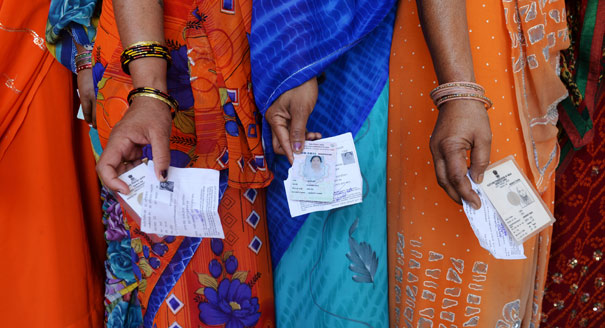
Source: Getty
In India’s boisterous democracy, the debate over the role of crime in politics is raging ahead—although understanding of the underlying drivers is still inchoate.
Source: Huffington Post
The resounding victory for [Prime Minister Narendra] Modi and the BJP, the stunning repudiation of the incumbent Congress Party, and the rhetorical emphasis on vikas (development) during the campaign led many analysts to dub the 2014 campaign India's "good governance" election. So it was curious that the very same election produced a parliament in which one-third of its members were facing ongoing criminal prosecution. One in five newly elected members of Parliament (MPs) disclosed at least one pending case involving serious criminal charges—charges that, if a conviction were obtained, would merit real jail time.
These facts raise a number of uncomfortable questions about how free and fair democratic elections and widespread illegality can comfortably coexist. This book addresses those questions, using the world's largest democracy as a test case. To be clear, this nexus is not unique to India, but a thorough examination of the Indian experience can shed light on the dozens of other democracies where criminality and corruption are deeply entrenched, from Pakistan to the Philippines.
Any explanation of complex social realities, such as the criminalization of politics, can rarely be boiled down to a single root cause. To try to simplify matters, I argue throughout the book that it is useful to think of criminal politicians existing within an electoral marketplace. As with any market, the marketplace for criminal politicians comprises both supply (politicians) and demand (voters). Of course, these factors are highly contextual, varying substantially even within a single country. To be clear, the term "criminal politicians" refers to politicians who have been named in ongoing criminal cases, even if a court of law has not conclusively established their guilt. Criminal politicians often have a reputation for engaging in illegal activity, but they may not have been convicted (yet) of criminal transgressions.
Individuals with criminal reputations have long been associated with politics in India, but amid a changing electoral environment in which uncertainty and competition have both intensified, over time they have moved from the periphery to center stage. Once content to serve politicians, criminals gradually became politicians themselves. In taking the electoral plunge, they have not acted on their own. Just as markets feature intermediaries who match buyers with sellers, political parties have embraced and promoted candidates with criminal links, drawn to their deep pockets at a time when the cost of elections has exploded and party organizations have atrophied. Loophole-ridden campaign finance laws have been no match for the torrent of undocumented cash that those with criminal ties are able to marshal.
Money helps grease the wheels, but voters too often have a rational incentive to back politicians with criminal reputations. In places where the rule of law is weak and social divisions are rife, politicians can use their criminality as a signal of their ability to do whatever it takes to protect the interests of their community—from dispensing justice and guaranteeing security to providing a social safety net. What the Indian state has been unable to provide, strongmen have promised to deliver in spades. What this means in practice is that voters are not necessarily blind to the predilections of the political class: many voters vote for politicians because, rather than in spite, of their criminal reputations. (...)
There are myriad implications of this book for India, and for democracies around the world. Unlike many countries in the West, India embarked on its democratic journey without first possessing capable institutions of governance. Whereas many advanced industrialized democracies built strong states over centuries before embarking on a process of political liberalization, India instituted universal franchise from the outset, operating under the constraints of a relatively weak institutional framework. Over time, as the stresses of political, economic, and social change have grown, the country's institutional framework has proven too frail to cope. The resort to suspected criminals in politics has to be understood through this larger prism of the state-building enterprise—an endeavor many developing countries also find themselves struggling with at present.
Over time, many Indian voters—faced with a state unable to service their needs—have looked to those who can. Viewed in this light, politicians with criminal records are not symptomatic of a failure of the democratic process. Instead, malfeasant politicians and popular accountability can in fact be compatible (although surely not free of adverse consequences). This means that contrary to the widely held belief that "sunlight is the best disinfectant," raising the level of transparency regarding the nexus between crime and politics will not be sufficient to stamp out this link.
The good news is that an understanding of this marketplace and how it behaves can help us grapple with the public policy ramifications and suggest possible remedies. In the short run, reformers must revamp how elections are funded and tackle the most egregious cases of illegality indulged in by politicians. But in the long run, there is no substitute for building up the capacity of the state to expand its writ while simultaneously taming its worst excesses. Put somewhat more provocatively, the problem with the Indian state is not that it is too big; it is that it is big in all the wrong places. Contrary to popular lamentations that India's developmental performance remains burdened by an unruly democracy while that of its Chinese neighbor, unencumbered by the constraints imposed by popular consent, has been able to rapidly develop, India's democracy is not, in fact, the difficulty. Rather, what India lacks is a state that can keep pace with popular aspirations.
In India's boisterous democracy, the debate over the role of crime in politics is raging ahead—although our understanding of the underlying drivers is still inchoate. The humble ambition of the present study is to help nudge that process along.
This excerpt from When Crime Pays was originally published in the Huffington Post.

Director and Senior Fellow, South Asia Program
Milan Vaishnav is a senior fellow and director of the South Asia Program and the host of the Grand Tamasha podcast at the Carnegie Endowment for International Peace. His primary research focus is the political economy of India, and he examines issues such as corruption and governance, state capacity, federalism, and electoral behavior. He also conducts research on the Indian diaspora.
Recent Work
Christopher S. Chivvis, Rohan Mukherjee, Milan Vaishnav



Sophia Besch, Eric Ciaramella, Steve Feldstein, …
Carnegie does not take institutional positions on public policy issues; the views represented herein are those of the author(s) and do not necessarily reflect the views of Carnegie, its staff, or its trustees.

Despite public disputes over trade and immigration, the strategic partnership’s foundations remain sturdy.

Sameer Lalwani

Putin’s conservative staffing policies and search for ever greater control have cemented parliament’s transformation into a bureaucratic appendage of the executive branch.

Andrey Pertsev

Ex-president Gurbanguly Berdimuhamedov remains interested in politics, but his son Serdar, Turkmenistan’s current president, is becoming increasingly independent and willing to break with his father’s legacy. If their covert rivalry goes too far, both risk losing power.

Galiya Ibragimova

A notable degree of participative democracy has firmly arrived in Europe. But to have more far-reaching impact, democratic deliberation needs to move into a radically new phase.

Richard Youngs
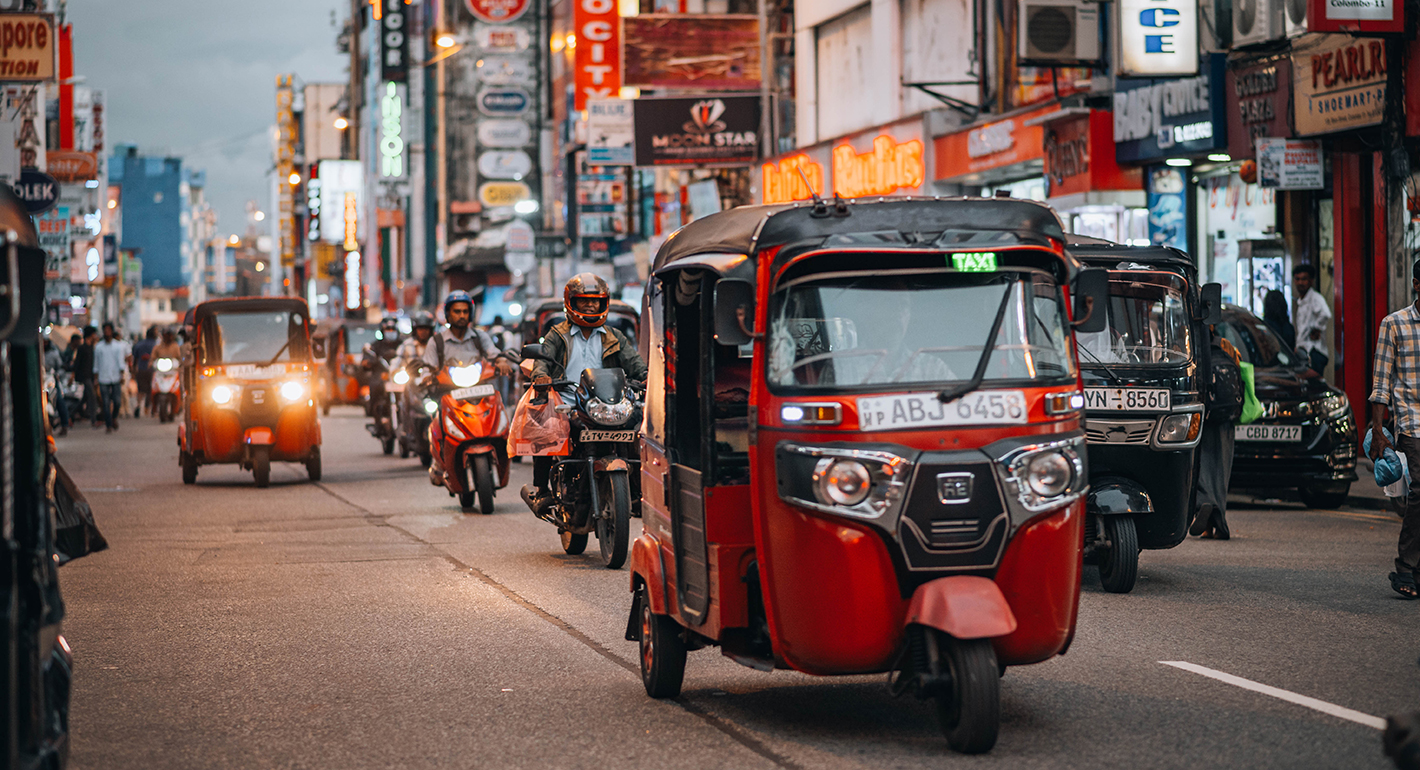
Economic recovery has brought Sri Lanka a modicum of stability, but domestic strains and great-power rivalry could test how long it lasts.
Avinash Paliwal