

In The Media
Minxin Pei
{
  "authors": [
    "Minxin Pei"
  ],
  "type": "legacyinthemedia",
  "centerAffiliationAll": "dc",
  "centers": [
    "Carnegie Endowment for International Peace"
  ],
  "collections": [],
  "englishNewsletterAll": "asia",
  "nonEnglishNewsletterAll": "",
  "primaryCenter": "Carnegie Endowment for International Peace",
  "programAffiliation": "AP",
  "programs": [
    "Asia",
    "Democracy, Conflict, and Governance"
  ],
  "projects": [],
  "regions": [
    "Iraq"
  ],
  "topics": [
    "Political Reform",
    "Foreign Policy"
  ]
}
REQUIRED IMAGE
Source: Carnegie
This op-ed first appeared in The Christian
Science Monitor on January 15, 2003. All rights reserved.
WASHINGTON - Recent press reports of the Bush administration's plans for a post-Hussein Iraq have underscored Washington's determination to seek a regime change in Baghdad, even though the White House claims that its primary objective remains disarming Iraq.
Instead of becoming giddy over the prospects of a new democratic Iraq, President Bush's advisers should review Washington's own - decidedly mixed - record of regime change and temper their optimism.
Among the major powers, the US has engaged in the largest number of regime changes. Since the past century, it has deployed its military to impose democratic rule in foreign lands on 18 occasions. Yet this impressive record of international activism has left an uninspiring legacy. Of all the regimes the US has replaced with force, democratic rule has been sustained in only five places - Germany, Japan, Italy, Panama, and Grenada. This suggests a success rate of less than 30 percent. Outside the developed world and Latin America, there hasn't been a single success.
In Latin America, the US efforts of regime change removed old dictatorships, but failed to rebuild new democracies. In Cuba, the Dominican Republic, Haiti, Nicaragua, and Guatemala, repeated direct American military interventions, including lengthy occupations, resulted only in new dictatorships. The only two successful cases of building democracy by force were Grenada in 1983 and Panama in 1989, one a tiny island and the other a small country where the US has based tens of thousands of troops.
The dearth of success in regime change was not for lack of trying. The US occupied Cuba and the Dominican Republic twice for extended periods in the past century. It stayed engaged in Haiti continuously for 19 years and in Nicaragua intermittently for 24 years in the early part of the 20th century. But in each case, US efforts came to nothing. The most discouraging case is Haiti. The last time the US tried a regime change in the impoverished and ill-governed nation was 1994. Although US-led forces peacefully ousted the junta and reinstalled the democratically elected Jean-Bertrand Aristide, Haiti's democracy unraveled again quickly. Today, the nation is mired in poverty and misrule under the same Aristide.
Washington's record is better in the more developed parts of the world. In postwar Japan, Germany, and Italy, US-led occupation forces successfully rebuilt democratic institutions. In these three countries, the state institutions were relatively strong and effective; their societies were more modern; all had brief histories of democratic rule. They were among the more promising candidates for democracy-building. In the developing world, on the other hand, US projects of regime change have been marked mostly with failures and disappointments.
Three lessons emerge from past American experience that President Bush should heed. First, given the overall low rate of success in regime change, a similar operation in the Middle East, a tough geopolitical neighborhood far away from American shores, carries greater risks and has less chance of success. Iraq, with 24 million people and a volatile ethnic mix, would be one of the most ambitious US projects.
Second, the overthrow of the old dictator never guarantees a successful regime change. The critical factor is the occupier's capacity to transform weak state institutions, such as the bureaucracy, courts, and military, into effective instruments of governance. Most outsiders fail in this attempt. Even lengthy commitment does not produce desired results.
Third, unilateralism makes things worse, even though multilateral efforts do not necessarily ensure success. Nearly all of the United States' attempted regime changes in Latin America were unilateral, with high costs both to the American image in the region and Washington's ability to sustain domestic political support for the undertakings.
Iraq should be the last place for the US to repeat the same mistakes.
• Minxin Pei and Sara Kasper are a senior associate and a junior fellow, respectively, at the Carnegie Endowment for International Peace in Washington.
US track record on nation building
Country/ Years/ Multilateral or Unilateral/ Democracy after 10 yrs.?
1. Afghanistan 2001-present Multilateral ?
2. Haiti 1994 Multilateral NO
3. Panama 1989 Unilateral YES
4. Grenada 1983 Multilateral YES
5. Cambodia 1970-73 Unilateral NO
6. South Vietnam 1965-73 Unilateral NO
7. Dominican Rep. 1965-66 Unilateral NO
8. Japan 1945-52 Multilateral YES
9. West Germany 1944-49 Multilateral YES
10. Italy 1944-47 Multilateral YES
11. Dominican Rep. 1916-24 Unilateral NO
12. Cuba 1917-22 Unilateral NO
13. Haiti 1915-1919 Unilateral NO
14. Honduras 1924-1925 Unilateral NO
15. Nicaragua 1909-27 Unilateral NO
16. Mexico 1914 Unilateral NO
17. Nicaragua 1909 Unilateral NO
18. Cuba 1906-1909 Unilateral NO
NOTE: Included are only the cases where American ground troops are committed; excluded are cases of humanitarian interventions, such as Somalia (1993) and Bosnia (1995) and cases where the US used proxies to overthrow hostile regimes.
Compiled by Minxin Pei and Sara Kasper

Former Adjunct Senior Associate, Asia Program
Pei is Tom and Margot Pritzker ‘72 Professor of Government and the director of the Keck Center for International and Strategic Studies at Claremont McKenna College.
Recent Work
Minxin Pei
Minxin Pei
Carnegie does not take institutional positions on public policy issues; the views represented herein are those of the author(s) and do not necessarily reflect the views of Carnegie, its staff, or its trustees.
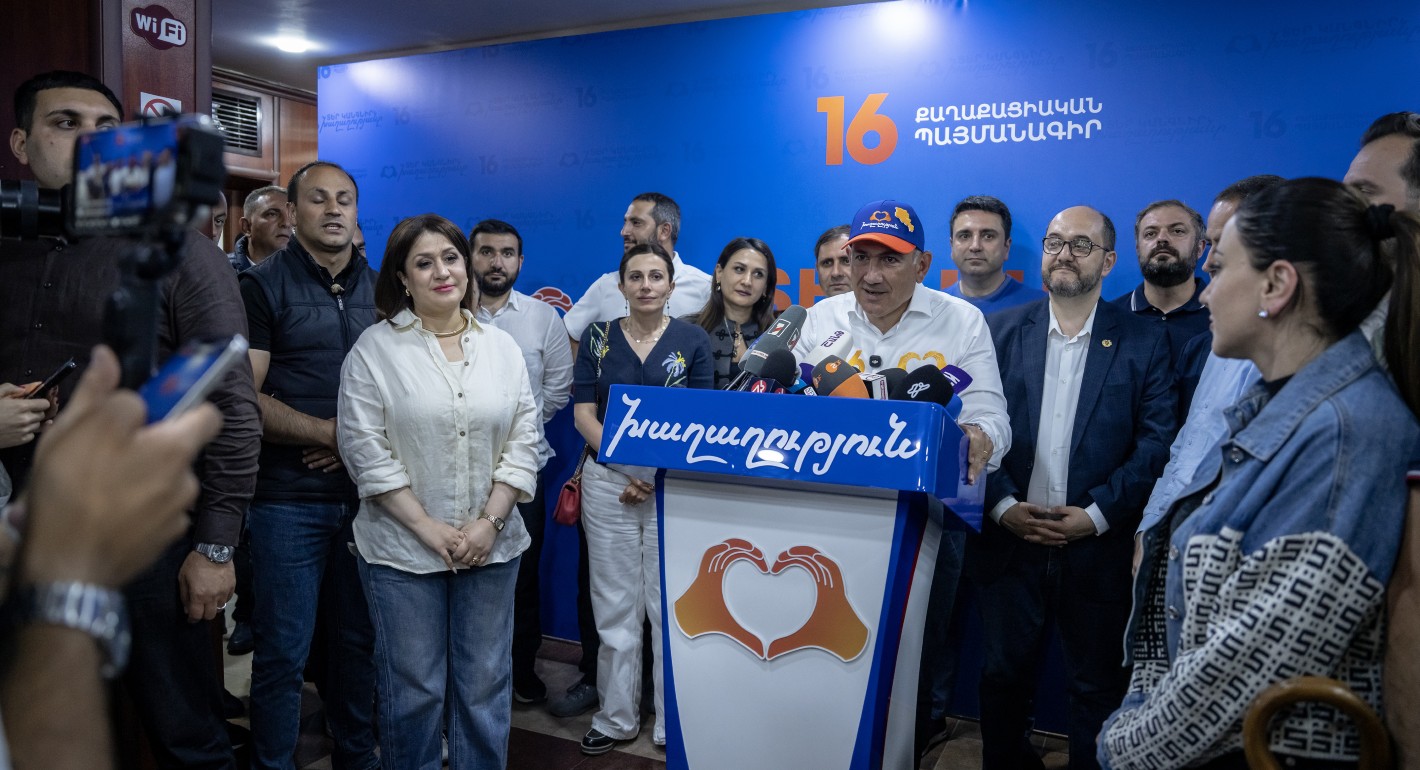
It’s time to build momentum, and Ankara is the venue of the next opportune diplomatic window to do this.

Alper Coşkun, Garo Paylan

The EU is putting together a new security strategy to meet today’s myriad challenges. But for any proposal to be effective, the union needs to grapple with its identity and ambitions.

Pierre Vimont
Three years after the Ohrid Agreement, Kosovo and Serbia remain far from normalization. To revive implementation, the EU should abandon its ambiguity and act as an even-handed arbitrator.

Miloš Pavković, Fitim Gashi, Iliriana Gjoni, …
For all the menacing rhetoric, the Armenian prime minister remains a leader with whom Putin is prepared to interact: not as an ally, but as a partner, albeit a problematic one.

Alexander Atasuntsev
The Islamic Republic’s words and actions suggest that it has changed its approach to both diplomacy and war.
Mohammad Ayatollahi Tabaar