

Commentary
Nikolay Petrov
{
  "authors": [
    "Nikolay Petrov"
  ],
  "type": "legacyinthemedia",
  "centerAffiliationAll": "",
  "centers": [
    "Carnegie Endowment for International Peace",
    "Carnegie Russia Eurasia Center"
  ],
  "collections": [],
  "englishNewsletterAll": "",
  "nonEnglishNewsletterAll": "",
  "primaryCenter": "Carnegie Russia Eurasia Center",
  "programAffiliation": "",
  "programs": [],
  "projects": [],
  "regions": [
    "Caucasus",
    "Russia"
  ],
  "topics": [
    "Political Reform",
    "Democracy",
    "Economy",
    "Foreign Policy"
  ]
}
REQUIRED IMAGE
The authorities conducted this presidential campaign in no time at all. Only 12 weeks passed from the day President Vladimir Putin announced his chosen successor to the day Dmitry Medvedev was elected, during which time Medvedev managed to squeeze in only a single official day off. The right candidates ran, the right number of people voted and the right person won.
Source: The Moscow Times
The authorities conducted this presidential campaign in no time at all. Only 12 weeks passed from the day President Vladimir Putin announced his chosen successor to the day Dmitry Medvedev was elected, during which time Medvedev managed to squeeze in only a single official day off. The right candidates ran, the right number of people voted and the right person won.
Never once has a direct election in Russia effected a change in leadership. Elections have always given popular support to a transfer of authority orchestrated from the top, and the vote on Sunday was no exception.
Much has already been said about the fact that, of all the functions elections are intended to serve, "managed democracies" concentrate on just one -- legitimizing the existing leadership. And these elections, or what is left of the electoral process, are incapable of providing true political competition -- that is, candidates and programs or a give-and-take between the authorities and citizens on the most important problems facing the country and possible solutions to them.
Sunday's election gives us a chance to analyze the authorities' decision-making skills. Only two weeks ago -- with Medvedev's speech in Krasnoyarsk outlining his economic program that stood in marked and positive contrast to Putin's earlier speech on the country's strategic development through 2020 -- it seemed that Medvedev understood the seriousness of the problems before him and was relying on a strong and professional team of experts. But Medvedev's accent during the campaign on the successes of his national projects and the prospects for their further development gave a completely different picture.
The problem is not so much the high marks that Medvedev gives to the national projects, which can be explained as a campaign PR tactic. Rather, it is his demonstrated lack of understanding of the scale of the problems facing the country as well as the administration's limited ability to resolve them. When Putin's successor boasts that the key success of his projects has been the "annual increase in life expectancy by more than one year," it can be written off as self-congratulation. But when Medvedev and other officials speak in all earnest of stabilizing the economy within three or four years while simultaneously predicting a population increase, it shows that he does not understand the situation.
You would think that Medvedev's claim to have increased the average Russian's lifespan would cause Putin some pangs of remorse for the hundreds of thousands of people who, by implication, died an early death on his watch. If you consider our leaders' heavy dose of optimism about the country's future, it follows that their absolutely unrealistic expectations and promises will lead to a worsening of the problems of population decline and labor shortages. The State Statistics Service predicts a population decrease in the hundreds of thousands per year in the near future and an annual reduction in the workforce of up to 1 million people. It follows that it will be impossible to carry out the government's plan for industrializing the Far East, or even to maintain the status quo, without attracting enormous numbers of immigrants.
The discussions of the National Projects Council revealed not only a complete absence of hard data to support Medvedev's various claims, but a critical lack of expertise in the government generally. For his part, Medvedev seems willing to read whatever statement his speechwriters hand him. Where those writers are more talented -- as in Krasnoyarsk, for example -- Medvedev comes off looking like he is up to the task of being president. But where the writers are worse, Medvedev looks like a dilettante. The decision-making process is now such that, even when the authorities do request expert analysis of a question, they feel at liberty to make official statements that are completely at odds with the experts' findings and recommendations.
During Soviet times, it was considered acceptable to ridicule British writer H.G. Wells, who referred to Lenin as the "Kremlin dreamer" after meeting with him. History is repeating itself in that we have a new generation of leaders in the Kremlin who are following pipe dreams -- men who have lost contact with reality and who demonstrate their lack of understanding of the country's serious problems. And because of this, their decisions and policies are woefully inadequate to address the needs of the times.
Nikolai Petrov is a scholar in residence at the Carnegie Moscow Center.
Former Scholar-in-Residence, Society and Regions Program, Moscow Center
Nikolay Petrov was the chair of the Carnegie Moscow Center’s Society and Regions Program. Until 2006, he also worked at the Institute of Geography at the Russian Academy of Sciences, where he started to work in 1982.
Recent Work
Nikolay Petrov
Nikolay Petrov
Carnegie does not take institutional positions on public policy issues; the views represented herein are those of the author(s) and do not necessarily reflect the views of Carnegie, its staff, or its trustees.
It should address the shortcomings of previous crisis communication efforts and adapt to the demands of frontier AI.

Lucy Luo

If the Russian-speaking community in Latvia cannot articulate their interests without being seen as disloyal, they could end up embracing a pro-Kremlin agenda.

Sergejs Potapkins
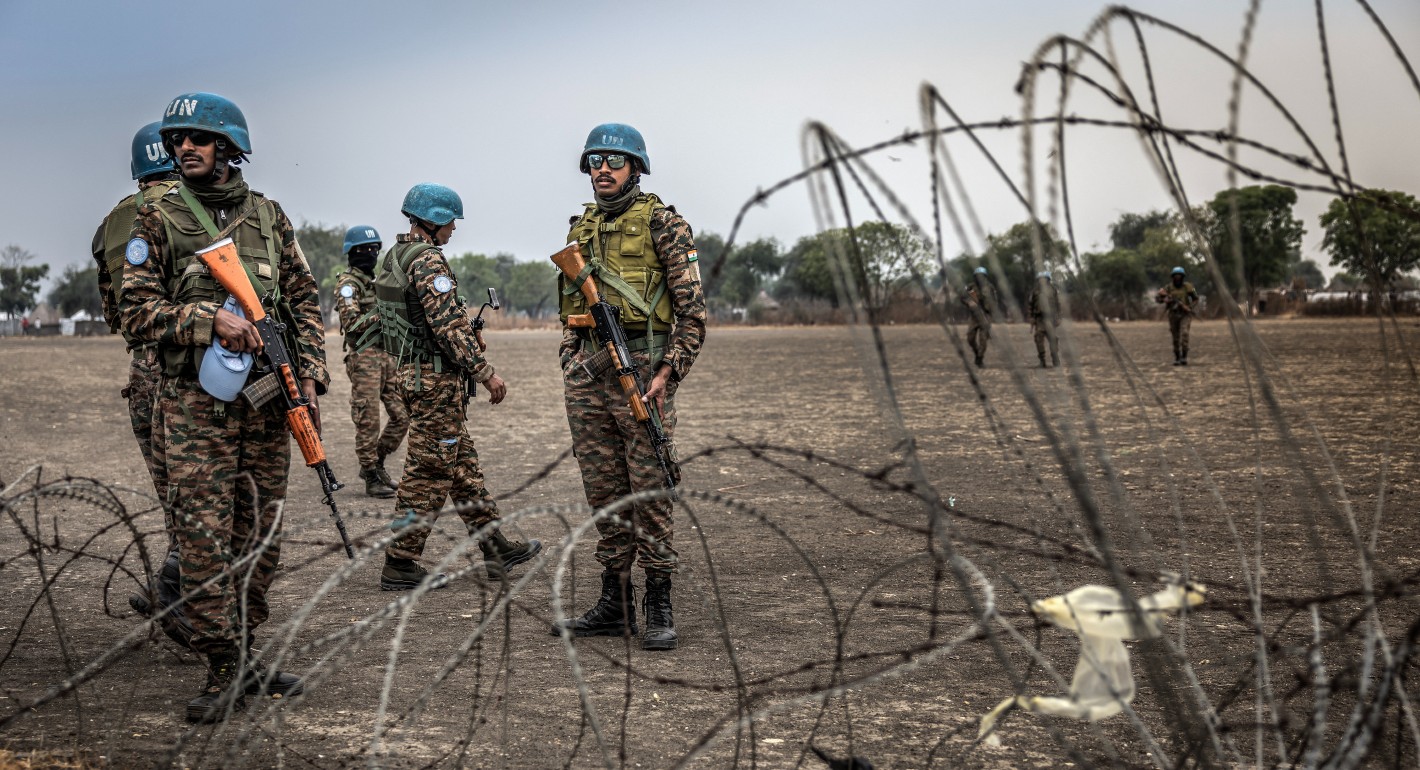
Washington’s decision to support some UN functions while letting others wither is pulling the organization apart at the seams.

Stewart Patrick, Theodore Zaritsky

Are Germany’s economic, industrial, and political struggles becoming a liability for the EU’s ability to rise to the geopolitical moment?

Rym Momtaz, ed.

Russia’s ruling party would have benefited from Putin appearing as its distant patron, but as an active frontman imposing his views on the public, he has done nothing but harm both the party’s election campaign and the ruling system overall.

Andrey Pertsev