

Commentary
Japan’s long-term security policy is driven by concerns about China, and there is little appetite for (or interest in) pursuing a confrontation with Moscow.
James D.J. Brown
{
  "authors": [],
  "type": "pressRelease",
  "centerAffiliationAll": "dc",
  "centers": [
    "Carnegie Endowment for International Peace"
  ],
  "collections": [],
  "englishNewsletterAll": "ctw",
  "nonEnglishNewsletterAll": "",
  "primaryCenter": "Carnegie Endowment for International Peace",
  "programAffiliation": "russia",
  "programs": [
    "Russia and Eurasia"
  ],
  "projects": [],
  "regions": [
    "North America",
    "United States",
    "Caucasus",
    "Russia"
  ],
  "topics": [
    "Security",
    "Military",
    "Foreign Policy",
    "Nuclear Policy"
  ]
}
REQUIRED IMAGE
Rose Gottemoeller, director of the Carnegie Moscow Center from 2006 to 2008, has been nominated as assistant secretary of state for verification and compliance. In particular, she will be responsible for negotiating a follow-on to the START Treaty expiring next December.
Rose Gottemoeller, director of the Carnegie Moscow Center from 2006 to 2008, has been nominated as assistant secretary of state for verification and compliance. In particular, she will be responsible for negotiating a follow-on to the START Treaty expiring next December. Gottemoeller’s appointment must be approved by the U.S. Senate.
Gottemoeller is a leading international expert on nuclear security, strategic stability, nonproliferation, arms control, Russian-American relations and nuclear issues in post-Soviet territories. As director of the Carnegie Moscow Center, she was simultaneously co-chair of the Center’s Nonproliferation program, initiated and led the Forum on Energy Security and ran a series of seminars and roundtables on the Iranian Nuclear Problem with participation of key Russian and international experts, political and public figures. With her as director, the Carnegie Moscow Center was named the Best Think Tank in Russia and Eastern Europe in the area of public policy, economics, social issues, security and ecology.
From October 2000 to December 2005, Gottemoeller served as senior associate at the Carnegie Endowment for International Peace in Washington, where she held a joint appointment with the Russian and Eurasian program and the Global Policy program.
Before coming to work for Carnegie Endowment, Gottemoeller was deputy undersecretary for nuclear nonproliferation in the U.S. Department of Energy. Previously, she had served as the Department’s assistant secretary for nonproliferation and national security, with responsibility for nonproliferation cooperation with Russia and the Newly Independent States.
President Obama said: "Turning the tide on the threat of nuclear weapons and strengthening the international nonproliferation regime is one of the great and urgent challenges of our time. Rose Gottemoeller’s extraordinary commitment and expertise make her a valuable addition to the State Department and my national security team as we renew American diplomacy to create a more secure world."
Dmitri Trenin, new director of the Carnegie Moscow Center, noted: “The appointment of Rose Gottemoeller to one of the most important positions in the U.S. State Department is great news for Russian-American relations. There is unlikely to be another American expert on disarmament and arms control who knows Russia as well, who can speak Russian so fluently and who holds such high esteem with her Russian colleagues. Rose and her partners do not only face the goal of developing new disarmament agreements, but also contributing to a positive dynamic in Russian-American relations at large. Best of luck!”
###
NOTES
Carnegie does not take institutional positions on public policy issues; the views represented herein are those of the author(s) and do not necessarily reflect the views of Carnegie, its staff, or its trustees.

Japan’s long-term security policy is driven by concerns about China, and there is little appetite for (or interest in) pursuing a confrontation with Moscow.

James D.J. Brown

Russia is testing the waters of NATO’s mutual defense clause. What do strikes in Romanian territorial waters mean for the alliance’s posture toward Moscow?

Dimitar Bechev

China has showcased its engineering prowess with small modular reactor demonstration projects. But turning these technological achievements into commercial success will be a greater challenge.

Tong Zhao
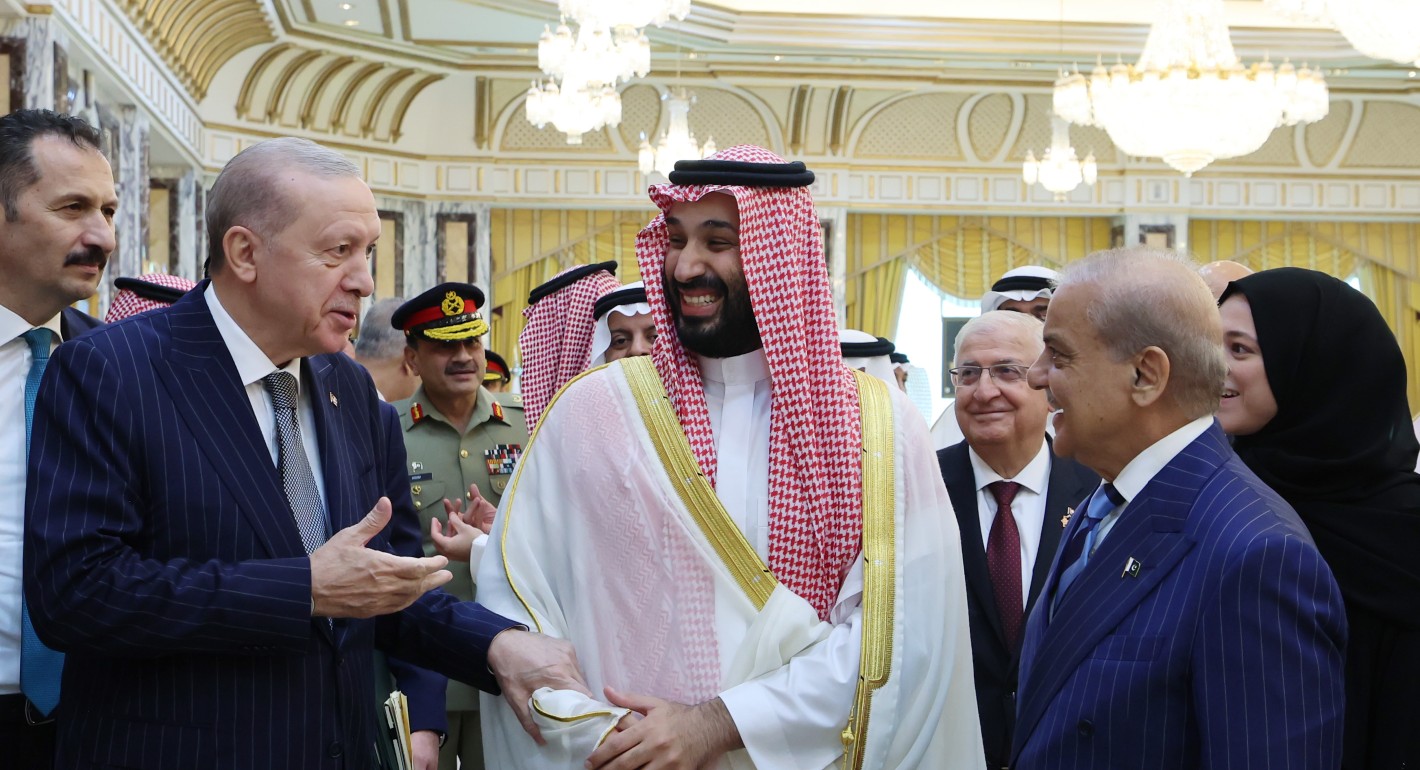
Why Pakistan, Saudi Arabia, and Turkey are joining forces on regional security.


Alper Coşkun, Amr Hamzawy

The truth of the strategic situation is that Europe and Russia are extremely unlikely to be able to “turn the page” on their confrontation within the next two decades.

Arkady Moshes