Nathan J. Brown
{
"authors": [
"Nathan J. Brown"
],
"type": "legacyinthemedia",
"centerAffiliationAll": "dc",
"centers": [
"Carnegie Endowment for International Peace"
],
"collections": [],
"englishNewsletterAll": "menaTransitions",
"nonEnglishNewsletterAll": "",
"primaryCenter": "Carnegie Endowment for International Peace",
"programAffiliation": "MEP",
"programs": [
"Middle East"
],
"projects": [],
"regions": [
"Middle East",
"Israel",
"Palestine"
],
"topics": [
"Political Reform",
"Foreign Policy"
]
}Source: Getty
OK, Here We Are at Plan B
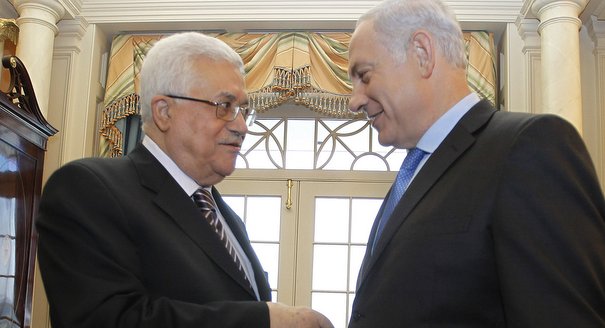
The collapse of U.S. diplomacy on the Israeli-Palestinian front has provoked predictably partisan sniping in Washington, with the Obama administration’s critics (and actually even some of its friends) charging it with incompetence.
Source: Foreign Policy's Abu Aardvark Middle East Blog


- “West Bank first” has failed. One of the proposals buzzing around Washington is to give fuller backing to Salam Fayyad’s “plan” for Palestinian statehood. Fayyad is an admirable figure in many respects, but he his plan is really a hopeful vision rather than a workable set of policy guidelines. We should back him if we like, but that’s no substitute for a comprehensive policy review.
- Palestinians—like Americans and Israelis—have domestic politics. Palestinians have some pleasant leaders now and we should work with them. But our bungling of the Goldstone report and the settlements issues should remind us that they are weak and have serious problems with domestic legitimacy.
- Don’t forget Gaza. The focus on Goldstone report on the Gaza war makes us forget that the Gaza economy was wrecked before December 2008. This matters—maybe not to us, but to almost everybody in the Arab world and many people elsewhere. This looks like a rerun of our Iraq sanctions policy of the 1990s—when the ground shifted slowly under our feet without us noticing it.
- There are no quick fixes to the challenge of Hamas. Hamas won’t go away quickly; it is dug in very deeply in Gaza. It has taken a hit in public opinion polls (and for good reasons—it has delivered blood, toil, sweat, and tears but little food and less hope). But let’s be careful about extrapolating that into the future—Hamas has been an agile movement in the past. And even if people grumble, someone has to explain how to make Hamas lose elections that aren’t going to be held.
About the Author
Nonresident Senior Fellow, Middle East Program
Nathan J. Brown, a professor of political science and international affairs at George Washington University, is a distinguished scholar and author of nine books on Arab politics and governance, as well as editor of five books.
- Israel’s Forever WarsCommentary
- For Younger Palestinians, Crisis Has Become a Way of LifeArticle
Nathan J. Brown
Recent Work
Carnegie does not take institutional positions on public policy issues; the views represented herein are those of the author(s) and do not necessarily reflect the views of Carnegie, its staff, or its trustees.

More Work from Carnegie Endowment for International Peace
- Time to Merge the Commission and EEASCommentary
The EU is structurally incapable of reacting to today’s foreign policy crises. The union must fold the EEAS into the European Commission and create a security council better prepared to take action on the global stage.
Stefan Lehne
- What the Russian Energy Sector Stands to Gain From War in the Middle EastCommentary
The future trajectory of the U.S.-Iran war remains uncertain, but its impact on global energy trade flows and ties will be far-reaching. Moscow is likely to become a key beneficiary of these changes; the crisis in the Gulf also strengthens Russia’s hand in its relationships with China and India, where advantages might prove more durable.
Sergey Vakulenko
- The Problem With the Idea That Netanyahu Made Trump Attack IranCommentary
Going to war was the U.S. president’s decision, for which he alone is responsible.
Daniel C. Kurtzer, Aaron David Miller
- Implementing the Biden Administration’s China StrategyReport
At the heart of Biden’s approach to China was the consolidation of a framework for strategic competition with an eye toward coexistence.
Christopher S. Chivvis, Senkai Hsia
- The Diverging U.S. and Israeli Goals in Iran Are Making the Endgame Even MurkierCommentary
The cracks between Trump and Netanyahu have become more pronounced, particularly over energy and leadership targets.
Eric Lob