• Research
  • Emissary
  • About
  • Experts
Carnegie Global logoCarnegie lettermark logo
DemocracyIran
  • Donate
{
  "authors": [
    "George Perkovich"
  ],
  "type": "other",
  "centerAffiliationAll": "dc",
  "centers": [
    "Carnegie Endowment for International Peace",
    "Carnegie Europe"
  ],
  "collections": [
    "U.S. Nuclear Policy"
  ],
  "englishNewsletterAll": "ctw",
  "nonEnglishNewsletterAll": "",
  "primaryCenter": "Carnegie Endowment for International Peace",
  "programAffiliation": "NPP",
  "programs": [
    "Nuclear Policy"
  ],
  "projects": [],
  "regions": [
    "North America",
    "United States",
    "Caucasus",
    "Russia",
    "Western Europe",
    "Europe"
  ],
  "topics": [
    "Nuclear Policy",
    "Foreign Policy"
  ]
}
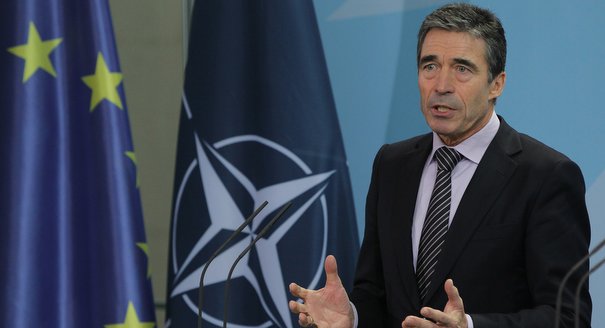
Source: Getty

Other

Like Wedding Rings or Euros? Nuclear Weapons in Europe

While security conditions in Europe remain relatively benign, NATO states should recapitalize their security commitments and clarify their crisis decisionmaking procedures.

Link Copied
By George Perkovich
Published on Dec 14, 2011
Program mobile hero image

Program

Nuclear Policy

The Nuclear Policy Program aims to reduce the risk of nuclear war. Our experts diagnose acute risks stemming from technical and geopolitical developments, generate pragmatic solutions, and use our global network to advance risk-reduction policies. Our work covers deterrence, disarmament, arms control, nonproliferation, and nuclear energy.

Learn More

NATO is conducting a Deterrence and Defense Posture Review to be completed prior to the May 2012 NATO summit that President Obama will host in Chicago. Among other things, the review will consider what the role of nuclear weapons should be in NATO’s overall military policies and posture.

The good news is that NATO does not now face threats against which it would be necessary or credible to use nuclear weapons, except if Russia or a future nuclear-armed Iran were to threaten the existence of an allied state first. The bad news is that NATO’s nuclear weapons are not useful against the threats that are most likely to arise, such as cyberattacks, energy-supply blackmail, or political subversion. The underappreciated news is that some states believe nuclear weapons are such a safe and protean asset that they will protect against a wide range of threats. This belief encourages leveraging the nuclear deterrent to cover positions that in fact should be backed by real capital in the form of new nonnuclear capabilities and policies.
 
Rather than a wedding ring that reassuringly symbolizes commitment, as defenders of the status quo argue, the NATO arsenal of nuclear bombs may be more like the euro. In that case, NATO states should learn from the euro crisis. While security conditions in Europe remain relatively benign, they should recapitalize their security commitments and clarify their crisis decisionmaking procedures.

About the Author

George Perkovich

Japan Chair for a World Without Nuclear Weapons, Senior Fellow

George Perkovich is the Japan Chair for a World Without Nuclear Weapons and a senior fellow in the Carnegie Endowment for International Peace’s Nuclear Policy Program. He works primarily on nuclear deterrence, nonproliferation, and disarmament issues, and is leading a study on nuclear signaling in the 21st century.

    Recent Work

  • Paper
    How to Assess Nuclear ‘Threats’ in the Twenty-First Century

      George Perkovich

  • Commentary
    “A House of Dynamite” Shows Why No Leader Should Have a Nuclear Trigger

      George Perkovich

George Perkovich
Japan Chair for a World Without Nuclear Weapons, Senior Fellow
George Perkovich
Nuclear PolicyForeign PolicyNorth AmericaUnited StatesCaucasusRussiaWestern EuropeEurope

Carnegie does not take institutional positions on public policy issues; the views represented herein are those of the author(s) and do not necessarily reflect the views of Carnegie, its staff, or its trustees.

More Work from Carnegie Endowment for International Peace

  • Commentary
    Diwan
    What Does the Strait of Hormuz’s Closure Mean?

    In an interview, Roger Diwan discusses where the global economy may be going in the third week of the U.S.-Israeli war with Iran.

      Nur Arafeh

  • Commentary
    Strategic Europe
    Russia’s Imperial Retreat Is Europe’s Strategic Opportunity

    The war in Ukraine is costing Russia its leverage overseas. Across the South Caucasus and Middle East, this presents an opportunity for Europe to pick up the pieces and claim its own sphere of influence.

      William Dixon, Maksym Beznosiuk

  • Commentary
    Is the Radical-Right Threat Existential or Overstated?

    Amid increased polarization and the influence of disinformation, radical-right parties are once again gaining traction across Europe. With landmark elections on the horizon in several countries, are the EU’s geostrategic vision and fundamental values under existential threat?

      Catherine Fieschi, Cas Mudde

  • Commentary
    Carnegie Politika
    The Nuances of Oscar-Winning Film “Mr. Nobody Against Putin”

    It’s disingenuous to criticize a film for simplifying Russia’s complexities when Russia is waging a brutally simple war of aggression against its neighbor.

      Alexander Baunov

  • Paper
    Belligerent and Beleaguered: Russia After the War with Ukraine

    No matter how its war against Ukraine ends, Russia will emerge less secure, more aggrieved, and posing a greater threat to Europe than it did when it started this war.

      • Eugene Rumer

      Eugene Rumer

Get more news and analysis from
Carnegie Endowment for International Peace
Carnegie global logo, stacked
1779 Massachusetts Avenue NWWashington, DC, 20036-2103Phone: 202 483 7600Fax: 202 483 1840
  • Research
  • Emissary
  • About
  • Experts
  • Donate
  • Programs
  • Events
  • Blogs
  • Podcasts
  • Contact
  • Annual Reports
  • Careers
  • Privacy
  • For Media
  • Government Resources
Get more news and analysis from
Carnegie Endowment for International Peace
© 2026 Carnegie Endowment for International Peace. All rights reserved.