

Research
- +10
Rosa Balfour, Frances Z. Brown, Yasmine Farouk, …
{
  "authors": [
    "Moisés Naím"
  ],
  "type": "legacyinthemedia",
  "centerAffiliationAll": "",
  "centers": [
    "Carnegie Endowment for International Peace"
  ],
  "collections": [],
  "englishNewsletterAll": "",
  "nonEnglishNewsletterAll": "",
  "primaryCenter": "Carnegie Endowment for International Peace",
  "programAffiliation": "",
  "programs": [],
  "projects": [],
  "regions": [
    "North America",
    "United States",
    "South America",
    "Middle East",
    "Iran",
    "Caucasus",
    "Russia",
    "Western Europe",
    "France"
  ],
  "topics": [
    "Political Reform",
    "Economy"
  ]
}
Source: Getty
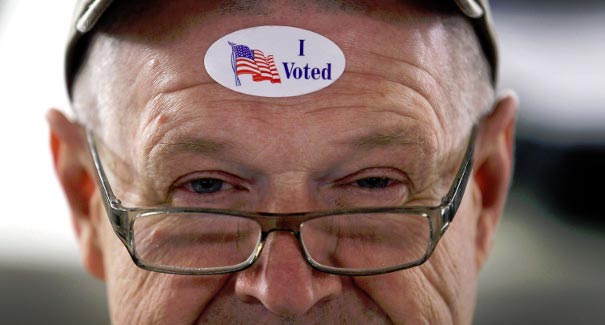
This year there will be presidential elections or changes of heads of government in countries that together account for over half of the world economy, a process which could have an adverse effect on the quality of the decisions made by governments.
Source: El País

In Greece, a country where the economic crisis and the country’s creditors are imposing decisions that will forever alter the very nature of the state and the distribution of power has elections in April. And, as we have seen, what happens in in Greece doesn’t stay in Greece; it affects Europe and even the world economy. Iran will vote before Greece does. In the important parliamentary elections on March 2, President Ahmadinejad will see his power drastically curtailed. Don’t start cheering: the supreme leader, the ineffable Ayatollah Ali Khamenei will concentrate even more power. Compared with him, Ahmadinejad is an enlightened, tolerant democratic leader. At the same time as they seek electoral support they are making decisions on their country’s economy, severely damaged by the international embargo, on their unconditional support for Syria, and on how to deal with, or anticipate, the possibility that Israel, or the United States, or both, may bomb their nuclear installations. All this has already affected you directly: the price of oil has skyrocketed.
Two days after the elections in Iran, Russia will go to the polls to choose its next president. Thanks to the “controlled democracy” system that he has imposed, Vladimir Putin has the election in his pocket. But his triumph has been clouded by massive protests against the government, spreading throughout Russia for some time. And like his Iranian colleague, the Russian leader has been obliged to combine electoral calculations with international decisions. Putin needs to recharge his aura of invincibility, and prevent the protests against him from escalating, even while making decisions on Syria, Iran and other global emergencies.The same applies to Nicolas Sarkozy, who on April 22 must face the strong electoral challenge posed by the Socialist candidate, François Hollande. And with Barack Obama, who between now and the November elections must combine the handling of grave international crises with the defense of his record against the attacks of his Republican contender. In China, the president Hu Jintao is spending his brief remaining time in power before handing it over to Xi Jinping. While this transition takes place without much drama, the change at the highest level of government in a country whose economic and political health is a determinant factor in world stability adds further complexity to an already complex year.
But changes are not going to be limited to superpowers. There will also be presidential elections in Egypt (May or June); Mexico (July 1); and Venezuela (October 7). The results will have consequences beyond the borders of those countries. In the case of Egypt, they will affect the Middle East and the very future of the Arab Spring. In that of Mexico, they will influence the expansion of the anti-drug war. And in Venezuela, the ascendancy of Hugo Chávez over his poorer neighbors.
In democracies elections are normal and, of course, desirable. But they are not cost-free. I am not referring to what is spent in ever-more costly electoral campaigns, but rather to the adverse effect on the quality of the decisions made by governments. Electoral calculations cause leaders to freeze or postpone necessary decisions, or become more prone to make undesirable ones. As election time approaches, the long term becomes less important. The priority is to seduce the voters. This, which is always bad, becomes worse in times of crisis.
We know that one of the factors that aggravates economic crises is that financial markets move at the speed of internet, while governments move at the speed of democracy. To this gap in the speed of decision-making we must add the loss of quality suffered by decisions in electoral periods in every ambit, not only in the economic one. The solution is not to have fewer elections but to have more and better democracy in-between elections.

Distinguished Fellow
Moisés Naím is a distinguished fellow at the Carnegie Endowment for International Peace, a best-selling author, and an internationally syndicated columnist.
Recent Work



Rosa Balfour, Frances Z. Brown, Yasmine Farouk, …
Moisés Naím
Carnegie does not take institutional positions on public policy issues; the views represented herein are those of the author(s) and do not necessarily reflect the views of Carnegie, its staff, or its trustees.

It should address the shortcomings of previous crisis communication efforts and adapt to the demands of frontier AI.

Lucy Luo

If the Russian-speaking community in Latvia cannot articulate their interests without being seen as disloyal, they could end up embracing a pro-Kremlin agenda.

Sergejs Potapkins

Washington’s decision to support some UN functions while letting others wither is pulling the organization apart at the seams.

Stewart Patrick, Theodore Zaritsky
While there are notable demographic, economic, and geographic divides over AI, there is also substantial alignment between Republicans and Democrats.
Ian Klaus, Mark Baldassare, Rachel George, …

Are Germany’s economic, industrial, and political struggles becoming a liability for the EU’s ability to rise to the geopolitical moment?

Rym Momtaz, ed.