

Report
Iskander Rehman
{
  "authors": [
    "Iskander Rehman"
  ],
  "type": "other",
  "centerAffiliationAll": "dc",
  "centers": [
    "Carnegie Endowment for International Peace",
    "Carnegie Europe"
  ],
  "collections": [],
  "englishNewsletterAll": "ctw",
  "nonEnglishNewsletterAll": "",
  "primaryCenter": "Carnegie Endowment for International Peace",
  "programAffiliation": "NPP",
  "programs": [
    "Nuclear Policy"
  ],
  "projects": [],
  "regions": [
    "East Asia",
    "China",
    "Caucasus",
    "Russia",
    "Western Europe",
    "France"
  ],
  "topics": [
    "Nuclear Policy"
  ]
}
Source: Getty
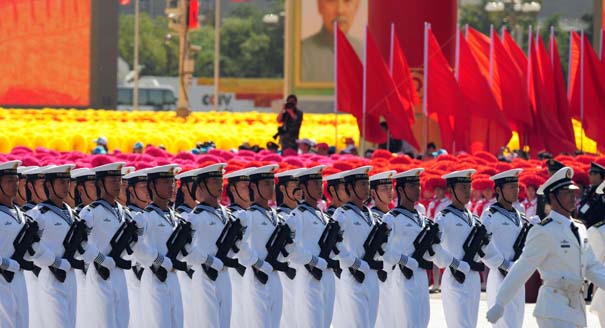
European history is replete with moments which can offer insight into some of the more complex-and potentially disquieting-facets of China's emergence as a major geopolitical actor.
Source: European Geostrategy

Indeed, as this short policy paper will attempt to show, European history is replete with significant moments which can serve to elucidate some of the more complex-and potentially disquieting-facets of China’s emergence as a major geopolitical actor. Every nation is, to some degree, the sum of its historical experiences. By more closely enmeshing European countries-and their attendant strategic communities, within the ongoing debate over fraught issues such as China’s naval rise, the United States’ understanding of Beijing’s concerns and ambitions will find itself both much enriched, and greatly enhanced.
The great XIXth century German philosopher Georg Hegel once wryly noted that the only lesson to be derived from history was that no people, or government, ever seemed willing-or able- to act on the principles it provided.4 Known to be of a glum disposition, the Teutonic Sage was lamenting the fact that mankind seemed singularly reticent to follow the great flow of history, preferring to merely drift aimlessly along its minor currents.
Nowadays, however, there appears to be no dearth of analyses which reach for reassuringly static renditions of the past in order to better gauge the shifting nature of the present. China’s rise, and the concurrent expansion of its Navy, in particular, seems to have prompted a battery of nervous analogies with the maritime expansionism of Wilhelmine Germany.5 This is inevitably accompanied by disheartening depictions of a United States as a crumbling Rome , or as a XXIst century United Kingdom , thrashing in its last throes of empire.6 While these comparisons are not entirely without merit, they are both too frequent-and too few. Other analogies can be made, which will inevitably be just as flawed (after all no historical parallel can hold claim to perfection) but which could also contain some potentially useful insights. Here follows a brief attempt to lay out three underutilized historical analogies which could help in the understanding-and if need be in the countering – of China’s naval rise.
When people reach for a classical equivalent to the United States, the choice seems to inevitably turn towards Ancient Rome.7 This glorious ancient civilization, defined for thousands of years by a sense of cultural unity under a common tongue, and an unparalleled prowess in both civil engineering and the exercise of military power, appears to provide a singularly apt template for comparison. In reality, it may prove more astute to swivel our mental map of the Mediterranean when exploring useful parallels for both China and the United States’ respective strategic cultures. Indeed, and as counterintuitive as this could first appear, Carthage, a cosmopolitan, maritime trading state, provides a better tool for comparison with the United States than the continentalist, xenophobic and expansionist Rome of the Mid-Republic. The latter, meanwhile, may actually bear closer resemblance to today’s China. Like the current leadership in Beijing, Rome’s early rulers were concerned first and foremost with internal consolidation and territorial defense. After having battered their neighboring Italian peoples into bloody submission and forcibly incorporated them into their Republic, the Romans started to grow concerned over the rise of an alternative power center on the tip of the peninsula in the form of the powerful city-state of Tarentum. This anxiety hit its crescendo when the inhabitants of Tarentum enrolled a renowned warrior, King Pyrrhus of Epirus, to fight their battles against Rome. This led to the savage Pyrrhic Wars , during which Rome joined hands with the great naval power of its time, Carthage, in order to protect its sea lines of communication.8 Once Pyrrhus was defeated, however, and the Roman Republic had freed itself from its existential land-based threat, the budding empire’s political and economic elite started to look askance at signs of growing Punic influence in their maritime backyard.
Carthage’s presence in Sicily and Sardinia, which could potentially be used as staging points for an invasion on Roman soil began to be viewed as a severe strategic liability-something which could only be resolved by Rome’s breaking out into the wider Mediterranean, past the “island chain” of Carthaginian dependencies and protectorates. Carthage, for its part, bore witness to the actions of this rapidly expanding, hyper-nationalistic and increasingly militaristic state on the Italian mainland with growing distaste. There are evident comparisons that can be drawn here-like Rome and Carthage, both China and the United States found reasons to cooperate in the face of a common threat-in their case, the Soviet Union.9 Once that unifying threat vanished almost overnight, their relationship was suddenly recast in a harsher light, and regional rivalry grew to become one of its defining factors. The tragic result of the growing enmity in-between Rome and Carthage is well known-it erupted into the system-shattering conflicts of the Punic Wars, led to the utter annihilation of a prosperous civilization, and to the resulting emergence of Rome as the lone superpower in the Mediterranean.
What is interesting, however, is how Rome, a traditionally continentalist power, managed to overcome its maritime adversary, and in so doing, vault its military capacity from land to sea. History tells us that Rome’s shipbuilding technology was far behind that of its Carthaginian rivals, whose Phoenician mariners had been plying the Mediterranean since the Early Bronze Age.10 Much like today’s China Rome had little to no experience in naval warfare, and its limited knowledge of naval technology placed it at a severe disadvantage. The Romans responded to this technological inferiority by investing in asymmetric weaponry: their equivalent of the DF-21D was the corvus, a spiked boarding plank which could impale and immobilize the more rapid Carthaginian vessels.11 Just as PLA strategic planners hope to employ land tactics to influence events at sea- most notably through the use of shore-based weaponry-Roman generals forced the hapless Carthaginian mariners to play by their continental rules. Once their adversary’s naval assets were immobilized or crippled by corvus strikes, Roman legionaries would swarm aboard and the formerly fluid maritime battlefield would suddenly morph into a more fixed environment of wood and steel. Roman shipwrights also engaged in technology theft, reverse engineering a Carthaginian vessel which had drifted onto their shores. Like China, whose new J-20 stealth fighter is rumored to incorporate elements of the US F-117 stealth fighter shot down over former Yugoslavia in 1999, Rome had no qualms in stealing foreign weapons technology for its own gain.12 When Rome’s fleets ran the risk of losing a major engagement at sea, its admirals would redirect its naval operations away from blue-water combat, and towards blockading actions of major ports.
Useful Insights:
To a Western audience, reports of China’s latest bout of brutal repression of its ethnic and religious minorities in places such as Tibet, Xinjiang or Inner Mongolia are profoundly unsettling. Accustomed to the gentle virtues of modern democracy, citizens of countries such as France or the United States may have temporarily forgotten that the births of their own respective nation states were also protracted, bloody affairs. For instance, France’s past excesses in the name of national unity could serve as an instructive counter-example to a Chinese leadership perennially consumed with insecurity over internal fragmentation.
Today’s France, with its common language and highly centralized government, is a far cry from the France of the pre-revolution. Indeed, the country that existed before the storming of the Bastille more closely resembled a “jumble of fiefdoms” controlled by an overarching, distant monarchy than the highly consolidated nation-state we know today. Less a cultural monolith than a kaleidoscope of different dialects and languages, author Graham Robb describes how up to 1800 only 11% of the population spoke what we would now recognize as French.16 Great swathes of the countryside were terra incognita for state bureaucrats, and in places such as the small province of Brittany, people from one village would frequently refuse to marry people from another-in large part because they often had great difficulty communicating.
France’s post-revolutionary state apparatus, fired by nationalist ardor and consumed with the fear of internal fragmentation (or what the PRC would now lambast as fissiparous tendencies) embarked on a whole-scale “internal colonization process” which sought to eradicate regional dialects, and stamp out local traditions, which were viewed as potentially reactionary and subversive. Just as young Tibetans are now forced to learn Chinese, young Bretons, Provencaux and Basques were compelled to learn French. More than a simple linguistic unifier, French was considered to be the purest vehicle of revolutionary ideals. In 1794, the Abbot Gregoire introduced his infamous “Report on the Necessity and Means of Exterminating Patois (regional dialects) and Universalizing the Use of the French Language.” Regional uprisings, such as the Royalist counter-revolution in the coastal province of Vendee, were brutally crushed, and the attachment to local languages and superstitions came to be associated with counterrevolutionary leanings. Thus, in 1794, Barere, an important member of France’s ruling Assembly, addressed the question of linguistic diversity by declaring that “these barbaric tongues and vulgar idioms are the sure signs of fanatics and counter-revolutionaries” and adding that “Federalism and superstition spoke Breton, the hatred of the Republic speaks Germanic, while fanatics speak Basque”.
The tone of this diatribe is almost eerily reminiscent of that of today’s Chinese leadership who portray acts of unrest in Tibet and elsewhere as being engineered by a “separatist clique” . Similarly, just as Beijing has sought to solidify its people’s sense of national unity by creating a narrative of victimization and whipping up jingoistic outrage over ongoing territorial disputes, XIXth century France worked hard to redirect the attention of its diversified people towards common external threats, most notably that which it perceived as emanating from Germany on its eastern flank.17 This enmity culminated in the Franco-Prussian war of 1870-1871 which led to the bitter humiliation of the battle of Sedan, and to the German annexation of Alsace-Lorraine.
Throughout much of the century following the revolution (barring, perhaps, the Napoleonic interlude, from 1803 to 1815) France’s preoccupation with its land borders as well as its obsession with internal unity meant that it struggled to assert itself as a maritime power, despite the existence of a strong naval tradition and savoir-faire. A trio of Naval War College professors, when comparing France and China, point out that “if contentalist powers typically face formidable political, bureaucratic and cultural obstacles to maritime transformation, strong political leadership would seem essential to overcoming them”, before arguing that France’s leadership, traditionally, placed a far greater strategic emphasis on land power.18 That being said, France, much like China today, displayed an astonishing propensity to respond creatively to its seapower deficit by investing in niche weaponry and developing asymmetric strategies. In the vein of contemporary Chinese strategists, who hope to overwhelm a larger, more powerful US fleet in China’s near seas with swarms of Houbei class catamarans armed with anti-ship cruise missiles, French theorists from the so-called Jeune Ecole advocated the use of small, powerfully-equipped naval assets to counteract the effect of Britain’s much larger fleet.19 China’s intense focus on submarine warfare also mirrors that of the French, who established the world’s very first submarine branch , in 1888, and were pioneers in the development of steam-powered vessels and torpedoes.20 Unfortunately a lack of political support, funding and industrial infrastructure meant that despite all these efforts , Paris found itself consistently outproduced and outpaced by shipwrights across the Channel, and had to resign itself to the lasting reality of British naval superiority.
Useful Insights:
The Tsar Peter the Great, who ruled Russia from 1682 to his death in 1725, is recognized as one of Russia’s most visionary rulers. Credited with having pivoted the formerly autarkic land-locked nation towards Europe and mercantilism, Peter the Great is also viewed as the founder of the Russian Navy.24 A sort of Deng Xiaoping and Admiral Liu Huaqing rolled into one, the Romanov ruler ushered in the so-called “Petrine” golden age, a period of economic prosperity and revitalized Russian influence on the world stage.25 Eager to capitalize on an upsurge in seaborne trade with northern Europe and Persia, he quickly understood how the sustainability of the new-found wealth flowing from seaborne trade hinged upon the shielding presence of a blue-water fleet.
Prior to Peter the Great’s coronation; Russia’s martial history had largely been defined by its people’s struggle to hold sway over the rimy, sprawling territories of the northern Eurasian land mass. The nation’s ill-defined geographical boundaries in Central Asia bred a constant feel of continental insecurity, which was seared into the national psyche after the devastating Mongol invasions of the XIIIth century, and a long, woeful, series of successive calamities and depredations. Russia’s vastness, combined with its historical susceptibility to nomadic invasions, is something which the country had in common with Imperial China, along with the underlying conviction that when confronted with such a wide panoply of diffuse threats, autocracy may form the only practical method of governance. Much like Imperial China, pre-Petrine Russia’s economy was largely self-contained, and its geography, crisscrossed with meandering waterways, allowed it to develop traditions of ship-building and riverine transport without really taking to sea.
Peter the Great opted to break with this long tradition of strategic isolation by taking a decisive turn towards the wide open waters. He founded a new city, Saint Petersburg, by the Baltic Sea, and decided to make it his capital, thereby shifting the center of political power from the more sedate, land-locked city of Moscow to a bustling maritime trade hub which hummed and thrived with energy. Described as Russia’s new “window onto Europe”, Saint Petersburg also provided its feverishly ambitious ruler with the perfect staging point for his plans of naval expansion into the Baltic Sea. This rapidly led Russia into conflict with the local maritime power, Sweden, and Russian galleys were soon to be seen ravaging coastal villages and burghs along the Nordic Nation’s long coastline. Peter the Great’s sudden spurt of naval bellicosity, which suddenly propelled Russia from the periphery of European geopolitics into its very center, began to foster unease in the wider maritime neighborhood. Great Britain, the traditional offshore balancer in the region, grew increasingly alarmed , and this despite the fact that its king, George the III, had previously humored Peter the Great’s desires for maritime expansion.26 Russia’s tryst with seapower, however, was to prove remarkably short-lived. Peter the Great’s successors did not seem to share his dreams of a great Russian Armada, viewing it as prohibitively costly, and preferring to focus, once more, on continental campaigns. Thus Russia’s conflicts with Turkey in the immediate aftermath of Peter the Great’s death were fought on land, not at sea, and until the twilight of the Imperial Period the Russian Navy was almost systematically overlooked in favor of the Army.
Useful Insights:
At a time when the world’s strategic map is taking on increasingly maritime hues, the European Union can ill afford to withdraw into its continental shell, and find itself reduced to the rank of passive bystander in an Indo-Pacific century. After all, it is Europe’s variegated history which provides the richest inventory of parallels key to understanding the complex and disruptive nature of China’s naval rise. The precipitous decline of European seapower will inevitably be accompanied by a slow withering of European naval thinking, and by a creeping amnesia in all matters maritime. More specifically, the current wave of budget cuts affecting some of Europe’s greatest navies is cause for concern.33 For centuries, the continent’s ships have plied the waves, providing their respective nation-states with the means to protect their trade routes, achieve forward presence, and uphold the so-called “silent principles of national security” on which so much of our current global order currently rests. As the US Navy stagnates in numerical terms, and the Chinese Navy continues its inexorable ascent, the slow hemorrhage of Western maritime strength risks having a deleterious effect on global stability.34 If nothing is done to prevent European navies from becoming the sacrificial cows of austerity, the United States may well find itself crippled not only in the checking-but also in the understanding-of Beijing’s quest for seapower.
1 Quoted by F.W. Walbank in “The Causes of Greek Decline”, The Journal of Hellenic Studies 64 (1944),10.
2 Polybius, Friedrich Otto Hultsch (translator), The Histories of Polybius (New York: Macmillan, 1889), 510.
3 See James Rogers, “Interview with Daniel Keohane”, European Geostrategy, August 19th 2012, http://europeangeostrategy.ideasoneurope.eu/2012/08/19/interview-with-daniel-keohane/
4 G.W.F. Hegel, J.Sibree (translator) The Philosophy of History (Mineola: Dover Philosophical Classics, 2004), 6.
5 See, for instance, Douglas C. Pfeifer,“Power Projection versus Distant Blockade: China, Germany and the New AirSea Operational Concept”, Orbis, 55:1 (Winter 2011),pp.114-131.
6 Jonathan Freedland, “ Rome AD..Rome DC?” The Guardian, September 17th, 2012. Online, accessible at http://www.guardian.co.uk/world/2002/sep/18/usa.comment
7 Robert D.Kaplan, “America’s Elegant Decline”, The Atlantic, November 2007. Online, accessible at http://www.theatlantic.com/magazine/archive/2007/11/america-s-elegant-decline/306344/
8 See, for example, Cullen Murphy, Are We Rome? The Fall of an Empire and the Fate of America (Boston: Houghton Miffler Harcourt, 2007) 272pp.
9 See Gary Forsythe, A Critical History of Early Rome: From Prehistory to the First Punic War (Berkeley and Los Angeles: University of California Press, 2005),349.
10 For example, from 1979 until the end of the Cold War, the United States and China cooperated in the field of signals intelligence , with the United States monitoring Soviet missile tests from secret facilities located in Western Xinjiang. See Bill Geerz, “Inside the Ring: US-China Joint Spying”, The Washington Times, 26th November, 2009.
11 For a compelling account of Carthage’s long and tragic history, see Richard Miles, Carthage Must Be Destroyed: The Rise and Fall of an Ancient Civilization (London: Allen Lane, 2010), 400pp.
12 The Dong-Feng 21 is a two-stage, solid-propellant, single-warhead medium-range ballistic missile with a reported range of up to 1700 nautical miles. The DF-21 D has been perceived as a potential major challenge to US naval supremacy in the region, by virtue of its status as the world’s first anti-ship ballistic missile. In 2010, the commander-in-chief of PACOM, Admiral Willard, stated that the DF-21 D had reached initial operating capability. It remains uncertain, however, whether the DF-21 D-which has not yet been tested over water- would be capable of successfully hitting a moving target at sea.
13 See “China stealth fighter copied parts from downed US jet”, BBC News, 24th January, 2011. Online, accessible at http://www.bbc.co.uk/news/world-asia-pacific-12266973
14 James Holmes and Toshi Yoshihara, “Underestimating China”, The Diplomat, 17th January 2011. Online, accessible at http://thediplomat.com/flashpoints-blog/2011/01/17/underestimating-china/
15 Deborah Snow and Hamish McDonald, “Defense Ready to Muscle Up”, The Sydney Morning Herald, 7th July 2012. Online, accessible at http://www.smh.com.au/opinion/political-news/defence-ready-to-muscle-up-20120706-21mdj.html
16 Graham Robb, The Discovery of France: A Historical Geography from the Revolution to the First World War (New York: W.W. Norton and Company, 2007), 480pp.
17 For a deeper analysis (in French) see Marie-Clemence Perrot, “La Politique Linguistique Pendant la Revolution Francaise”, Mots, 52:52 (September 1997), pp. 158-167.
18 Hua Zi, “Self-immolations engineered by separatist clique”, China Daily, 31st March 2012.
Online, accessible at http://www.chinadaily.com.cn/cndy/2012-03/31/content_14957039.htm
19 For a theoretical examination of diversionary warfare or the “scapegoat hypothesis” see Jack S. Levy and Lily I. Vakili, "Diversionary Action by Authoritarian Regimes: Argentina in the Falklands/Malvinas Case”, in Manus I. Midlarsky (Ed.) The Internationalization of Communal Strife, (New York: Routledge, 1992), pp.118-149.
20 Andrew Erickson, Lyle Goldstein & Carnes Lord, “China Sets Sail”, The American Interest, May/June 2010.
21 For a good description of the Jeune Ecole and its intellectual foundations see A. Røksund, The Jeune Ecole: The Strategy of the Weak (Leiden: Brill, 2007), 242pp.
22 Jan S. Breemer, “Defeating the U-Boat: Inventing Anti-Submarine Warfare”, Naval War College Newport Paper 36, US Naval War College, 2010.
23 Chris Buckley, “China domestic security spending rises to $111 billion”, Reuters, 5th March 2011. Online, accessible at http://www.reuters.com/article/2012/03/05/us-china-parliament-security-idUSTRE82403J20120305
24 This idea-of intelligently shaping a prospective adversary’s decisions through long-term planning-takes root in the competitive strategies approach first conceptualized by Andrew W. Marshall at the Department of Defense’s Office of Net Assessment during the Cold War. For a particularly insightful analysis of how this approach can be harnessed in order to develop a successful US grand strategy in Asia see James P. Thomas and Evan Braden Montgomery, “Developing a Strategy for Long-Term Sino-American Competition”, in Thomas G. Mahnken (Ed.) Competitive Strategies for the 21st Century: Theory, History and Practice, (Stanford: Stanford University Press, 2012),pp.257-274.
25 Linda Jakobsen and Dean Knox, New Foreign Policy Actors in China, SIPRI Policy Paper n.26 (September 2010), 51pp.
26 Edward J.Phillips, The Founding of Russia’s Navy: Peter the Great and the Azov Fleet, 1688-1714 (Westport: Greenwood Press, 1995), 200pp.
27 Commonly known as “the father of the modern Chinese Navy”, the late General Liu Huaqing was the commander of the People’s Liberation Army Navy during the 1980s. He is credited with having led the first efforts to transform the Chinese Navy from a coastal defense force into a blue-water navy.
28 See James R. Moulton, Peter the Great and the Russian Military Campaigns During the Final Years of the Great Northern War, 1719-1721, (Lanham: University Press of America, 2005), 254pp.
29 Julian S. Corbett, Principles of Maritime Strategy (London: Longmans, Green and Co.,1911), 336pp.
30 Josh Rogin, “Inside the first ever U.S.-Japan-India trilateral meeting”, Foreign Policy, 23rd December 2011. Online, accessible at http://thecable.foreignpolicy.com/posts/2011/12/23/inside_the_first_ever_us_japan_india_trilateral_meeting
31 Stephen M. Walt, The Origins of Alliances (Cornell: Cornell University Press, 1987), 336pp.
32 Hugh R. Clark, “Frontier Discourse: China’s Frontiers and the Encounter with the Sea through Early Imperial History”, Journal of World History, 20:1 (March 2009), 32.
33 Rajeev Ranjan Chaturvedy and Guy M. Snodgrass, The Geopolitics of Chinese Access Diplomacy, German Marshall Fund Policy Brief, German Marshall Fund of the United States, May 2012. Online, accessible at http://www.gmfus.org/archives/the-geopolitics-of-chinese-access-diplomacy/
34 James R. Holmes and Toshi Yoshihara, “China’s Active Defense is Turning Offensive”, Proceedings, 137:4 (April 2011), 1298.
35 The Royal Navy, for example, will find itself bereft of an aircraft carrier strike group until at least 2020. Moreover, the British government has now decided to forgo the expenses of installing CATOBAR (Catapult Assisted Take Off Barrier Arrested Recovery) systems on the carriers. This means that the carriers will be incapable of operating a wide variety of more heavily armed and long-legged fighter jets, and will have difficulty fielding most future unmanned systems. See Lee Willet, “Impact of the F-35B Decision: Time Now to Have Two Ships, Not One”. RUSI Analysis, Royal United Services Institute, 11th May 2012. Online, accessible at http://www.rusi.org/analysis/commentary/ref:C4FACE1DB6AC6E/#.UE-OGJH9N_4
36 The US Navy numbers about 280 ships today, in comparison to the peak of 597 reached during the Ronald Reagan era.
This article was originally published in European Geostrategy.

Former Associate, Nuclear Policy Program
Rehman was an associate in the Nuclear Policy Program at the Carnegie Endowment and a Stanton Nuclear Security Fellow. His research focuses on security and crisis stability in Asia, specifically the geopolitical ramifications of naval nuclearization in the Indian Ocean.
Recent Work
Iskander Rehman
Carnegie does not take institutional positions on public policy issues; the views represented herein are those of the author(s) and do not necessarily reflect the views of Carnegie, its staff, or its trustees.
In an interview, Elizabeth Thompson recalls how the country formulated a liberal constitution in 1920, before being denied by France and Britain.

Michael Young

Nuclear recycling has emerged as a salient, cross-cutting issue, one that is heavily dependent on broader choices among reactor designs, fuel availability, economic resources, technological options, and political choices. States and nuclear industries seeking to advance recycling must devote sustained consideration now to the interplay of all these factors.
Etienne Pochon
The issue is not that the president only has selective information at his disposal, but that the decision-making process consists of one person with an unshakeable vision of how the world works.

Tatiana Stanovaya

By fueling the arguments of both supporters and opponents of Armenian Prime Minister Nikol Pashinyan, Azerbaijan wants to ensure he is re-elected with a weaker mandate.

Bashir Kitachaev

A much-discussed disagreement over internet restrictions in Russia was never an existential threat for Putin: It was about elite groups protecting their interests.

Alexandra Prokopenko