

Paper
Douglas H. Paal
{
  "authors": [
    "Douglas H. Paal"
  ],
  "type": "legacyinthemedia",
  "centerAffiliationAll": "dc",
  "centers": [
    "Carnegie Endowment for International Peace",
    "Carnegie China"
  ],
  "collections": [
    "China’s Foreign Relations",
    "U.S.-China Relations"
  ],
  "englishNewsletterAll": "asia",
  "nonEnglishNewsletterAll": "",
  "primaryCenter": "Carnegie Endowment for International Peace",
  "programAffiliation": "AP",
  "programs": [
    "Asia"
  ],
  "projects": [],
  "regions": [
    "North America",
    "United States",
    "East Asia",
    "China"
  ],
  "topics": [
    "Security",
    "Foreign Policy",
    "Nuclear Policy"
  ]
}
Source: Getty
If Obama and Xi can rise to the conceptual challenge and articulate a path forward, they have a chance to contribute a richer chapter to history than the previous leaders have made in decades.
Source: China Daily
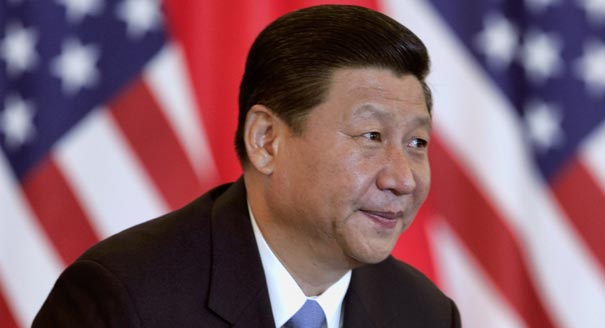
The presidents of China and the United States will meet for an unusual, informal summit in California on June 7-8. Officials on both sides are rightly trying to lower expectations, especially for "deliverables" and detailed outcomes on some of the thorniest issues between the world's top two economies in only two days of personal diplomacy. Instead, they are stressing the opportunity for the two leaders to explore areas of cooperation and reduced competition beyond the short-term calendar.
This summit is the first in more than 40 years when the leaders of two very consequential and different powers will sit down for a "blue sky" discussion. The last was between Chairman Mao Zedong and former US president Richard Nixon in 1972. History has proved the importance of that dialogue for the principles and concepts governing Chinese and American cooperation and competition. Had they bogged themselves down in detailed disputes, which were many, beneficial strategic change would have proved elusive.
The California summit could be similarly consequential for the 21st century. Grinding competition of the sort seen recently between the two countries, potentially leading to conflict, could put them on a path to disaster. Focused cooperation, despite major systemic differences in the structure and interests of the two countries, can lead to more positive outcomes.What should the two presidents discuss? First, presidents Xi Jinping and Barack Obama should seek to evoke from each other expressions of principle about handling the major disputes and challenges facing their countries. This is not about crafting a detailed "fourth communiqu", for which there is neither time nor need. Nor is it about creating a "G2" consortium of the US and China to lead world affairs. But if these two powers cannot work out the principles to handle many of the problems they face, regional and global cooperation may prove elusive and competition dangerous.
What are these principles? First, both leaders should state their commitment to resolve their differences and regional crises peacefully, through international law and mechanisms. Xi has repeatedly called for a "new kind of great power relationship". To Western ears, it sounds like China will not confront US global dominance. But Chinese leaders should make the concept clearer.
Second, keeping the status quo in Asia could help curb the growing frictions between China and some of its neighbors over maritime claims. Both leaders could call for further negotiations on interim arrangements to manage resource competition among the claimants over fisheries, hydrocarbons and minerals.
Third, Xi and Obama should reiterate a common commitment to denuclearization of the Korean Peninsula and ultimate peaceful reunification.
Fourth, they should assert their commitment to a global free trade agreement in the decade ahead, because current arrangements under negotiation are partial and sometimes conflicting. China is embarking on a new round of reforms that is likely to make American and Chinese economic interests intersect more closely over time. So China should, when the time is ripe, welcome and be welcomed by members of the Trans Pacific Partnership, and the US should not be excluded from Asian regional arrangements.
Chinese investment in the US is growing, but is nowhere near as substantial as it should be for both US and Chinese interests. And since the US is locked out of some sectors in China's market, the leaders should instruct their commercial and financial officials to address these shortcomings.
If the expression of these principles proves possible, then Obama and Xi would do well to assign their governments the responsibility to follow up in a practical yet visionary fashion. The Strategic and Economic Dialogue, an important annual meeting of Chinese and American senior officials, is scheduled for July in the US. The S&ED has the virtue of assembling stakeholders across both systems to address issues. But it is also cumbersome and infrequent.
Therefore, the leaders should assign sub-cabinet level officials to meet more frequently. There are four broad areas that can be designated as sub-groups to the S&ED. These should be assigned ambitious objectives, taking advantage of the fact that Xi is likely to remain China's leader for 10 years. One goal is to keep the respective bureaucracies committed to constructive long-term objectives that can be a counterweight to the grinding competition that so often accompanies adjustments in the correlation of forces in the region and the world.
The four sub-S&ED umbrella talks should be on economics, military, non-traditional issues and regional security.
Economics: The leaders can ask their financial and commercial officials to establish the conditions for the US and China to pave the way for a global or large multilateral free trade agreement over the next decade.
Military: Since Xi assumed office in November, China's military has exhibited a much more open approach to improving relations with the US armed forces. Having been subjected to on-off, deeply suspicious relations for years, both sides should seize this opportunity to deepen contacts and understanding, dispelling problems of "transparency" along the way.
Non-traditional issues: Cyber hacking, threats in space, climate change, pandemics and energy policy are areas where American and Chinese interests intersect. Obama and Xi should instruct their officials to find ways to cooperate over the next decade and reach agreements on how to manage non-traditional challenges.
Regional security: The leaders should instruct their officials to cooperate in building a multi-lateral regional security mechanism for the Indo-Pacific region over the next decade. Tensions between China and Japan, Vietnam, the Philippines and India indicate what a difficult objective this will be. But they also show the need for such a mechanism. Mistrust must be overcome gradually with substantial step-by-step progress.
The California summit has great potential. The leaders need to assess their ledgers of benefit and risk, but they will rise to the occasion only if they see and respect their counterpart's needs as well. If Obama and Xi can rise to the conceptual challenge and articulate a path forward, they have a chance to contribute a richer chapter to history than the previous leaders have made in decades.
Distinguished Fellow, Asia Program
Paal previously served as vice chairman of JPMorgan Chase International and as unofficial U.S. representative to Taiwan as director of the American Institute in Taiwan.
Recent Work
Douglas H. Paal

Douglas H. Paal, Tong Zhao, Chen Qi, …
Carnegie does not take institutional positions on public policy issues; the views represented herein are those of the author(s) and do not necessarily reflect the views of Carnegie, its staff, or its trustees.

China’s police training infrastructure construction projects provide benefits to recipient countries, promote China’s image as a major global security provider, and are likely to reinforce alignment between Beijing’s security priorities and those of countries in the Global South.


Cameron Waltz, Sheena Chestnut Greitens, Kim Nguyen, …
AI capabilities are moving fast. Most institutions—including governments—can’t keep up.


Anton Leicht, Scott Singer

The Bureau of Industry and Security needs to adjust its focus and practices to maintain its position as the U.S. government’s primary champion of international technological competition.

Geoffrey Irving
They face an uphill climb, but they could draw on a strategy that other diplomats have used in the past.


Shana Tabak, Alejandro Martin Rodriguez

European Commission President Ursula von der Leyen is about to give her annual address on the state of the EU. Here’s what she won’t—but should—say.

Rym Momtaz