

Commentary
Funding Ukraine remains a priority for European leaders. As Russia’s war of aggression heads into another winter, two feasible options to mobilize support for Kyiv should be fast-tracked.
Vladyslav Rashkovan, Gregory P. Wilson
{
  "authors": [
    "Mykola Siruk",
    "Lilia Shevtsova"
  ],
  "type": "legacyinthemedia",
  "centerAffiliationAll": "dc",
  "centers": [
    "Carnegie Endowment for International Peace",
    "Carnegie Russia Eurasia Center"
  ],
  "collections": [],
  "englishNewsletterAll": "ctw",
  "nonEnglishNewsletterAll": "",
  "primaryCenter": "Carnegie Russia Eurasia Center",
  "programAffiliation": "russia",
  "programs": [
    "Russia and Eurasia"
  ],
  "projects": [],
  "regions": [
    "Russia",
    "Eastern Europe",
    "Ukraine",
    "Western Europe"
  ],
  "topics": [
    "Foreign Policy"
  ]
}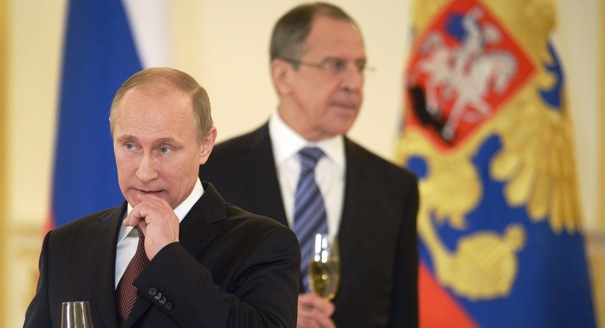
Source: Getty
The Kremlin wants to legalize the annexation of Crimea to Russia as soon as possible because it is trying to present the world with an accomplished fact while the West is still confused and lacks effective means to stop Russia.
Source: Day
How can we explain Russian president Vladimir Putin’s hurried legalization of the annexation of Crimea to the Russian Federation, and why the West has been unable to stop Putin, whose actions are destroying the established world order? The Day asked a senior associate at the Carnegie Moscow Center Lilia Shevtsova to comment on the current situation with annexation of the Crimea and the possible consequences of the Russian authorities’ actions.
“The desire to ‘complete the process’ that goes against every norm of international law is a quite natural one. The Kremlin is trying to present the world with a fait accompli and to exploit the situation while the West is still confused and lacks effective means to stop Russia. That is, they strike while the iron is hot. There is also the desire to exploit a high wave of revanchist patriotism in Russia itself as well as consolidation of pro-Russian elements among the Crimean population. Neither of them can continue indefinitely without permanent boosts... Therefore, the hurried legalization looks understandable.”“Announced sanctions by the US and the EU are for now mostly evidence of the West still warning the Kremlin that it can be really harmed. So far, the West has not dared to apply real sanctions that could seriously affect the interests of the Russian ruling class. It is a very soft warning, showing the West’s desire not to drive the Kremlin into the corner but give it an opportunity to retreat. However, these sanctions actually only strengthen the Kremlin’s confidence that they still have some room for maneuver, and the ‘red line’ is still some way off. So far, sanctions themselves instead of splitting the political class act as a mobilizing factor strengthening its consolidation.”
“It is hard to determine what can stop the Kremlin’s revanchism. All international actors are already in uncharted waters. It is important to understand that the Kremlin has begun to operate in the logic of bobsleigh and will find it very hard to jump out of the track without losing face in front of its audience, which doubles as its electoral base.”
“All these statements are still compatible with the rhetoric of warnings. Even if they intend to implement them, this process will take time. Moreover, it is unclear whether the West is ready to accept the new status quo or if it urges Russia to refrain from new expansion... Lack of coordination between US and EU sanctions together with discord between the Americans and the Germans suggest that the Kremlin may have room for maneuver within its revanchist logic.”
“McCain is not yet the person to look for when trying to discern the White House’s stance. Still, Barack Obama has been forced to move out of his lethargy and the US is now more active than the EU. I think that Obama understands that if Russia dares to tear away or even just destabilize south-eastern Ukraine, it will be the main legacy of his presidency. He is hardly willing to let it be this way. However, it is too early to talk about how far the US is ready to go when escalating its sanctions.”
“I would refrain from giving any advice to Ukraine and its government. The territorial integrity of any country is determined by consolidation of society around national interests and ability of its government to express these interests.”
Mykola Siruk
Former Senior Associate, Russian Domestic Politics and Political Institutions Program, Moscow Center
Shevtsova chaired the Russian Domestic Politics and Political Institutions Program at the Carnegie Moscow Center, dividing her time between Carnegie’s offices in Washington, DC, and Moscow. She had been with Carnegie since 1995.
Carnegie does not take institutional positions on public policy issues; the views represented herein are those of the author(s) and do not necessarily reflect the views of Carnegie, its staff, or its trustees.

Funding Ukraine remains a priority for European leaders. As Russia’s war of aggression heads into another winter, two feasible options to mobilize support for Kyiv should be fast-tracked.


Vladyslav Rashkovan, Gregory P. Wilson

Russian strikes are weakening the economy sustaining Ukraine’s war effort. Closing the growing funding gap will require more European support and politically contentious reforms in Kyiv.

Balázs Jarábik

While the EU and European governments are embracing the much-lauded middle-power moment, this entails three difficult conundrums.

Richard Youngs

The middle power moment will not be defined by sovereign states alone, and California stands out for its potential contributions to international cooperation.


Ian Klaus, Stewart Patrick

Europe is facing rising populism internally as well as external pressures from Russia, China, Turkey, and the United States.

Dimitar Bechev