

In The Media
Lina Khatib
{
  "authors": [
    "Lina Khatib"
  ],
  "type": "other",
  "centerAffiliationAll": "dc",
  "centers": [
    "Carnegie Endowment for International Peace",
    "Malcolm H. Kerr Carnegie Middle East Center"
  ],
  "collections": [],
  "englishNewsletterAll": "menaTransitions",
  "nonEnglishNewsletterAll": "",
  "primaryCenter": "Malcolm H. Kerr Carnegie Middle East Center",
  "programAffiliation": "MEP",
  "programs": [
    "Middle East"
  ],
  "projects": [],
  "regions": [
    "Levant",
    "Syria",
    "Middle East"
  ],
  "topics": [
    "Political Reform",
    "Security",
    "Foreign Policy"
  ]
}
Source: Getty
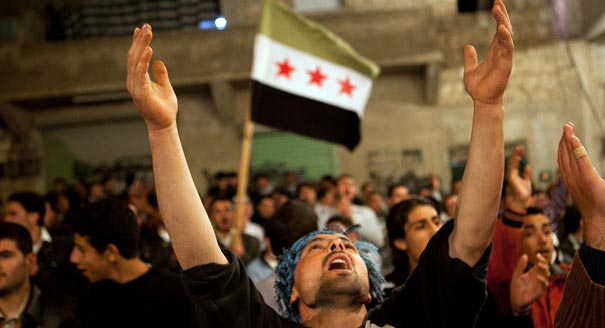
There is lack of will to be decisive about the conflict in Syria and a staggering lack of understanding, especially on the part of Western donors, of what is actually happening on the ground.
Source: Issam Fares Institute for Public Policy and International Affairs
When it comes to the regional dimension of the Syrian crisis, we are “dealing with a new Middle East cold war with different actors in the region with their own rivalries, mainly Saudi Arabia, Qatar, and Iran,” said Carnegie’s Lina Khatib during a symposium on the Syrian refugee crisis at the American University of Beirut Issam Fares Institute for Public Policy and International Affairs.
Khatib said that the conflict is being viewed through a “black and white framework” by international actors, especially regarding the roles of Iran and Russia who are “sticking to a hardline position that they will not budge on.”
“To think that diplomatic talks such as Geneva are going to be the solution is actually very simplistic,” argued Khatib, because to reach any solution requires a complicated comprehensive strategy for a complicated conflict. Khatib added that there is still a “lack of will to be decisive about the conflict and there is a staggering lack of understanding, especially on the part of Western donors, of what is actually happening on the ground.”
Former Director, Middle East Center
Khatib was director of the Carnegie Middle East Center in Beirut. Previously, she was the co-founding head of the Program on Arab Reform and Democracy at Stanford University’s Center on Democracy, Development, and the Rule of Law.
Recent Work
Lina Khatib
Lina Khatib
Carnegie does not take institutional positions on public policy issues; the views represented herein are those of the author(s) and do not necessarily reflect the views of Carnegie, its staff, or its trustees.

In an interview, Ian Lustick and Eli Clifton discuss their new book on why a prominent ally has so much influence in America.

Michael Young

Germany, India, and other middle powers can’t build frontier AI alone, and they risk being cut off if they depend on the United States or China. The way through is to build the capacity for a frontier sprint while hoping never to use it.

Anton Leicht, Sam Winter-Levy

Sergei Kiriyenko used Russia’s parliamentary vote to further hone his strategy of corporate mobilization that is designed to maximize votes for United Russia.

Andrey Pertsev

Before the next wave of EU enlargement takes place, the union needs to grapple with thorny questions of how power is distributed among its members.


Emil Sondaj Hansen, Ditte Brasso Sørensen

The real test may come after the leaders leave the room.



Sheena Chestnut Greitens, Oriana Skylar Mastro, Yukon Huang, …