


Q&A
Matt Ferchen
{
  "authors": [
    "Matt Ferchen"
  ],
  "type": "legacyinthemedia",
  "centerAffiliationAll": "",
  "centers": [
    "Carnegie Endowment for International Peace",
    "Carnegie China"
  ],
  "collections": [
    "China and the Developing World",
    "China’s Foreign Relations"
  ],
  "englishNewsletterAll": "",
  "nonEnglishNewsletterAll": "",
  "primaryCenter": "Carnegie China",
  "programAffiliation": "",
  "programs": [],
  "projects": [
    "Carnegie Oil Initiative"
  ],
  "regions": [
    "North America",
    "South America",
    "East Asia",
    "China"
  ],
  "topics": [
    "Economy",
    "Climate Change",
    "Foreign Policy"
  ]
}
Source: Getty
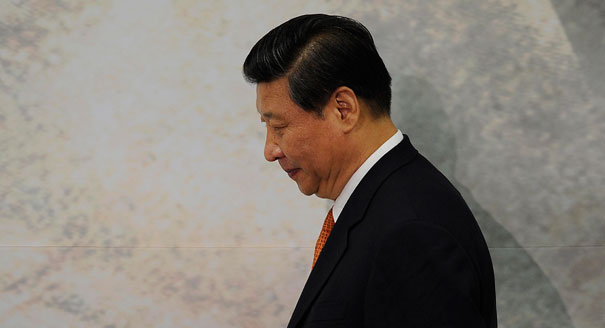
Xi Jinping is likely to announce new multibillion deals at the upcoming BRICS summit—deals that amount to a doubling down on an already risky Chinese bet.
Source: National Interest
China may have been a no-show for the 2014 World Cup, but at next weeks’ 6th BRICS Summit in Fortaleza, Brazil, all eyes will be on President Xi Jinping. While the summit is likely to result in important announcements such as a Shanghai-based BRICS Bank, the rest of Xi’s Latin America visit, which will include stops in Cuba, Venezuela, and Argentina, is bound to attract even more headlines.
Pundits inside and outside of China will either trumpet or decry the trip as a grand tour of China’s Latin American socialist and statist friends and a slap in the face to the United States. However, no matter how much socialist solidarity and “South-South” diplomatic back-slapping is offered up for public consumption, President Xi’s trip will actually be less about deepening already healthy ties with strong regional allies than seeking to mitigate deep anxieties about its commercial and diplomatic relations with dysfunctional friends.
In contrast to U.S. President Barack Obama’s trip this past spring to shore up ties with American allies in East and Southeast Asia, Xi Jinping’s tour of Latin America’s crisis-prone leftist stalwarts (Cuba and Venezuela) and populist debtors (Argentina) will simply underscore how problematic some of China’s “strategic partnerships” in the Americas actually are. Rather than highlighting the strengths of China’s presence in Latin America, Xi’s trip, especially the stop in Venezuela, will instead expose the limitations of China’s influence in the region China explicitly refers to as America’s “backyard.”If China’s commodity-focused Latin America policy, based on mutually beneficial, developing countries relations, should be working anywhere, it is with Venezuela and its unprecedented energy resources. Indeed, the initial euphoria and also many of today’s concerns about the Chinese-Venezuelan relationship share similar roots: Chavismo and oil. It was under Hugo Chavez, during his presidency from 1999-2012, that Venezuela and China created a strategic partnership based on both countries’ desire to seek out new oil trade and investment partners. It was a match made in heaven—or a perfect storm, depending on how you see it. Chavez made clear his intention to embrace China as a socialist comrade and counterweight to traditional Venezuelan oil dependence on the U.S. Even though China retained a certain distance from Chavez’s efforts to form a fully fledged trans-Pacific ideological alliance, China’s actions spoke louder than words. Through its own state-sponsored loans-for-oil deals, valued at over $50 billion, and national oil company investments, China cemented a special state-to-state relationship with Chavez’s Venezuela.
Despite official Chinese and Venezuelan rhetoric, sure to be repeated during and after Xi Jinping’s visit, all has not been well in bilateral commercial and diplomatic relations between the two countries. In fact, quite the contrary. Rising Chinese anxiety and discontent with their Venezuelan partners is based on a combination of unmet, high expectations and a rising sense that China is precariously tied into Venezuela’s deeply troubled economic and social problems as well as its increasingly unstable political system.
Oil is at the center of unmet expectations. While China and Venezuela certainly have expanded their oil trade and investment ties in the last decade (China now imports about 6 percent of its oil from Venezuela), the volume of both has fallen far short of Chinese expectations. Even when Chavez was alive, Chinese annoyance with the poor performance of Venezuela’s state-owned oil company, PDVSA, was apparent. But under Nicolas Maduro, the current Venezuelan government’s increasing loss of public support and continuing mismanagement of the economy appear to have pushed China’s leaders’ anxieties to a new level, one which requires President Xi’s personal attention. Before Chavez died, China’s greatest concern seemed to be that a less China-friendly opposition might come to power, but now the incumbent government is the principal focus of unease.
But what can or should China do about this? Part of the answer, or at least the search for an answer, might be found in Xi’s visit to Cuba. Cuban economic and security, not to mention ideological, ties with Venezuela are a matter of existential importance to Cuba’s leaders. Xi Jinping’s trip to Cuba will therefore certainly include discussions about what China and Cuba might do about their difficult and troubled Venezuelan comrade. The need for such discussions, which will undoubtedly remain far removed from any public announcements about the visit, highlights exactly how important and difficult it will be for China to formulate a foreign policy in Latin America and elsewhere that goes beyond simplistic and self-limiting principles of “noninterference.” China’s idealistic “Peaceful Development” foreign policy offers few practical guidelines for how to navigate such troubled waters. Indeed, at each leg of Xi’s post-BRICS Summit tour to its crisis-ridden Latin American partners (including to often-tetchy Argentina), China’s leader is likely to announce new multibillion-dollar loan, investment, and development cooperation deals—deals that amount to a doubling down on an already risky Chinese bet.
This article was originally published in the National Interest.

Former Nonresident Scholar, Carnegie-Tsinghua Center for Global Policy
Ferchen specializes in China’s political-economic relations with emerging economies. At the Carnegie–Tsinghua Center for Global Policy, he ran a program on China’s economic and political relations with the developing world, including Latin America.
Recent Work
Matt Ferchen
Matt Ferchen, Anarkalee Perera
Carnegie does not take institutional positions on public policy issues; the views represented herein are those of the author(s) and do not necessarily reflect the views of Carnegie, its staff, or its trustees.

The acknowledgment has sparked fears of a new arms race with China and Russia.

Chris O’Meara
Smaller powers cannot go it alone, but Canadian history shows that integration with the United States will not always be benign.
Paul Samson

The European Commissioner for Trade is headed to China. But after President Xi’s bridge-building visit to Washington, can a more isolated EU overcome Beijing’s stranglehold on critical raw materials? Who will blink first?

Rym Momtaz, ed.
The summit may be remembered as a fatal blunder, when Washington, Beijing, and the AI industry collectively chose ceremony over action.
Jeffrey Prescott
European NATO countries are wrestling with the possibility of U.S. disengagement from the alliance. With the continent’s security increasingly uncertain, governments must restore the credibility of their collective defense.



Hans-Dieter Lucas, Adam Thomson, Pierre Vimont