• Research
  • Emissary
  • About
  • Experts
Carnegie Global logoCarnegie lettermark logo
DemocracyIran
  • Donate
{
  "authors": [
    "Tedo Japaridze"
  ],
  "type": "commentary",
  "centerAffiliationAll": "",
  "centers": [
    "Carnegie Endowment for International Peace",
    "Carnegie Russia Eurasia Center"
  ],
  "collections": [],
  "englishNewsletterAll": "",
  "nonEnglishNewsletterAll": "",
  "primaryCenter": "Carnegie Russia Eurasia Center",
  "programAffiliation": "",
  "programs": [],
  "projects": [],
  "regions": [
    "Caucasus",
    "Russia",
    "Georgia",
    "Western Europe"
  ],
  "topics": [
    "Economy",
    "Foreign Policy"
  ]
}

Source: Getty

Commentary
Carnegie Russia Eurasia Center

Georgia: In a Roadmap, the Most Important Thing Is the Destination

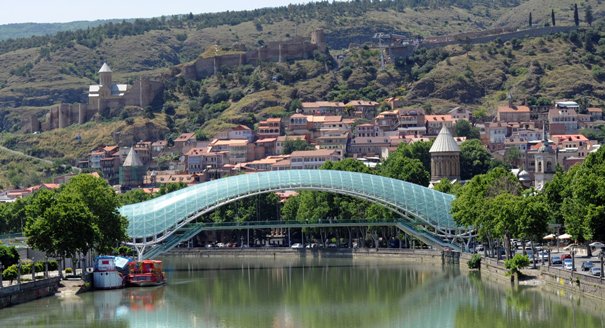
In recent years Georgia has taken every possible step to ensure that its western trajectory does not threaten to Russia. Georgia is seeking a constructive role, consistent with its values and in tune with its geography.

Link Copied
By Tedo Japaridze
Published on Jul 3, 2014

For nearly a generation now, Georgia has been on a Euro-Atlantic trajectory. The current government in Tbilisi has been unequivocal in its determination to continue this policy which enjoys both elite and grass root consensus. On June 27, 2014, it signed an Association Agreement with the European Union, another milestone on this path.

Every time Tbilisi appears to be coming closer to Europe, this is hailed with enormous public opinion enthusiasm. Essentially, this sentiment is still powered by the vision of “a return to Europe,” which, more than twenty years since our independence, is anything but passé.

Pursuing the same “European” vision, Georgia has been an enthusiastic contributor to NATO’s Partnership for Peace (PfP) program being one of the most significant contributors in joint operations in Kosovo, Afghanistan, and the Mediterranean. By the way, Russia used to be an active participant of that program since the inception in conducting joint naval exercises in which they practiced techniques of communicating, maneuvering and jointly operating at sea. It is no secret that Tbilisi is now seeking a Membership Action Plan (MAP) at the NATO Summit in Wales this September. Georgia has spared no cost, human or material, to join the Euro-Atlantic community of values as a contributor rather than a “free rider.”

Recently, however, Georgia has taken every possible step to ensure that its western trajectory does not appear threatening to Russia. It has taken steps to deescalate conflict with Moscow. In the run-up and during the Sochi Olympics last February, Tbilisi made it clear that it was not seeking to destabilize the Russian North Caucasus. Bilateral trade has been growing. The explosive symbolism of the past is history. 

Georgia is seeking a constructive regional role. It is a transit country that sits on an energy and transport highway from Astana and Baku to Ankara and, thereon, to Europe; it is Armenia’s gateway to the world, including to Russia. There are plenty more routes going through Tbilisi, from the greater Caucasus to the greater Middle East and from Central Europe to Central Asia. Georgia today is the only access from land-locked Central Asia to the European market.

Politically, Georgia is “on the fringes” of Europe. Russia shares little if any commitment to sovereignty and democratic governance and free trade that Georgia has embraced, ideologically and politically, since its independence. Georgia is of the West, even if not in the West. In view of the fact that Tbilisi has not been encouraged to expect the granting of a MAP this September in Wales, the hope of joining NATO’s collective security system remains elusive. Since European and “Eurasian” (Russian) trade regimes remain mutually exclusive, there is no hope for a common trade regime. And rather than regionalization paving the way to successful globalization, the South Caucasus amounts to little less than the sum of its individual states, each tormented by separatism. Across the region, fragmentation prevails.

And yet, Georgia has no choice but to be what it is, and where it is. The successful conclusion of the EU Association Agreement should not lead to too much elation, and the expected disappointment over NATO’s MAP should not be a reason for frustration. Georgia’s road is hard, but the only map it can use is one whose destination is decided by the Georgians themselves.

Tedo Japaridze is chairman of the foreign affairs committee in Georgia’s parliament, where he represents the Georgian Dream coalition. He has served as Georgia’s national security advisor, foreign minister and ambassador to the United States. This article expresses his personal views.

About the Author

Tedo Japaridze

Member, Georgian parliament

Tedo Japaridze is a member of the Georgian parliament, former ambassador, and chairman of the Foreign Relations Committee.

Tedo Japaridze
Member, Georgian parliament
EconomyForeign PolicyCaucasusRussiaGeorgiaWestern Europe

Carnegie does not take institutional positions on public policy issues; the views represented herein are those of the author(s) and do not necessarily reflect the views of Carnegie, its staff, or its trustees.

More Work from Carnegie Endowment for International Peace

  • China Financial Markets
    Commentary
    China Financial Markets
    Is China’s High-Quality Investment Output Economically Viable?

    China’s rapid technological progress and its first-rate infrastructure are often cited as refuting the claim that China has been systematically overinvesting in non-productive projects for many years. In fact, as the logic of overinvestment and the many historical precedents show, the former is all-too-often consistent with the latter.

      Michael Pettis

  • Commentary
    Carnegie Politika
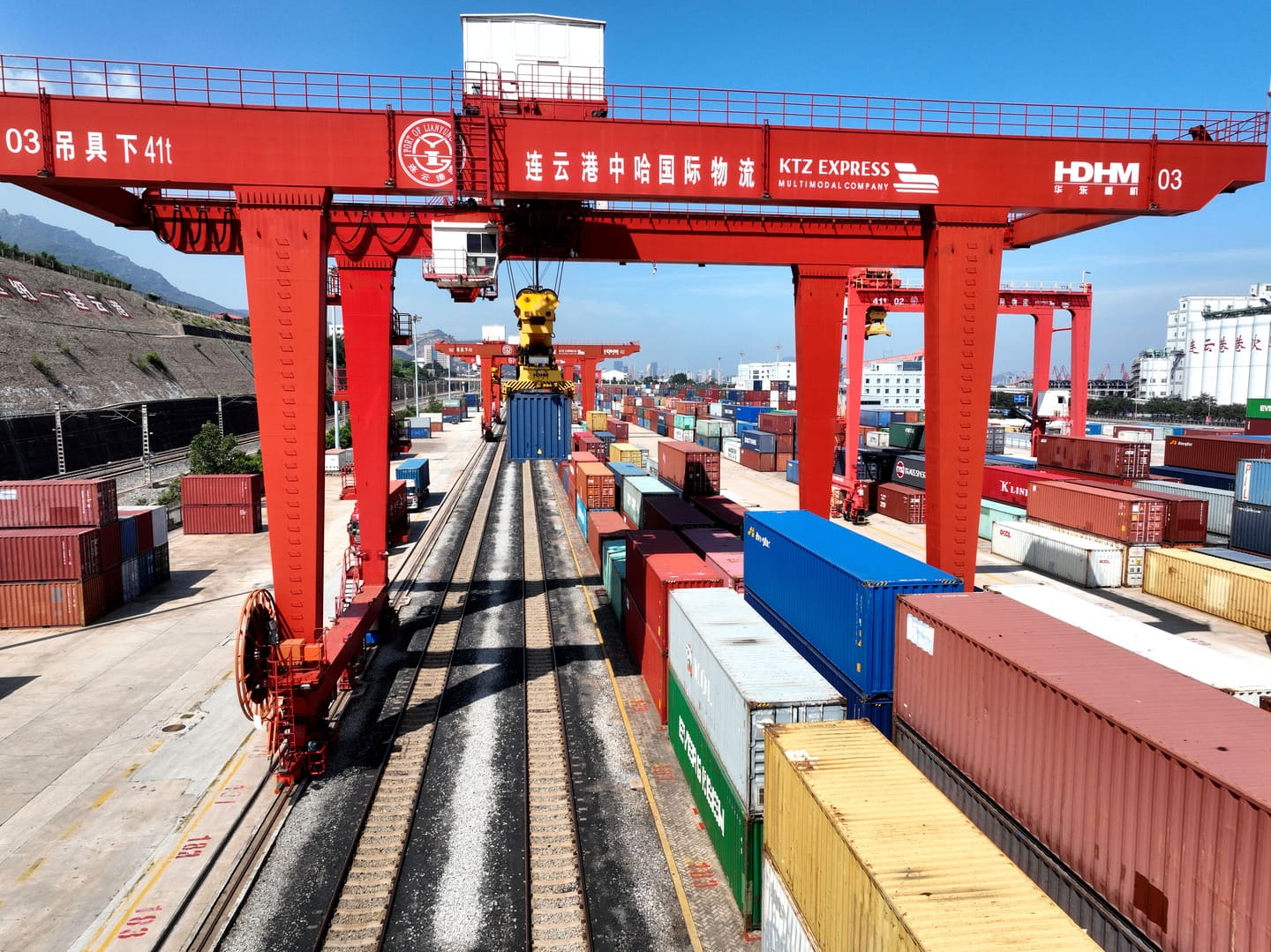
    The Much-Touted Middle Corridor Transport Route Could Prove a Dead End

    For the Middle Corridor to fulfill its promises, one of these routes must become scalable. At present, neither is.

      Friedrich Conradi

  • Article
    The Iran War Shows the Limits of U.S. Power

    If Washington cannot adapt to the ongoing transformations of a multipolar world, its superiority will become a liability.

      Amr Hamzawy

  • Commentary
    Strategic Europe
    The EU Equivocating on Turkey Is Bad Geopolitics

    Following Ursula von der Leyen’s gaffe equating Turkey to Russia and China, relations with Ankara risk deteriorating even further. Without better, more consistent diplomatic messaging, how can the EU pretend to be a geopolitical power?

      Sinan Ülgen

  • Article
    India’s Press Note 3 Gamble: Opening the FDI Door to China

    On March 10, 2026, India’s Union Cabinet approved amendments to Press Note 3, a regulation that mandated government approval on all foreign direct investment (FDI) from countries sharing a land border with India. This amendment raises questions primarily about whether its stated benefits will materialize and if the risks have been adequately weighed. This piece will address the same.

      Konark Bhandari

Get more news and analysis from
Carnegie Endowment for International Peace
Carnegie global logo, stacked
1779 Massachusetts Avenue NWWashington, DC, 20036-2103Phone: 202 483 7600
  • Research
  • Emissary
  • About
  • Experts
  • Donate
  • Programs
  • Events
  • Blogs
  • Podcasts
  • Contact
  • Annual Reports
  • Careers
  • Privacy
  • For Media
  • Government Resources
Get more news and analysis from
Carnegie Endowment for International Peace
© 2026 Carnegie Endowment for International Peace. All rights reserved.