

Article
Thomas de Waal
{
  "authors": [
    "Thomas de Waal"
  ],
  "type": "commentary",
  "centerAffiliationAll": "",
  "centers": [
    "Carnegie Endowment for International Peace",
    "Carnegie Europe",
    "Carnegie Russia Eurasia Center"
  ],
  "collections": [],
  "englishNewsletterAll": "",
  "nonEnglishNewsletterAll": "",
  "primaryCenter": "Carnegie Europe",
  "programAffiliation": "",
  "programs": [],
  "projects": [
    "Eurasia in Transition"
  ],
  "regions": [
    "Middle East",
    "Türkiye",
    "Caucasus",
    "Russia",
    "Azerbaijan"
  ],
  "topics": [
    "Economy",
    "Trade",
    "Climate Change",
    "Foreign Policy"
  ]
}
Source: Getty
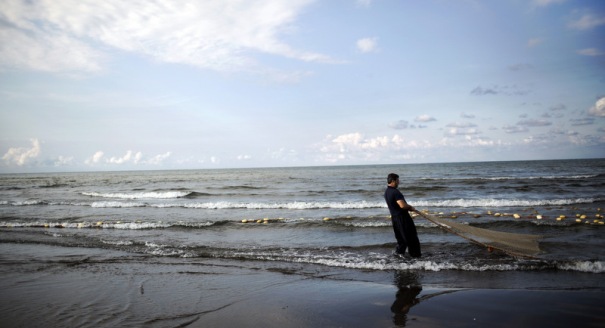
Calling time on the South Stream pipeline project, Putin announced a new Black Sea pipeline to Turkey instead. The new project could be a competitor to Azerbaijan gas ambitions, but, at the same time, it may require more collaboration in the future.
Calling time on the South Stream pipeline project in Ankara this week, Vladimir Putin tried to spin it as a win nonetheless, by announcing a new Black Sea pipeline to Turkey instead.
South Stream, everyone agrees, had simply become too expensive. Seven years and ten billion dollars after the project was first floated, Gazprom and the Russian government could no longer sustain the costs. Like its failed European twin, the Nabucco pipeline to Central Europe, it was too much of a geopolitical project and not commercially viable. In the duel between Nabucco and South Stream both sides lost, Steve LeVine wrote in Quartz, “The world’s first pipeline war ended up having no victors at all.”
The announcement reshuffles the political energy map of Eastern Europe in a dramatic way.
The first loser in this maneuver is Putin himself. However much he tried to put a gloss on the news, he lost face and esteem, by being forced to ditch his prestige project. Bulgaria and Serbia have also lost out. They will have to say goodbye to the prospect of hundreds of millions of dollars of transit fees from South Stream.
The European Union can celebrate a rare political success, having rallied enough support to kill off South Stream. Ukraine also scores a rare win, even as it faces disaster on many other fronts. After all, Moscow’s political rationale behind promoting South Stream was to bypass Ukrainian territory.
The biggest winner is Turkey. Turkey’s ambitions to become an international gas hub are enhanced, with the prospect of it receiving big new gas supplies from Russia, alongside the quantities it already imports from the Caspian Sea, Northern Iraq, and Iran.
Putin made his announcement standing next to the international leader he perhaps admires the most, Turkish president Recep Tayyip Erdoğan, calling Turkey “our strategic partner.” He also announced that Russia would cut the price of its gas exports to Turkey by six percent from January 1. (By implication that also means the Crimean Tatars are also losers from this deal. Although Erdoğan mentioned the Tatars, do not expect any real Turkish pressure on Russia over Crimea soon).
The most intriguing question is what this all means for Azerbaijan, which has begun the awkward process of trying to convert itself from being an oil supplier to a gas supplier, as its oil revenues begin to decline. Azerbaijan’s bet is to deliver gas to southern Europe via Turkey through the TANAP and TAP pipelines in five years’ time.
If it ever comes to fruition—and that is a big if—the new Russian-Turkish gas project could be a competitor to Azerbaijan gas ambitions and squeeze the profit margins of that project even more.
But a new Russian Black Sea pipeline would still be a massive project and difficult to pull off. To get its gas to European markets, Gazprom would need to use the new TANAP pipeline, owned by a consortium which consists of BP, two Turkish companies (BOTAŞ, TPO) and (the major shareholder), the Azerbaijani state oil company SOCAR. “TANAP becomes major gas link,” said one Azerbaijani commentator in response to the news.
Already this year, Russia and Azerbaijan have been collaborating economically as never before. Azerbaijan has recently announced new trade deals with Russia to fill markets targeted by European Union sanctions. In October Baku played a major meeting of the sanction-hit Russian bank VTB.
So the new Turkish deal may require more collaboration in the future, challenging the notion that Russia and Azerbaijan are always destined to be energy rivals.

Senior Fellow, Carnegie Europe
Thomas de Waal is a senior fellow at Carnegie Europe, specializing in Eastern Europe and the Caucasus.
Recent Work
Thomas de Waal
Thomas de Waal
Carnegie does not take institutional positions on public policy issues; the views represented herein are those of the author(s) and do not necessarily reflect the views of Carnegie, its staff, or its trustees.
It should address the shortcomings of previous crisis communication efforts and adapt to the demands of frontier AI.

Lucy Luo
Washington’s decision to support some UN functions while letting others wither is pulling the organization apart at the seams.

Stewart Patrick, Theodore Zaritsky

Are Germany’s economic, industrial, and political struggles becoming a liability for the EU’s ability to rise to the geopolitical moment?

Rym Momtaz, ed.

Russia’s ruling party would have benefited from Putin appearing as its distant patron, but as an active frontman imposing his views on the public, he has done nothing but harm both the party’s election campaign and the ruling system overall.

Andrey Pertsev

China’s police training infrastructure construction projects provide benefits to recipient countries, promote China’s image as a major global security provider, and are likely to reinforce alignment between Beijing’s security priorities and those of countries in the Global South.


Cameron Waltz, Sheena Chestnut Greitens, Kim Nguyen, …