

Article
C. Raja Mohan, Darshana M. Baruah
{
  "authors": [
    "C. Raja Mohan"
  ],
  "type": "legacyinthemedia",
  "centerAffiliationAll": "dc",
  "centers": [
    "Carnegie Endowment for International Peace",
    "Carnegie India"
  ],
  "collections": [],
  "englishNewsletterAll": "ctw",
  "nonEnglishNewsletterAll": "",
  "primaryCenter": "Carnegie India",
  "programAffiliation": "SAP",
  "programs": [
    "South Asia"
  ],
  "projects": [],
  "regions": [
    "South Asia",
    "Afghanistan",
    "India"
  ],
  "topics": [
    "Foreign Policy",
    "Security"
  ]
}
Source: Getty
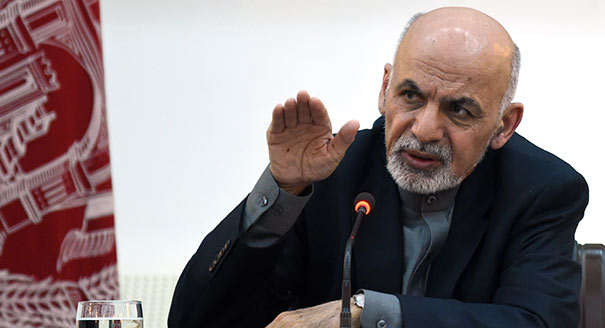
Afghanistan President Ashraf Ghani’s visit to New Delhi offers an opportunity for Prime Minister Narendra Modi to recalibrate India’s Afghan policy toward greater realism and more modest goals.
Source: Indian Express
The presence of Afghanistan President Ashraf Ghani in New Delhi this week offers an opportunity to Prime Minister Narendra Modi to recalibrate India’s Afghan policy towards greater realism and more modest goals. The need for rethinking was evident ever since US President Barack Obama announced, way back in 2009, that America would leave Afghanistan at the earliest possible opportunity.
If inertia prevented change in the Indian approach for too long, Ghani’s election as president last year and his new policies, especially the outreach to Pakistan and China, have made an Indian adjustment to the new circumstances an urgent imperative. Delhi’s fortuitous run in Afghanistan after the ouster of the Taliban at the end of 2001 tended to mask the political and geographic limits on India’s role there. India must now learn to bring its Afghan objectives back in line with the constraints.
A number of factors that facilitated an expansive Indian role in Afghanistan no longer exist. Consider, for example, the US presence in Afghanistan. Although there was a tendency in Delhi to believe that India had an independent role of its own in Afghanistan, its gains over the last decade there were deeply tied to the relative stability that emerged under the American military occupation.The prospects for economic and political instability in Afghanistan have significantly increased since the rapid downsizing of the US military presence. This, in turn, casts a shadow over Delhi’s ability to sustain the kind of economic engagement it had over the last decade. Meanwhile, as Afghan demands for security grow, Delhi is clearly not the preferred partner for Ghani’s Kabul. India was too risk-averse to embark on an expansive security cooperation when Ghani’s predecessor, Hamid Karzai, was pressing for it earlier in the decade. In any case, there is no way India can sustain a massive military role across the Durand Line in the teeth of opposition from the Pakistani army.
Back in 2009 Obama hoped to realise three important goals before ending the American occupation: build a reasonably strong Afghan armed force; put in place iron-clad international guarantees on military and economic assistance to Kabul; and promote a political reconciliation with the Afghan Taliban. All three objectives remain unrealised. But having given his best shot in Afghanistan, Obama is now determined to scale back US engagement with Afghanistan.
Despite their bravery and commitment, the Afghan armed forces will find it hard to beat the Taliban, which continues to enjoy strong sanctuaries of support in Pakistan. It is by no means clear that the international community will keep its pledges of support to Afghanistan in the coming years. Along with the declining American military footprint, there is a rapid reduction of international financial flows into Afghanistan. The dominant mood in Washington and other Western capitals is to limit their exposure in Afghanistan rather than increase it, irrespective of the ground realities in the region. Various attempts by the US and its allies to promote talks between Kabul and the Taliban have failed to take off, largely because of the Pakistan army’s reluctance to back the process.
Given these difficult circumstances, Ghani has had few options to play with. If international support is on the decline and the capacity to unilaterally fight the Taliban is limited, Ghani is pursuing the seemingly sensible course of seeking a rapprochement with Pakistan. Ghani has understood the brutal logic of the region’s geopolitics — that there can be no sustainable peace in Afghanistan without substantive support from the Pakistan army.
The 2,500 km-long open frontier between the two nations, the spread of the Pashtun population across the Durand Line, the massive asymmetry in power capabilities and Rawalpindi’s support to the Taliban make Pakistan the most important external player in Afghanistan. No wonder then that Ghani, presiding over a much weaker Kabul, has gone out of his way to seek a deal with Pakistan. He has also sought the support of other countries, especially China, which have some influence in Pakistan to help nudge Rawalpindi towards a reasonable settlement.
If Ghani had no choice but to focus on a “Pakistan-first” strategy, Delhi has no option but to patiently wait for Kabul’s new engagement with Rawalpindi to play out. After all, Karzai too sought good relations with Pakistan. The problem was not the lack of interest in Kabul for a reconciliation with the Taliban and its main benefactor, the Pakistan army. The question has always been the kind of terms that Rawalpindi sets. It wants Kabul to accept Pakistan’s extraterritorial interests across the Durand Line and give a significant role to its friends, like the Taliban, in the revised political arrangements to stabilise Afghanistan.
If Ghani is sensible enough to explore the prospects for a reconciliation with Rawalpindi, he is surely aware that Kabul’s Pakistan gamble is a risky one. Despite all the positive-sounding talk of reconciliation from Pakistan, Rawalpindi has not delivered much to Kabul, at least until now. Given the leverage it has today, Rawalpindi will most likely shake down Ghani for maximum political concession. The problem for Ghani is that he is not in a position to buy peace with Pakistan at any cost. Accepting Pakistan’s terms will undermine the fragile internal balance in Afghanistan and set the stage for another round of bloodletting.
But it is not Delhi’s business to tell Ghani what to do with Pakistan. What Delhi must do is signal a genuine appreciation of Kabul’s current strategic dilemmas. It should avoid interfering in the peace efforts between Afghanistan and Pakistan. Modi must reassure Ghani that Delhi is in a “standby” mode, ready to extend, within its limitations, whatever support Kabul wants and feels comfortable with.
This article was originally published by the Indian Express.
Former Nonresident Senior Fellow, Carnegie India
A leading analyst of India’s foreign policy, Mohan is also an expert on South Asian security, great-power relations in Asia, and arms control.
Recent Work

C. Raja Mohan, Darshana M. Baruah


Alexander Gabuev, Paul Haenle, C. Raja Mohan, …
Carnegie does not take institutional positions on public policy issues; the views represented herein are those of the author(s) and do not necessarily reflect the views of Carnegie, its staff, or its trustees.

Funding Ukraine remains a priority for European leaders. As Russia’s war of aggression heads into another winter, two feasible options to mobilize support for Kyiv should be fast-tracked.


Vladyslav Rashkovan, Gregory P. Wilson

Russian strikes are weakening the economy sustaining Ukraine’s war effort. Closing the growing funding gap will require more European support and politically contentious reforms in Kyiv.

Balázs Jarábik

While the EU and European governments are embracing the much-lauded middle-power moment, this entails three difficult conundrums.

Richard Youngs
The middle power moment will not be defined by sovereign states alone, and California stands out for its potential contributions to international cooperation.


Ian Klaus, Stewart Patrick

Europe is facing rising populism internally as well as external pressures from Russia, China, Turkey, and the United States.

Dimitar Bechev